
Tenerife plans six new reservoirs by 2027
The Cabildo of Tenerife has announced plans to build six new reservoirs by 2027, describing the project as an “ambitious horizon” with the ultimate goal of “closing the water cycle and definitively eliminating discharges to the sea.”
The announcement was made on Monday at the International Congress on Reservoirs and Discharges (BalVert), held at the Hotel Mencey in Santa Cruz. Over two days, the event brought together key figures from the water, treatment and waste management sectors at island, regional and national level.
Tenerife’s long history of water reuse
Hosting the congress were Blanca Pérez, the island’s Minister for Natural Environment, Sustainability, Safety and Emergencies, alongside the island’s Director of Waste, Alejandro Molowny, and the manager of the Tenerife Water Board (Ciatf), Javier Davara. They provided an overview of the island’s waste and water management.
“Tenerife has a long track record in reclaimed water that puts it at the forefront of Spain,” the Cabildo highlighted. “It began this path back in 1993 and is a benchmark in various engineering projects, such as the longest reclaimed water pipeline in the country, which runs 62 kilometres across the south of the island from Santa Cruz de Tenerife to Arona.”
Geotextile technology for a challenging landscape
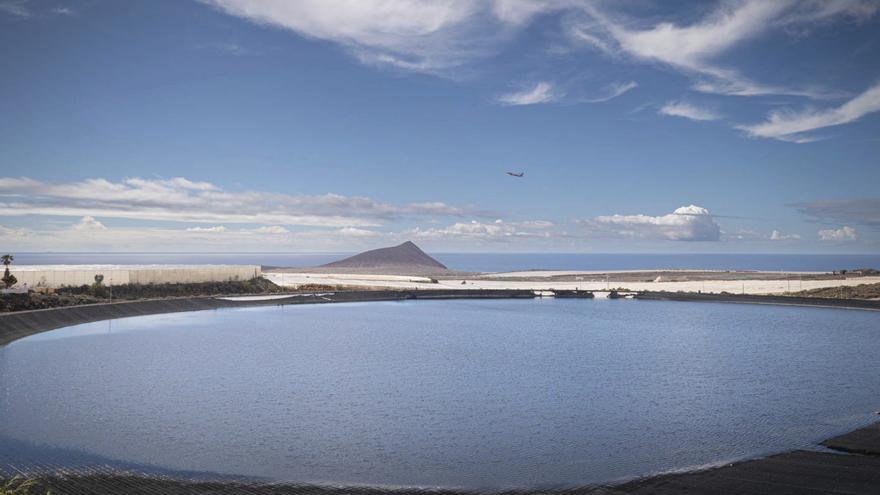
Due to its complex terrain, which historically prevented the construction of conventional dams, Tenerife developed an innovative solution: building reservoirs using geotextiles. The island now has a storage capacity of 5.1 cubic hectometres, essential for storing reclaimed water.
“Growth in this area has been remarkable over the past decade, with the number of treatment plants rising from five to 14, and treatment capacity quadrupling,” the Cabildo noted.
Waste management and biogas innovation
When it comes to waste, the priority is “maximum technical safety.” The institution considers that “landfill waterproofing is a critical task to prevent leaks and protect the island’s aquifers.” To this end, the Tenerife Environmental Complex is equipped with “cutting-edge installations and systems that guarantee watertightness.”
The second day of the congress focused on an innovative and pioneering horizontal biogas capture system, as opposed to the conventional vertical system. This approach allows for better recovery of biogas and eliminates odours during the export phase of landfill cells.
A circular economy approach
The island’s strategy is not just about efficient management, but a real transition towards a circular economy model. Operating under the premise that “the best waste is the one that is not produced,” the Cabildo said it is “working intensively on improving source separation and boosting recovery, leaving landfill as the last option possible.”
“Think about it: we cannot have conventional dams because of our geology, and we have come a long way, making great strides in improving these technologies for water storage, which was traditionally produced from gallery surpluses,” said Blanca Pérez, Minister for Natural Environment, Sustainability, Safety and Emergencies. “We have now taken another leap forward. We are now talking about 5.1 cubic hectometres of water that can be stored, and a large part of it comes from the circularity of water.”
Canary Islands a national benchmark
The congress director, Ariosto de Haro, stated that the Canary Islands are “a benchmark in terms of reservoirs.” In his view, “a very strong effort has been made by different administrations.”
What’s happening in the Canaries – straight to your phone
News, weather alerts and practical updates – direct from the islands, in English. We live here and know what’s going on – before the international media catch up. Everything lands on our WhatsApp channel – no middlemen, no algorithm. Curated for families, expats and travelers.

Canary Islands sea hits second-hottest year on record

Legal bid to halt tree felling in Santa Cruz’s La Salud

Fiesta del Charco: A journey through La Aldea’s past

Corralejo dunes power line set for removal

ULPGC launches 14 research projects at Las Canteras

TMT will never be built, says Canary Islands astrophysics chief

Pedro Duque: Canarias is the “ultimate dream” for rockets

Court blow to Tenerife motor circuit project
La Palma faces new volcanic risk planning deadline
