
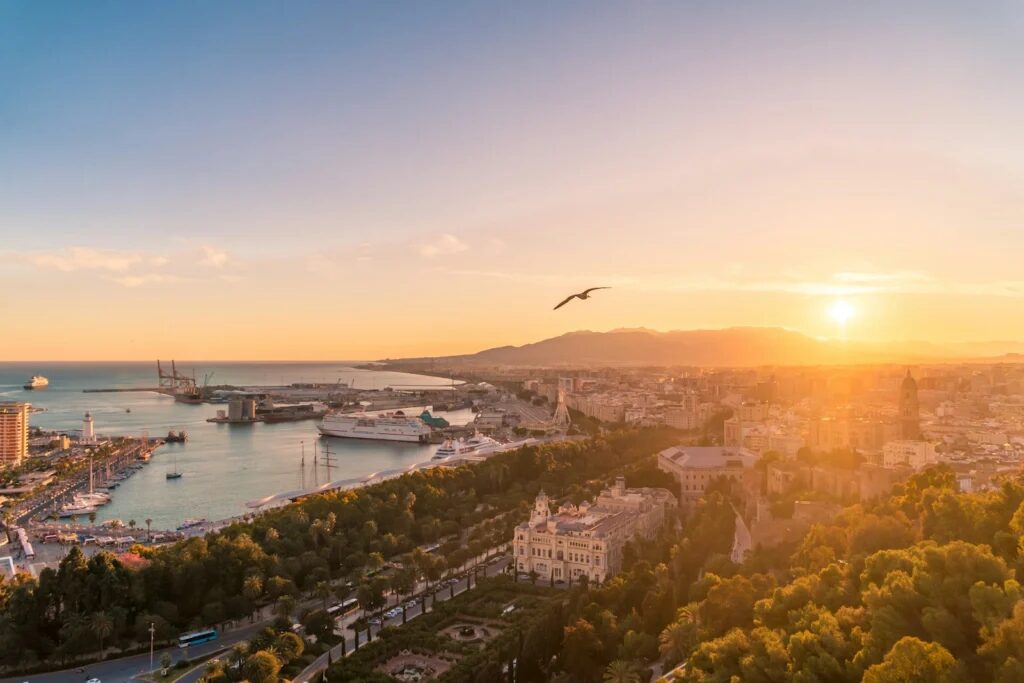
Malaga is one of those rare destinations that genuinely delivers for the whole family – not just a beach holiday, but a full-blown adventure packed with history, wildlife, water parks, and some of the best food in southern Spain. With 320 days of sunshine a year, this Andalusian gem is arguably one of Europe’s most underrated family destinations. We spent a week here with our two school-age kids, and we were blown away by just how much there is to see, do, and taste. This guide covers the best things to do in Malaga with kids – from ancient castles and interactive museums to crocodile parks and river canyon hikes.
- Is Malaga Good for Families?
- Best Things to Do in Malaga with Kids
- 1. Museo Interactivo de la Música – Where Kids Are Encouraged to Make Noise
- 2. Picasso Museum Malaga – Art That Surprises All Ages
- 3. Castillo de Colomares – A Fairytale Castle in Benalmádena
- 4. Alcazaba – Moorish Fortress with Spectacular Views
- 5. Gibralfaro Castle – The Best View in Malaga
- 6. Teatro Romano – Ancient History, Free of Charge
- 7. Malaga Cathedral – Walk on the Roof
- Family-Friendly Wildlife Attractions Near Malaga
- Active Adventures for Families
- Malaga Beaches for Families
- Parks and Play Spaces for Kids
- Food Experiences Worth Making Time For
- Free Things to Do in Malaga with Kids
- Sample Itineraries for Malaga with Kids
- Practical Tips for Your Malaga Family Holiday
- FAQ – Malaga with Kids
Is Malaga Good for Families?
Short answer: absolutely. Malaga for families is a dream combination of culture, beaches, and adventure – all within easy reach of each other. The city’s public transport is solid (the Renfe train connects you to nearby towns like Fuengirola and Benalmádena in under 45 minutes), the beaches are well-equipped, and a surprising number of top attractions offer free entry or significant discounts for children.
What makes Malaga particularly family-friendly is the sheer variety on offer. You can spend a morning exploring a Moorish fortress, grab lunch at a market full of fresh juice and tapas, and be on the beach by mid-afternoon – all within the city itself. Add in day trips to water parks, wildlife parks, and dramatic natural landscapes, and you have more than enough to fill a week without repeating yourself.
The locals are warm and welcoming towards children, restaurants are genuinely child-friendly (dinner at 9pm is perfectly normal here), and the relaxed pace of Andalusian life suits families who don’t want to rush from one tick-box attraction to the next.
Best Things to Do in Malaga with Kids
1. Museo Interactivo de la Música – Where Kids Are Encouraged to Make Noise
If your children find traditional museums a little dull, this one is a revelation. The Interactive Music Museum houses over 400 instruments from around the world – and the whole point is to touch, play, and experiment with them. From Spanish guitars and African drums to instruments made from shells and bone, every exhibit is hands-on.
Each station comes with a touchscreen video tutorial showing how to hold and play the instrument correctly, which kept our kids genuinely engaged for nearly two hours. The museum is divided into thematic zones tracing the history of music from ancient civilisations through to the present day. It’s one of those rare places where learning feels like playtime.
Check the website before your visit – the museum runs special children’s workshops throughout the year. And if you can time your trip to coincide with one of the flamenco shows (held on select days, tickets around €20 per person), it’s well worth it. This is authentic, passionate flamenco – not a tourist performance.
Practical info:
- Hours: Tuesday-Sunday, 10:00-18:00
- Admission: Adults €6, children €4, under 6s free
- Location: Old Town, 5 minutes from the Cathedral
- Allow: 1.5-2 hours
- Website: musicaenaccion.com
2. Picasso Museum Malaga – Art That Surprises All Ages
Pablo Picasso was born in Malaga, and the museum dedicated to his work sits inside the stunning 16th-century Buenavista Palace. The collection spans over 200 pieces – paintings, sculptures, ceramics – with a strong focus on his later works.
What most visitors don’t expect is the archaeological site in the basement. Beneath the museum lie well-preserved ruins from Roman, Phoenician, and Arab times. Since most tourists concentrate on the main galleries, this lower level is often quiet – a wonderful spot for children to explore ancient history without the crowds.
The museum provides child-friendly educational materials, and the building itself is beautiful enough to hold interest even for younger visitors who might not yet fully appreciate Cubism.
Practical info:
- Hours: Daily 10:00-18:00
- Admission: Adults €13, concessions €11, under 17s free
- Free entry: Every Sunday during the last 2 hours before closing
- Location: Palacio de Buenavista, 5 minutes from Plaza de la Constitución
- Website: museopicassomalaga.org
3. Castillo de Colomares – A Fairytale Castle in Benalmádena
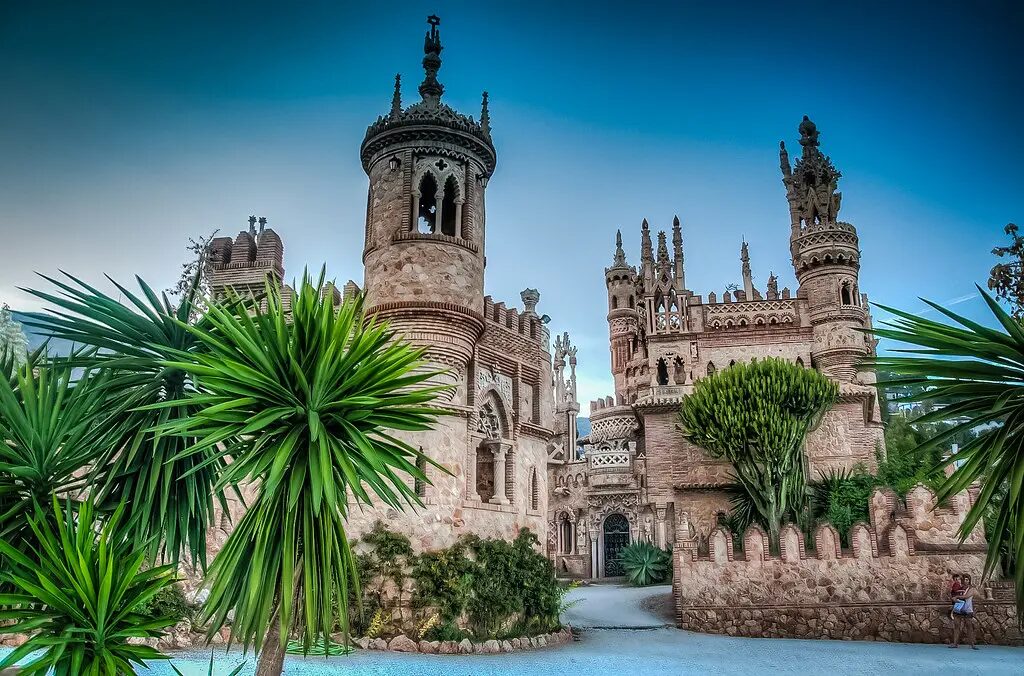
This is one of those Malaga attractions that genuinely surprises people – it looks medieval, but it was actually built between 1987 and 1994. American doctor Esteban Martín created this extraordinary monument to Christopher Columbus and the discovery of the Americas, blending Byzantine, Romanesque, Gothic, and Mudéjar architectural styles into something that feels entirely magical.
Spread across 1,500 square metres, the castle incorporates symbols representing the three cultures of medieval Spain – Jewish, Christian, and Muslim – alongside representations of Columbus’s three ships. The headline curiosity is the world’s smallest chapel, measuring just 1.96 square metres, which holds a Guinness World Record.
Kids love exploring the towers and hidden corners, and the whole place has a storybook quality that fires the imagination. The guided tour is genuinely worthwhile – the story of how this one man built this entire structure over seven years is fascinating.
Practical info:
- Hours: Winter 10:00-13:30 and 16:00-18:00; Summer 10:00-13:30 and 17:00-21:00
- Admission: Adults €2, children and seniors €1.50
- Getting there: Renfe to Torremuelle station, then 10 minutes on foot
- Allow: 45-60 minutes
- Website: castillomonumentocolomares.com
Tip: The castle is somewhat hidden among the trees – check its exact location on maps before you go. The guided tour (small additional cost) brings the story to life.
4. Alcazaba – Moorish Fortress with Spectacular Views
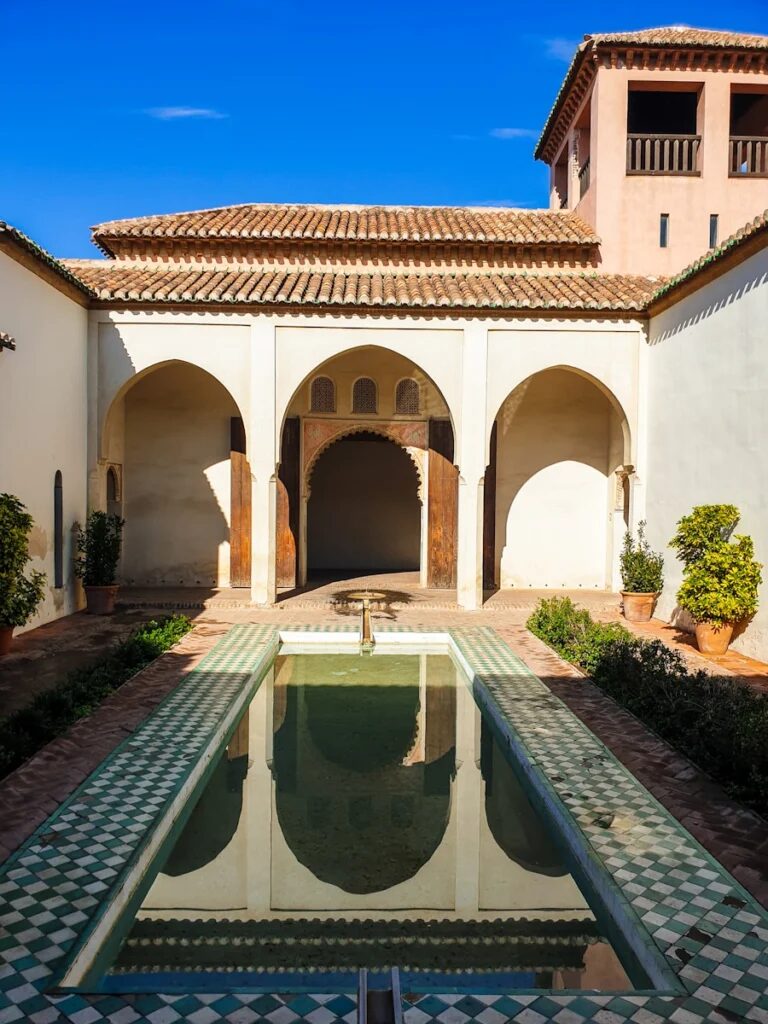
The Alcazaba is the most significant Moorish monument in Malaga, with roots going back to the 11th century. Originally both a fortress and a royal palace, it served different purposes across the centuries – the lower section housed the royal guard, while the upper reaches were reserved for the ruling elite.
Visiting requires some climbing, but every level brings its reward: beautifully tiled courtyards, fragrant jasmine gardens, and progressively more dramatic views over the city and the bay. It’s one of those places where history doesn’t feel like homework – it feels alive.
Practical info:
- Free entry every Sunday from 14:00
- Admission: €7 individually, or €10 for a combined ticket with Gibralfaro Castle (valid 48 hours)
- Location: Next to the Roman Theatre
- Allow: 1-1.5 hours
- Website: alcazabaygibralfaro.malaga.eu
Parent tip: Visit early morning or late afternoon to avoid peak heat. Bring water – the steep sections can be tiring, especially in summer.
5. Gibralfaro Castle – The Best View in Malaga
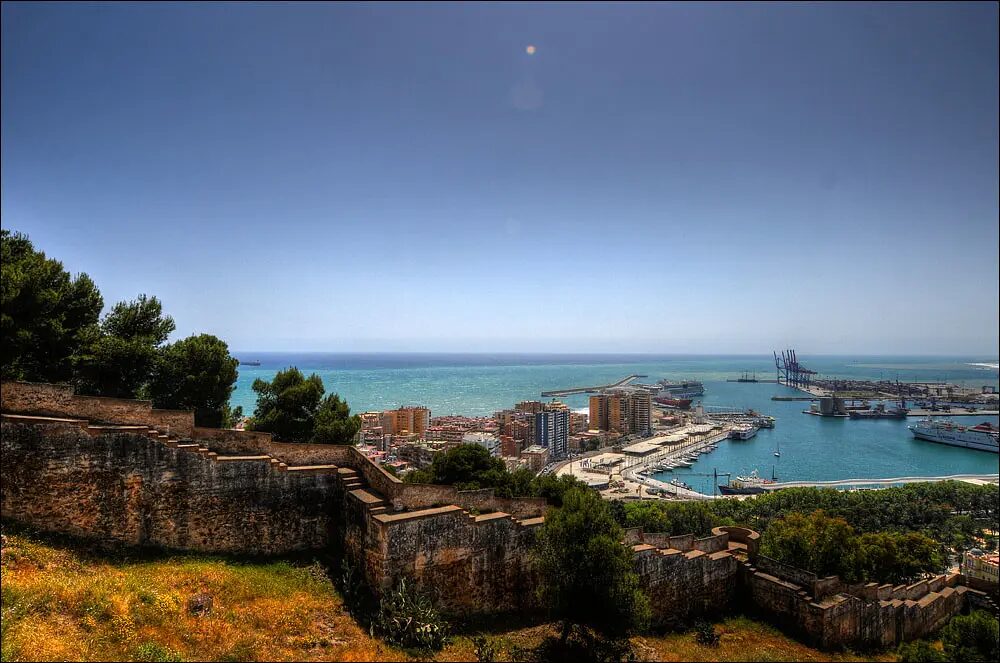
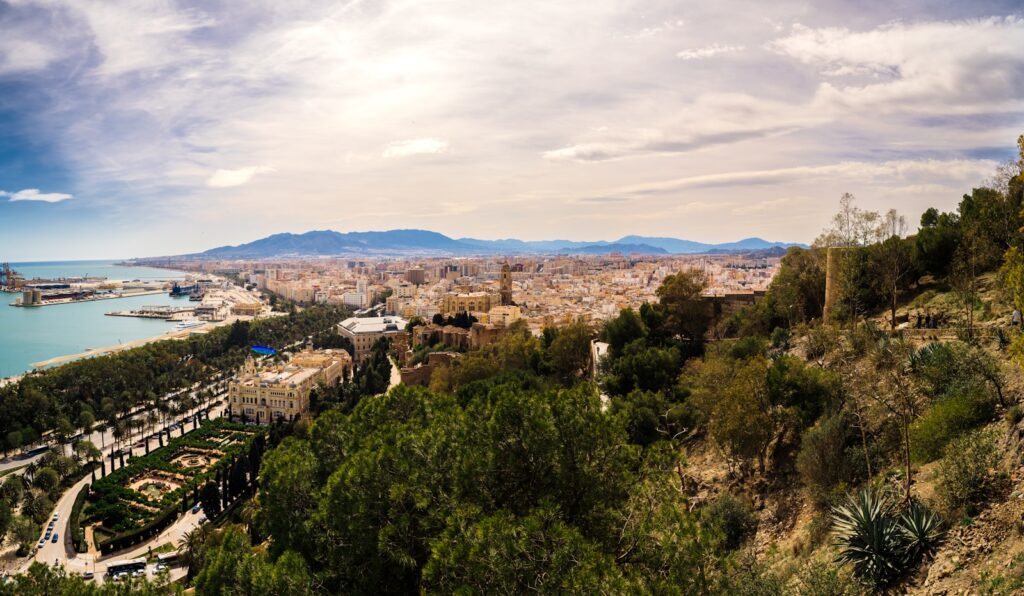
Perched 130 metres above the city, Gibralfaro Castle dates from the 14th century and is connected to the Alcazaba by a long defensive wall. Originally serving as both barracks and a kind of lighthouse guiding sailors into port, today it offers what is arguably the finest panorama in the city.
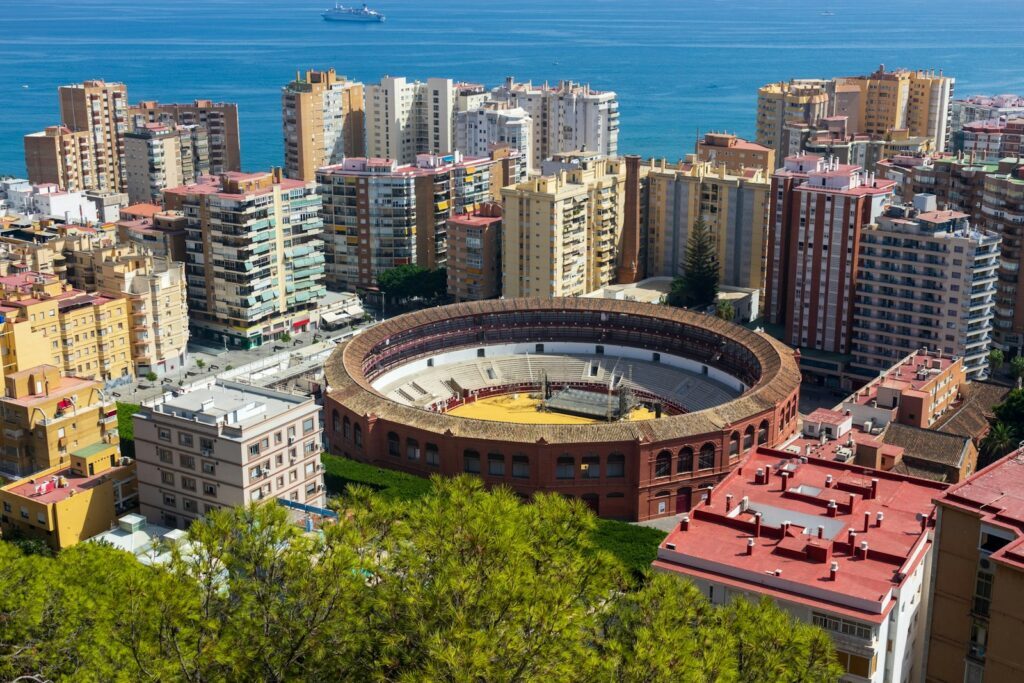
A small military history museum occupies the old arsenal, but the real reason to come is the walk along the castle walls. From here you can see the entire city laid out below you – the port, the marina, the mountains beyond – all in one sweeping view. Arrive about an hour before sunset for the best light. (📸 Perfect photo spot: the north-facing section of the wall with the bullring in the foreground.)
Practical info:
- Hours: Daily 9:00-20:00 (summer), 9:00-18:00 (winter)
- Admission: €7 individually, €10 combined with Alcazaba
- Getting there: 20-30 minute walk (steep) or bus
- Allow: 1 hour
- Website: alcazabaygibralfaro.malaga.eu
Note: The approach is steep. Bring water and sun protection – there is very little shade on the ascent.
6. Teatro Romano – Ancient History, Free of Charge
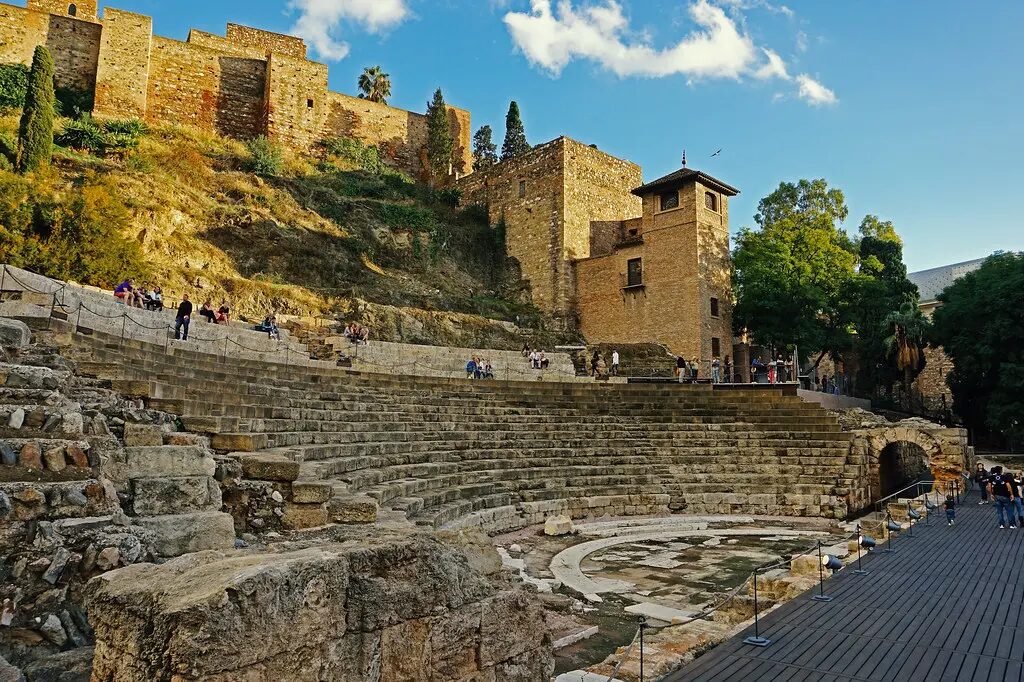
Right at the foot of the Alcazaba lies one of Malaga’s most unexpected treasures: a Roman theatre dating from the 1st century BC that was in active use for two to three hundred years. The ruins were only discovered in 1951, during construction of a cultural centre – at which point building work was halted and the site was opened to the public.
You can walk freely into the ancient seating area and get a real sense of what performances here must have looked like. A small archaeological museum to the north of the site provides context and informational materials. It’s a brief visit, but a genuinely atmospheric one – and it pairs perfectly with the Alcazaba just steps away.
Practical info:
- Hours: Tuesday-Saturday 10:00-18:00, Sunday 10:00-16:00
- Admission: Free
- Location: Base of the Alcazaba, city centre
- Allow: 20-30 minutes
- Website: juntadeandalucia.es
7. Malaga Cathedral – Walk on the Roof
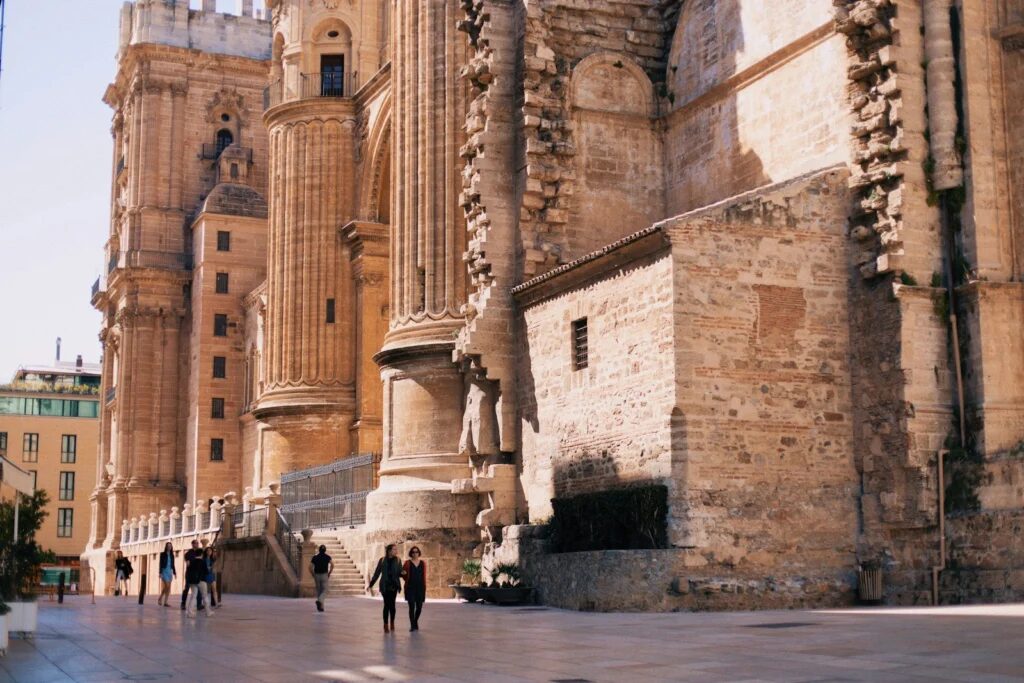
The Cathedral of the Incarnation – known locally as La Manquita (“the one-armed lady”) because its second tower was never completed – is one of Malaga’s most recognisable landmarks. Construction began in 1528 and took over 250 years, which explains the mix of Renaissance, Baroque, and Neoclassical styles throughout.
The interior is genuinely impressive, with an extraordinary carved wooden choir and monumental pipe organ. But the highlight for most visitors – children and adults alike – is the rooftop tour. Every full hour between 11:00 and 18:00, a guide takes small groups up onto the cathedral roof for a 40-minute tour with extraordinary views over the old city and the surrounding mountains.
Practical info:
- Hours: Monday-Saturday 10:00-18:00
- Admission: Interior €8, roof €8, combined ticket €12
- Free entry during Sunday masses (no guided access)
- Allow: 1 hour (interior), 40 minutes (roof)
- Website: malagacatedral.com
Family-Friendly Wildlife Attractions Near Malaga
8. Bioparc Fuengirola – Wildlife Done Right
Bioparc is not a conventional zoo. The philosophy here centres on conservation and respect, with animals living in carefully reconstructed natural habitats representing Africa, Asia, and Madagascar. Waterfalls, rock formations, and dense vegetation create environments that genuinely resemble their wild counterparts.
The park is home to over 130 species and 1,400 animals, including Sumatran tigers, gorillas, and the blue duiker – the only one in Spain. A recent addition, “The Mangrove”, features an underwater viewing panel into a mangrove ecosystem, which is quietly extraordinary.
For activities in Malaga beyond the city itself, this is one of the best half-day options for families. Allow 3-4 hours, and travel by Renfe from Malaga Centro (around 45 minutes).
Practical info:
- Hours: Oct-Mar 10:00-18:00; Apr-Jun 10:00-19:00; Jul-Aug 10:00-23:00
- Admission: Children 3-9 years €23, adults €29.50, under 3s free
- Book online for discounts at bioparc.es
- Getting there: Renfe to Fuengirola, then 7 minutes on foot
9. Selwo Marina – Dolphin Shows in Benalmádena
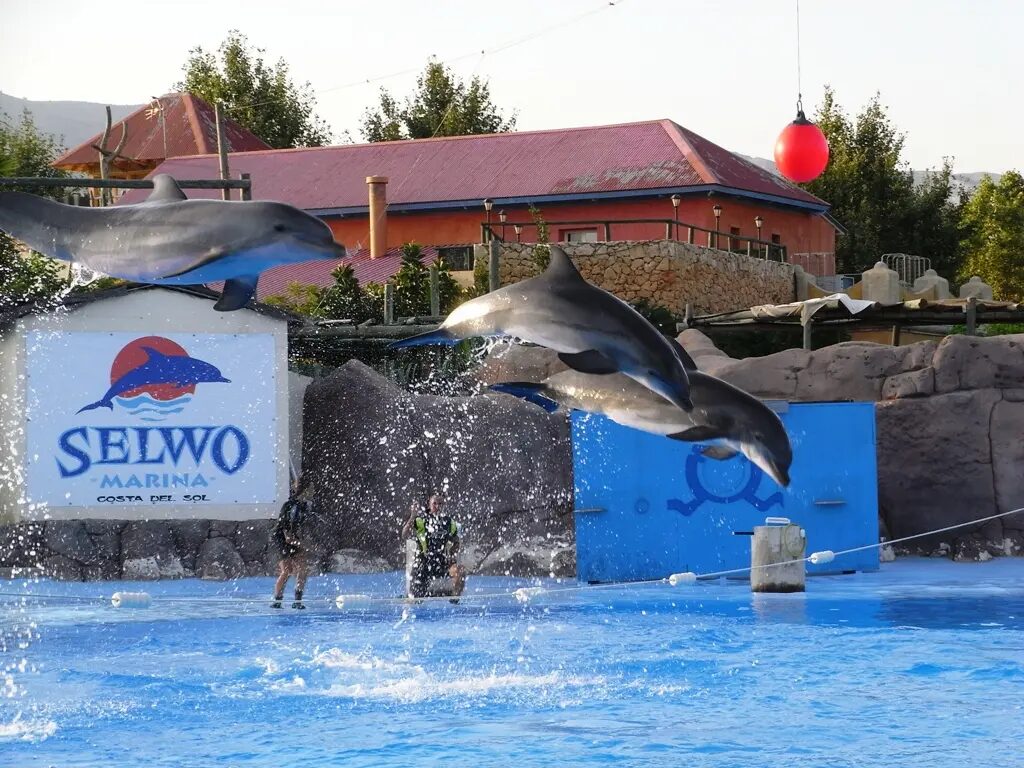
Selwo Marina is a compact marine and exotic animal park in Benalmádena, built around a schedule of daily shows. Parrot performances, penguin feeding sessions, sea turtle encounters, and a sea lion and dolphin show make up the programme – small enough to cover comfortably in half a day, but engaging enough that children rarely want to leave.
The headline extra is the opportunity to have your photo taken with the dolphins (€15-22) – an experience that tends to leave a lasting impression on younger visitors.
Show schedule:
- Penguin feeding: 10:50, 13:20, 17:00
- Exotic bird show: 12:00, 14:00, 17:30
- Sea lion and dolphin show: 12:30, 14:30, 18:30
- Turtle feeding: 13:00, 16:10
Practical info:
- Admission: Varies by booking date (cheaper online)
- Getting there: 10 minutes from Benalmádena Renfe station
- Allow: 3-4 hours
- Website: selwomarina.es
10. Crocodile Park Torremolinos – Up Close with Prehistoric Giants
The Crocodile Park is the only facility of its kind in Andalusia and one of very few in Europe where you can observe these ancient reptiles at such close range. The park houses over 300 crocodilians of various species – from relatively small caimans to enormous Nile crocodiles reaching up to 5 metres in length.
Daily feeding shows at 13:00 and 17:00 are the main event: experienced keepers feed the animals while narrating fascinating facts about crocodile biology, behaviour, and conservation status. Watching creatures that appear completely motionless suddenly move with explosive speed is genuinely dramatic.
For younger children, a dedicated section features miniature dinosaur replicas, drawing a brilliant connection between prehistoric reptiles and their living descendants today. Informative panels throughout the park make it easy to distinguish between crocodiles, caimans, and alligators – a surprisingly engaging natural history lesson.
The grounds are well-maintained, with shaded seating areas throughout, and the lush tropical planting gives the whole place an authentic jungle atmosphere.
Practical info:
- Hours: Daily 10:00-18:00 (last entry 17:00)
- Admission: Adults €18.50 online, under 4s free; 10% discount when booking direct
- Getting there: Renfe to Torremolinos, then 15 minutes on foot or bus line 2
- Allow: 1.5-2 hours
- Website: cocodrilospark.com
Parent tip: The 13:00 feeding show tends to be less crowded than the 17:00 session. Afterwards, the beach at Torremolinos is just a 10-minute walk – a perfect spot for lunch at one of the seafront chiringuitos. Pack sunscreen; shade is limited in the park.
Active Adventures for Families
11. Teleférico Benalmádena – Flying Over the Coast

The Benalmádena cable car is one of the Costa del Sol’s most memorable experiences. A 15-minute ride carries you from the resort town of Arroyo del Miel up to the summit of Mount Calamorro at 769 metres – with extraordinary views over the coastline, Gibraltar, and on a clear day, the mountains of northern Africa.
At the top, daily bird of prey displays (13:00 and 16:00) see trained eagles and vultures soaring freely – genuinely spectacular. Easy mountain trails make it a good option for families who enjoy gentle walking with a dramatic backdrop.
Practical info:
- Hours: Daily 10:30-19:00 (seasonal variation)
- Admission: €13.90 online
- Getting there: Renfe to Benalmádena (Arroyo del Miel)
- Allow: 15-minute ride + 1-2 hours at the summit
- Website: telefericobenalmadena.com
12. Aqualand Torremolinos – The Water Park for Thrill-Seekers
On a hot July or August day, Aqualand is simply irresistible. The park covers everything from a gentle lazy river for toddlers to the eye-watering Kamikaze and Black Hole slides for older kids and adults. There’s a wave pool, a dedicated toddler zone with mini-slides, and plenty of sunloungers, restaurants, and snack bars scattered throughout.
This is genuinely a full-day destination in summer. Book tickets in advance online for the best price.
Practical info:
- Season: May-September, 10:00-18:00
- Admission: €37 online
- Getting there: Renfe to Torremolinos, then bus or 15-minute walk
- Allow: Half day to full day
- Website: aqualand.es/torremolinos
13. Caminito del Rey – For Brave Families (Ages 8+)
Caminito del Rey (King’s Path) is a legendary trail running through the El Chorro gorge, around 60 km from Malaga. The path clings to the vertical canyon wall at heights of over 100 metres – the views are extraordinary, but anyone with a serious fear of heights should think carefully before booking.
The trail is 8 km long and requires reasonable fitness. Children must be at least 8 years old, and all visitors must be part of a guided group – independent access is not permitted. Advance booking is essential.
Practical info:
- Booking: Mandatory, online in advance
- Admission: €10
- Allow: 3-4 hours
- Website: caminitodelrey.info
Important: Once you start, there is no turning back mid-route. Not suitable for children under 8 or anyone with relevant health conditions.
14. Nerja Caves (Cueva de Nerja) – An Underground Cathedral
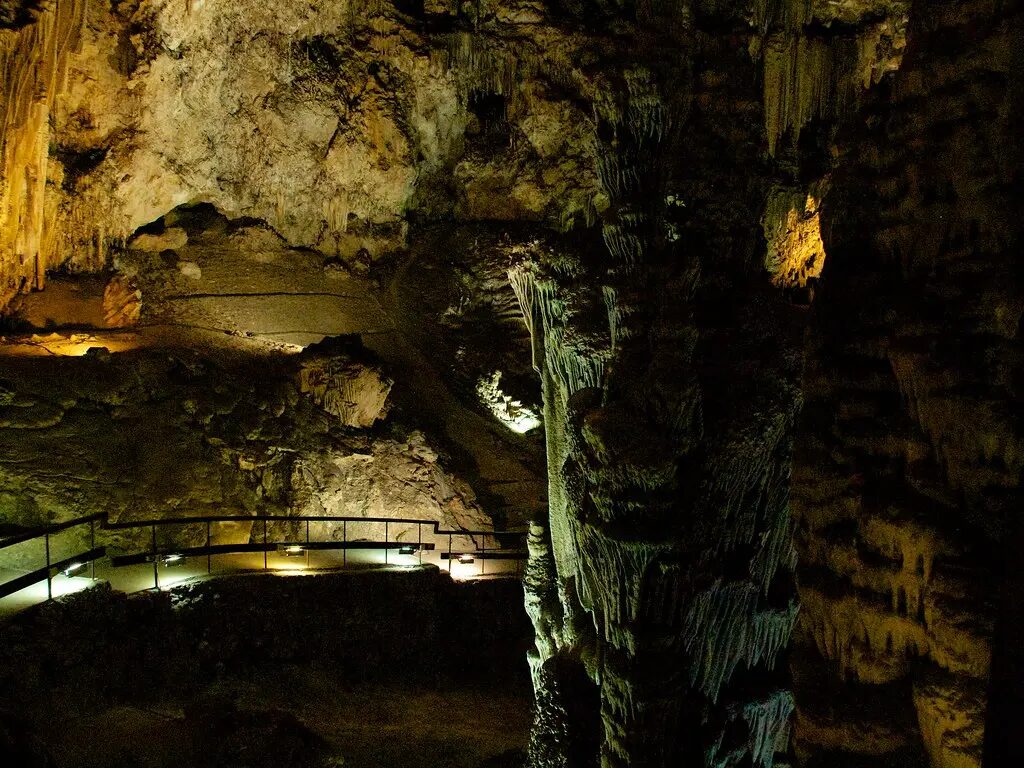
The Nerja Caves rank among Spain’s most important prehistoric sites and are the third-largest cave system in Europe. Discovered by accident in 1959 by five young boys hunting for bats, the caves now attract over half a million visitors a year – and the wonder is entirely justified.
Walking inside feels like entering an underground cathedral. Enormous chambers are filled with dramatic stalactites and stalagmites, including a column standing 32 metres tall – one of the largest in the world, formed over approximately 450,000 years. The rooms carry evocative names: the Hall of Cataclysms, the Hall of Ghosts, the Ballet Hall.
The oldest sections contain cave paintings over 42,000 years old, making them among the earliest known in Europe. These are not accessible to visitors (for preservation reasons), but the on-site museum features high-quality reproductions and engaging information about prehistoric life. The cave maintains a constant temperature of around 19°C year-round – blissful if you’re visiting in the height of summer.
In summer, classical music concerts are held inside the caves – the acoustics are extraordinary. Check the events calendar before your visit.
Practical info:
- Hours: Daily 9:00-16:00 (July-August until 19:00)
- Admission: Adults €15, children 6-12 years €10, under 6s free
- Free entry: Monday-Friday at 9:30 (45 people maximum – book a month ahead)
- Getting there: Alsa bus from Malaga (2 hours, €5.50) or hire car (1 hour)
- Allow: 45 minutes (caves) + 30 minutes (museum)
- Website: cuevadenerja.es
Parent tip: Bring a light layer – the temperature difference between outside (30°C+) and the caves (19°C) can be a real shock for children. Shoes with good grip are essential; the floor is slippery in places. Pushchairs cannot be taken inside.
Bonus: After the caves, the town of Nerja is just 5 minutes away by car. The Balcón de Europa is a magnificent clifftop terrace with sweeping sea views, and the beach at Burriana below it has wonderfully clear water. Lunch at a chiringuito here rounds off the day perfectly.
15. Rio Chillar in Nerja – Hiking Through a Canyon in the Water
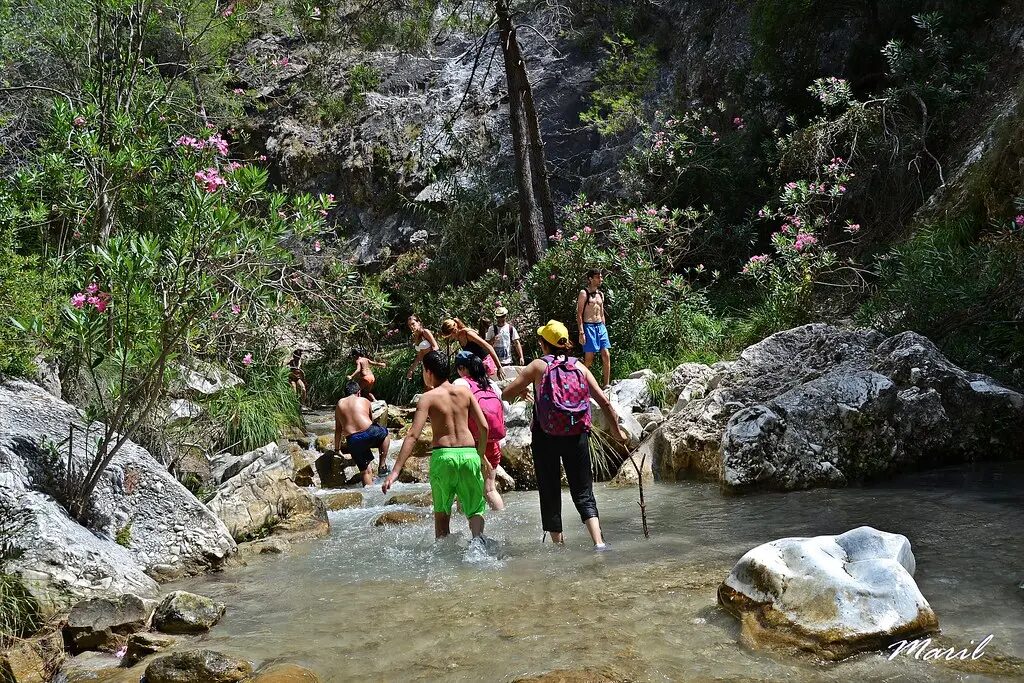
Rio Chillar is one of the most unusual hikes in southern Spain – a trail where you spend most of the route actually walking through a mountain river. Combining adventure, natural beauty, and refreshing coolness on hot days, it’s one of the best fun things to do in Malaga for active families.
The route begins on the edge of Nerja and follows the riverbed of the Chillar river through a dramatic canyon. For the first 3-4 kilometres, you walk in water ranging from ankle to knee-deep depending on the season. The riverbed is rocky, so proper footwear is non-negotiable – trekking sandals or old trainers work well.
The scenery is breathtaking: towering canyon walls, lush exotic vegetation, small waterfalls, and natural pools. About halfway along, a larger waterfall and pool makes a natural stopping point – children love splashing around here and scrambling over the wet rocks.
The full route is around 15 km return, but most families turn back after 3-4 km at the waterfall and pool – which is entirely satisfying, and makes for a round trip of around 2-3 hours.
Best time to visit: Spring (April-May), when water levels are low but the river still flows well. In mid-summer some sections can become too dry. After heavy rain in autumn or winter, water levels can be dangerously high – always check conditions before going.
Practical info:
- Best months: April-June (ideal water level + comfortable temperatures)
- Admission: Free; paid parking €3-5 per day
- Getting there: Alsa bus to Nerja, then 20 minutes on foot to the trailhead (or drive and park)
- Essential kit: Trekking sandals or old shoes (non-negotiable), waterproof bag or phone case, towels, swimwear, water, snacks
- Allow: 2-3 hours (shorter version to the waterfall and back)
- Website: nerja-turismo.com
Parent tip: Pack spare clothes and towels in the car – everyone will be soaked. Start early (9:00-10:00) before the sun gets too intense. Combine it with Nerja beach and lunch afterwards for a perfect full day out.
Malaga Beaches for Families
16. Malaga’s 15 Beaches – Infrastructure That Sets the Standard
Malaga has 15 beaches, and what sets them apart from many European alternatives is the consistently excellent infrastructure: showers, public toilets, lifeguards throughout the season, and chiringuitos (beachfront bars) at regular intervals. Many beaches are also fully accessible for visitors with mobility needs.
Best Malaga beaches for families:
- La Malagueta – the central city beach, wide and well-equipped, with sunlounger and umbrella hire available. The sand is dark and coarser than northern European beaches, but the facilities are superb. Look out for the flocks of bright green parakeets in the palm trees behind the beach.
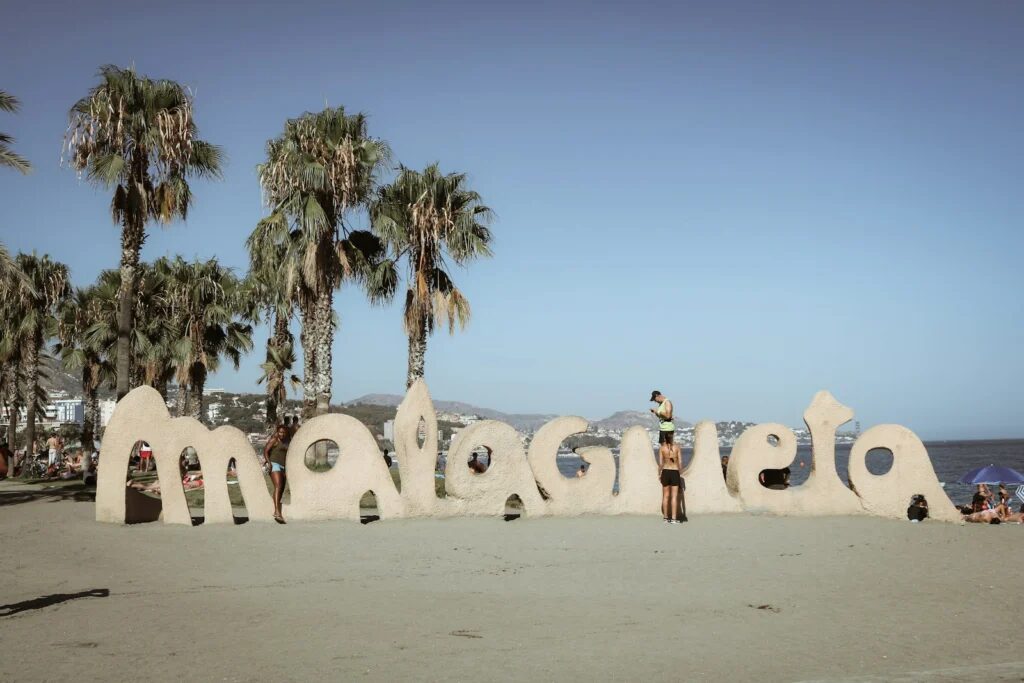
- La Misericordia – a longer beach with a pleasant promenade, multiple restaurants, and a water park nearby. Smoother sand than La Malagueta, and a slightly more relaxed atmosphere.
- Pedregalejo / El Palo – less touristy, more local in character, and home to some of the most authentic chiringuitos on the coast. If you want proper espetos de sardinas, this is where to come.
Practical info:
- Admission: All beaches free
- Getting there: Walking from the centre or bus/metro
Parks and Play Spaces for Kids
17. Parque Litoral – The Playground That Looks Like a Film Set
Located in western Malaga, Parque Litoral is home to one of the most spectacular public playgrounds we’ve seen anywhere in Europe. The equipment is on a genuinely impressive scale – colourful, imaginative, and designed to entertain children of a wide age range. In summer, a water play area adds another dimension.
The park sits within beautifully maintained gardens with palm trees and plenty of benches, and the beach at La Misericordia is just a few minutes’ walk away. On the nearby Paseo Marítimo Antonio Banderas, look out for the miniature Walk of Fame with handprints from Spanish celebrities – including Banderas himself.
Practical info:
- Admission: Free
- Getting there: 15 minutes by bus from the centre
- Allow: 1-2 hours (or combine with the beach)
18. Parque de Málaga – Tropical Garden in the Heart of the City
Running between the old city and the port, this historic park functions as an open-air botanical garden – a genuine green oasis in the urban centre. Palms, exotic flowering shrubs, fountains, and trees from around the world are all labelled, making it a gentle educational experience as well as a cool refuge from the heat.
Small playgrounds are dotted throughout, and the benches are plentiful. It’s an ideal spot for a slow afternoon when you need to let the children run and the adults rest.
Practical info:
- Admission: Free
- Location: Between the city centre and the port
- Allow: 30-45 minutes
Food Experiences Worth Making Time For
19. Mercado Central de Atarazanas – The Taste of Andalusia
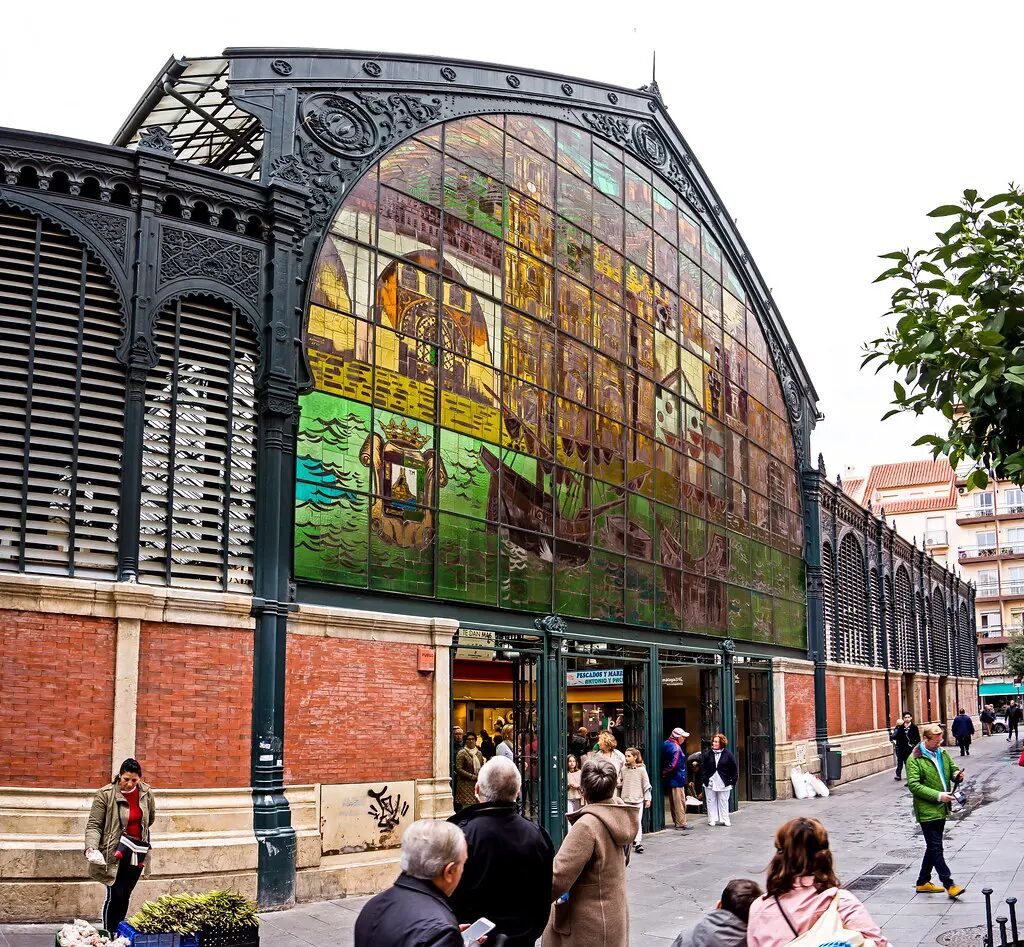
The Atarazanas Central Market is an essential stop for any family visiting Malaga – not just for the food, but for the building itself. The market stands on the site of former Arab shipyards, and the original 14th-century Moorish gate on Calle Atarazanas still stands. On the Calle Sagasta side, a vast stained-glass window depicting Malaga’s coastline fills the hall with coloured light.
Inside, you’ll find stalls of fresh vegetables and fruit (including tropical varieties rarely seen at home), freshly-squeezed orange juice, smoothies, and the kind of tapas bars that locals actually use. Prices are noticeably lower than restaurants, and the stallholders are genuinely friendly.
Local specialities to try:
- Espetos de sardinas – sardines grilled over charcoal on reed skewers
- Berenjenas con miel de caña – fried aubergine with sugarcane syrup
- Fritura malagueña – a platter of mixed fried seafood
- Fresh-squeezed orange juice – often the best you’ll ever taste
Practical info:
- Hours: Monday-Saturday 8:00-15:00, closed Sunday
- Admission: Free entry; you pay for what you buy
- Location: 6 minutes from the Cathedral
- Allow: 30-60 minutes
- Market etiquette: Don’t handle the produce yourself – ask stallholders to prepare your selection for you.
20. Chiringuitos on the Beach – Espetos de Sardinas
No visit to Malaga is complete without eating at a chiringuito – the informal beachfront bars that line the entire coastline. Fresh fish and seafood, grilled or fried to order, is the speciality, and the atmosphere is relaxed, family-friendly, and utterly Andalusian.
The signature dish is espetos de sardinas – sardines threaded onto reed skewers and cooked over glowing charcoal in small wooden boats on the beach. This tradition dates back nearly 150 years, and eating them fresh from the grill with a squeeze of lemon is one of those simple pleasures that stays with you long after the holiday is over.
Best spots for authentic espetos:
- Pedregalejo and El Palo beaches – the most authentic experience
- Playa Las Acacias – excellent espetos and good views
- La Malagueta – more variety, slightly higher prices
Espetos cost around €2 per portion; main dishes typically run €8-15.
Free Things to Do in Malaga with Kids
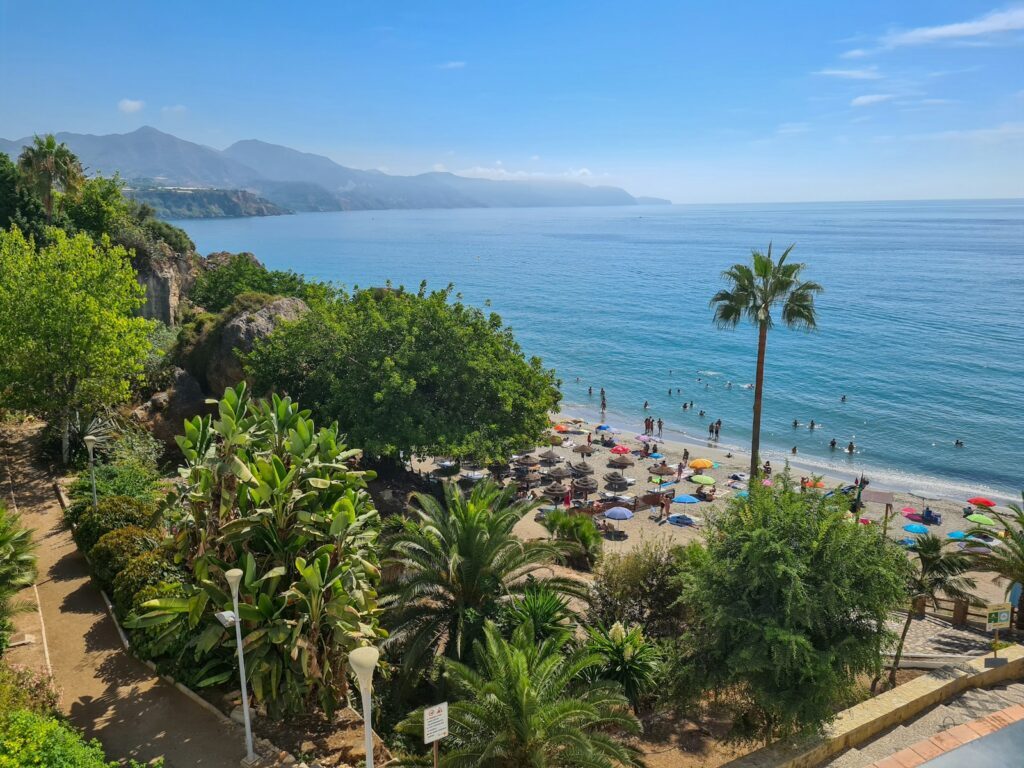
One of the great surprises of Malaga is just how much you can experience without spending a euro. Here’s a summary of the best free options:
Free museum entry on specific days/times:
- Alcazaba – every Sunday from 14:00
- Museo Picasso Málaga – every Sunday, last 2 hours before closing
- Museo de Málaga (archaeology + fine arts) – always free for EU citizens
- Teatro Romano – always free, Tuesday-Saturday 10:00-18:00, Sunday until 16:00
- MUCAM (Municipal Heritage Museum) – always free, includes individual Picasso works
Free outdoor spaces:
- Paseo del Parque – tropical park running through the city centre
- Parque Litoral – one of the best playgrounds in Malaga
- All 15 city beaches – with showers, toilets, and lifeguards
- Mercado Central de Atarazanas – free entry, pay only for what you buy
- Muelle Uno port area – promenade, fountains, small play areas
- Plaza de la Constitución – historic heart of the old city
- Calle Marqués de Larios – the elegant main pedestrian street
- Mirador de la Alcazaba – viewpoint overlooking the Roman Theatre
- Jardines de Pedro Luis Alonso – gardens alongside the Town Hall
Free curiosities:
- Green parakeets – flocks throughout the city, especially in Parque de Málaga
- The Genovese Fountain – 16th century, Plaza de la Constitución
- SOHO street art district – large-scale murals by international artists
- Cathedral during Sunday mass – open to visitors, no guided access
Money-saving tips for families:
- Many museums offer free entry for children up to age 16 or 17
- The combined Alcazaba + Gibralfaro ticket saves €4 and is valid for 48 hours
- Booking online typically saves 10-15% on most paid attractions
Sample Itineraries for Malaga with Kids
3-Day Weekend in Malaga
Day 1 – Old City and Culture
Morning (9:00-13:00): Start with breakfast at a central café – churros with chocolate is the obvious choice. Then head to the Cathedral (2 hours) – go inside, or book the rooftop tour if you want the views. Afterwards, walk to the Mercado Central de Atarazanas for a browse and fresh juice for the children.
Afternoon (14:00-18:00): Lunch in the centre – tapas or the menú del día (set lunch menu, usually excellent value). Then head to the Interactive Music Museum for a couple of hours of hands-on fun. Walk back along Calle Granada to the Plaza de la Constitución.
Evening (18:00-21:00): Visit the Alcazaba – if you’re there on a Sunday afternoon, entry is free from 14:00. Time your exit for sunset from the Mirador de la Alcazaba. Dinner at El Pimpi or tapas at La Farola de Orellana.
Day 2 – Wildlife and the Coast
Morning (9:00-13:00): Catch the Renfe train to Fuengirola (around 45 minutes). Spend the morning at Bioparc Fuengirola, one of the best wildlife parks in southern Spain.
Afternoon (14:00-18:00): Lunch at a chiringuito on Fuengirola beach. Spend the afternoon on the beach – building sandcastles, swimming, recharging. Return to Malaga in the early evening.
Evening (19:00-21:00): A walk along the Muelle Uno port. Dinner in the centre – fritura malagueña is the local recommendation.
Day 3 – Viewpoints and the Beach
Morning (9:00-13:00): Head up to Gibralfaro Castle early, before the heat builds (2 hours for the walk and the views). Descend and make a brief stop at the Roman Theatre (free).
Afternoon (13:00-18:00): Lunch at Pedregalejo beach – this is where to order the famous espetos de sardinas. Spend the afternoon at La Malagueta or La Misericordia beach. If the children still have energy, finish at Parque Litoral.
Evening (18:00-21:00): A slow walk through Paseo del Parque. Farewell dinner, packing.
7-Day Malaga Family Holiday
Day 1 – Arrival and First Impressions
Settle in and get your bearings. After checking in, have breakfast and take a relaxed walk through the Old Town without an agenda – just let the city wash over you. In the afternoon, visit the Mercado Central de Atarazanas. Head to La Malagueta beach for the sunset, then dinner at a chiringuito. End the evening with a stroll around the Muelle Uno port area.
Day 2 – Culture and History
Morning at the Cathedral (choose between the interior and the rooftop – both take around an hour). Then the Picasso Museum, including the underground archaeological site. Afternoon: lunch at Casa Lola for tapas, then the Interactive Music Museum, then a quiet stretch in Paseo del Parque. Evening: Teatro Romano (free), dinner at El Pimpi.
Day 3 – Moorish Heritage
Start early at the Alcazaba to beat the heat. Spend the afternoon recovering over lunch, then head up to Gibralfaro for the late afternoon light and views. Evening: descend into the city, tapas at La Tranca, walk through the illuminated old town.
Day 4 – Benalmádena Day
Take the Renfe to Benalmádena (30 minutes). Start at Castillo de Colomares in the morning. Afternoon at Selwo Marina for the animal shows. End the day on the Teleférico cable car for the sunset views and bird of prey display. Light dinner back in Malaga.
Day 5 – Fuengirola Wildlife Day
Full day at Bioparc Fuengirola. Morning for the animals (allow 4 hours), lunch in Fuengirola, afternoon on the beach. Return to Malaga for dinner.
Day 6 – Water Parks and Beaches
Morning at Aqualand Torremolinos (or the water park at La Misericordia). Afternoon: continue at the water park, then move to La Misericordia beach. Evening: walk to Pedregalejo for dinner and authentic espetos de sardinas.
Day 7 – Final Day Relaxation
Late morning at Parque Litoral playground, then La Misericordia beach for a last swim. Afternoon: lunch on the beach, souvenir shopping on Calle Larios. Optional evening: a catamaran sunset cruise. Farewell dinner at your favourite restaurant from the week.
Optional day trips if you have extra time:
- Ronda – a dramatic white hilltop town, around 2 hours’ drive
- Caminito del Rey – for families with children 8 and above
- Nerja – caves, the Balcón de Europa, and Burriana beach (full day)
- Gibraltar – the Rock, Barbary macaques, views to Africa (full day)
- Granada – the Alhambra (a long day or consider an overnight stay)
Practical Tips for Your Malaga Family Holiday
When to Visit Malaga with Kids
May, June, and September are the sweet spot. July and August bring temperatures above 35°C and significant crowds – children tire faster, queues are longer, and accommodation prices peak. Spring and early autumn give you 22-26°C, far fewer tourists, and hotel prices typically 30-40% lower.
Winter (December-February) is 15-20°C during the day – excellent for sightseeing, not ideal for beach days. Malaga averages 320 sunny days a year, so even winter visits rarely disappoint.
Is Malaga Safe for Kids?
Very much so. Malaga is a genuinely safe, family-welcoming city. Standard travel precautions apply – keep an eye on belongings in crowded areas like markets and the main pedestrian street – but the overall environment is relaxed and child-friendly.
How Many Days in Malaga with Kids?
A minimum of 3-4 days covers the city highlights comfortably. A full week allows you to add day trips to Benalmádena, Fuengirola, and Nerja without feeling rushed. Two weeks is ideal if you want to combine the city with a proper beach holiday.
Where to Stay in Malaga with Kids
The Old Town (Centro Histórico) puts you within walking distance of most city attractions but can be noisy and some streets are uneven – check carefully if you have a pushchair. The western seafront area near La Misericordia beach offers easier access to the beach and Parque Litoral, and is generally quieter. If travelling by car, staying slightly outside the centre gives you more space and easier parking, while still being within 15-20 minutes of everything.
Malaga with Toddlers and Babies
Malaga is manageable with very young children, but it requires some planning. Only around 30% of metro stations have lifts; buses are the more accessible option (all have low floors and ramps). The Old Town’s narrow cobbled streets and uneven paving are tricky with a pushchair – a carrier or sling is significantly more practical for most of the historic centre. The Alcazaba and Gibralfaro are effectively inaccessible with a pushchair.
On the plus side: the beaches have gentle slopes into the water, the parks are pushchair-friendly, and Spanish culture is genuinely welcoming of very young children in restaurants and public spaces.
Is Malaga Expensive for Families?
Less than you might expect. A realistic budget for a family of four for a week in Malaga (excluding flights) is around €1,200-1,600 for accommodation, €500-750 for food (a mix of eating out and self-catering), €50-400 for paid attractions depending on how many you visit, and around €100 for local transport. The free attractions are genuinely excellent, and choosing apartments over hotels saves significantly.
Paying in Malaga
Cards are accepted in around 95% of places – restaurants, hotels, supermarkets, and the major attractions. Keep €50-100 in cash for small ice cream stalls, some chiringuitos, and parking meters. The airport bus requires cash (€4 per person); the Renfe train accepts cards.
FAQ – Malaga with Kids
Yes – it’s one of the best family destinations in southern Spain. It combines excellent beaches, fascinating history, great food, and a range of activities that work for children of all ages. The weather is reliable, the infrastructure is good, and it’s significantly less crowded than Barcelona or Madrid.
The Interactive Music Museum, Parque Litoral playground, and the beaches are all excellent for younger children. For slightly older kids, the Alcazaba, Gibralfaro Castle, and Bioparc Fuengirola work brilliantly. The beach at La Misericordia has gentle entry and good facilities.
Three days covers the city highlights. A full week lets you add day trips. Two weeks is ideal for a proper combination of sightseeing and beach time.
The western seafront near La Misericordia is often the most practical for families – beach access, Parque Litoral nearby, and quieter streets than the Old Town. If sightseeing is the priority, the Old Town is convenient but less pushchair-friendly
Yes, for sightseeing. Temperatures of 15-20°C make exploring the city, castles, and markets comfortable without the summer heat. Beach swimming is unlikely, but everything else is perfectly enjoyable.
Absolutely. Three days is enough to cover the Cathedral, Alcazaba, the Music Museum, and at least one beach day. Use the sample 3-day itinerary above as your starting point.