
Compiled with the help of artificial intelligence, based on Spanish-language information. Source below the article.
Tenerife to invest €10 million in Teide shuttle buses
The Cabildo de Tenerife will earmark €10 million in 2027 to launch new shuttle buses providing access to Teide National Park from the north, the south and the metropolitan area. The measure forms part of the new mobility plan the island government is preparing for the protected area – the jewel of Canary Islands nature – with the aim of prioritising public transport over private vehicles, reducing traffic pressure and improving the conservation of this site, which is a Unesco World Heritage Site. The initiative will be accompanied by new measures to control and progressively regulate access to the national park.
This is one of the actions included in the island’s 2027 budget, the last of this term in office, which totals €1.412 billion – 7.7% more than this year and 30% above the 2023 figures, the last of the previous island government. “Made by and for people, above all for the most vulnerable.” That is how the president of the Cabildo de Tenerife, Rosa Dávila, described the accounts, which she said reflect how the Corporation’s main priorities have changed over the past four years, with a 369% increase in housing and almost 275% in spatial planning, while municipal cooperation is the only area to see its resources cut, down 30%.
Social policies take the largest share
For 2027, the Corporation will concentrate the bulk of its resources on policies that, according to Dávila, put “people at the centre”, with €450 million – almost 12% more than this year – allocated to the full range of social measures, from support for families and dependent people to housing, employment, education and youth policies. Under the distribution presented by the island government, four out of every ten euros in the budget will go to these areas, while €236 million will be devoted to caring for the territory and protecting natural heritage, up 9%, and a further €236 million to improving mobility and road infrastructure on the island, an increase of 7.4%. The remaining €349 million will be split between boosting and diversifying the island economy and modernising the Administration itself.
Before setting out the details of a budget that will come into force on 1 January, the president took direct aim at the central government, noting that it has been operating for almost four years on the extensions of the budgets approved in 2023. With their homework done at home, the vice-president, Lope Afonso, wanted to focus on “the main challenge facing this country”: housing. The Popular Party representative estimates that the future allocation for this area, which will be around €36 million – also 137% more than in 2026 – will allow the island government to mobilise up to 700 new accommodation resources and thus reach 1,300 homes, thanks to the signing of eight new agreements for the construction of properties and one additional agreement with the Canary Islands Housing Institute.
More buses, new routes and station upgrades
Mobility, another of the Cabildo’s priorities, increases its allocation by 7.4% compared with 2026, with investment aimed at improving infrastructure, expanding public transport and making it easier to travel between municipalities. Around €20 million will go towards expanding the TITSA fleet, with the addition of 13 double-decker buses and another 22 conventional ones, as well as modernising the stations at Güímar, Icod de los Vinos, Costa Adeje, Guía de Isora and La Orotava, with the aim, as Dávila explained, of “reaching places you still can’t reach”. This is in addition to expanding the network with seven new routes: four planned for 2027 – Los Silos-Garachico, Tacoronte-El Sauzal, Santa Úrsula-La Matanza and La Guancha-San Juan de la Rambla – and another three whose tender process will begin next year, between La Orotava and Los Realejos, Anaga, and Guía de Isora-Santiago del Teide.
Extra security and conservation in Teide National Park
These investments are accompanied by other measures to strengthen protection of the national park. The budget provides €32 million to reinforce security on Teide, with the addition of 30 new personnel, and €30 million for the Tenerife Firefighters Consortium, which will gain 18 new posts. The idea, according to the Cabildo, is also to guarantee the conservation and protection of biodiversity through the control of invasive species and the eradication of the subterranean termite, to which a further €11 million is added for emergency prevention, with new crane and forest pump services, renewed signage and the purchase of land in Icor (Arico) to build a heliport. Alongside this, and returning to the roads, up to €42 million will go towards rehabilitating Tenerife’s road infrastructure, with measures covering not only resurfacing but also €4 million to modernise the transport network’s systems using smart tools.
Support for families, mental health and schools
Within the Social Action department, €23 million of its €371 million will go to supporting families and strengthening care for older people, dependent people and children, with almost €42 million for investment, including the €33 million planned for six new centres in the north and south of the island and specific resources for people with autism and Down’s syndrome. The accounts also reinforce prevention and early intervention, with €2.7 million for mental health, addiction and healthy habits programmes, plus new initiatives aimed at vulnerable young people. At the same time, the Employment, Education and Youth department will have an additional €20 million to boost employment, to which €5 million is added for installing shaded areas at more than 70 schools and €3 million for pupils with special needs.
The budget also provides for completing the island network of youth centres, made up of 31 facilities, reinforcing equality and diversity programmes with an increase of almost 18%, and raising funding by 33% to recover trades and traditions and boost the textile sector, to just over €3 million. The primary sector will have €36.6 million to support farming, livestock and fishing, with particular attention to generational renewal, improving access to farms through the €4 million Agrocaminos programme, and promoting local products such as wine and potatoes, plus €2 million for animal welfare. “This budget,” Afonso argues, “is intended to ensure that those who choose to invest in our countryside feel that their effort is worthwhile.”
Waste, water and municipal cooperation
Waste management, for its part, will receive €61 million, earmarked for modernising facilities and expanding treatment and recycling infrastructure. The budget of the Island Water Council will grow by 41.4% to €90.4 million, with €19.1 million in direct investment for measures such as the Buenos Aires wastewater treatment plant, the expansion of the La Orotava Valley treatment plant and improvements to the North Canal, with €2 million to renew municipal supply networks. Along these lines, in the area of municipal cooperation, the first Island Cemeteries Plan will be introduced to improve burial grounds in all 31 municipalities.
Economy, culture, sport and innovation
Economic revitalisation and diversification will receive €225 million, 12.3% more than in 2026, with €33 million for tourism, €44 million for culture and almost €40 million for sport, of which €13.5 million will go to sports infrastructure. The accounts also strengthen industry with a 20% increase, and set aside almost €2 million to support local commerce and the self-employed. This boost to economic activity is completed by a commitment to research and innovation, whose budget exceeds €21 million, 13% more, with a further €153 million linked to its affiliated companies. Of this allocation, €5.6 million goes to research talent, €14.5 million to space technology and digital connectivity – with €5 million for the Canary Islands Satellite Constellation – and €11.1 million to the development of renewable energy. Healthcare innovation will receive a further €3.2 million to install a three-tesla MRI scanner and expand ultrasound capacity.
The budget also sets aside €9 million for the conservation of historical heritage, with work at the Basilica of Candelaria, €8 million to recover and protect historic buildings and another €1.7 million for landmark buildings such as Casa Mesa in La Orotava and the Santuario del Cristo. Finally, modernising the island Administration will receive €124 million, 13.3% more, of which €23.1 million will go to digital transformation, citizen services and improving public services. Staff costs will account for 11.4% of the budget, compared with 88.6% devoted to the full range of services, citizen care, municipal cooperation, mobility and investment.
What’s happening in the Canaries – straight to your phone
News, weather alerts and practical updates – direct from the islands, in English. We live here and know what’s going on – before the international media catch up. Everything lands on our WhatsApp channel – no middlemen, no algorithm. Curated for families, expats and travelers.


La Naval street in Las Palmas to close for three days

Motorcyclist, 27, hurt in collision with car in Ingenio
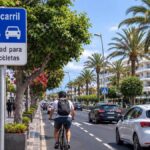
Puerto de la Cruz plans its first shared 30km/h cycle lane

Four hurt in eight-vehicle pile-up at Santa Cruz entrance

Iberia Express to launch free Starlink wifi on Canary Islands flights

Ryanair bomb threat at Tenerife South was a false alarm

Woman, 69, injured in collision on TF-1 in Adeje

Valido demands Canary Islands voice over airports

Canary Islands gains control over its airport network
