South takes the lead in Tenerife’s housing drive
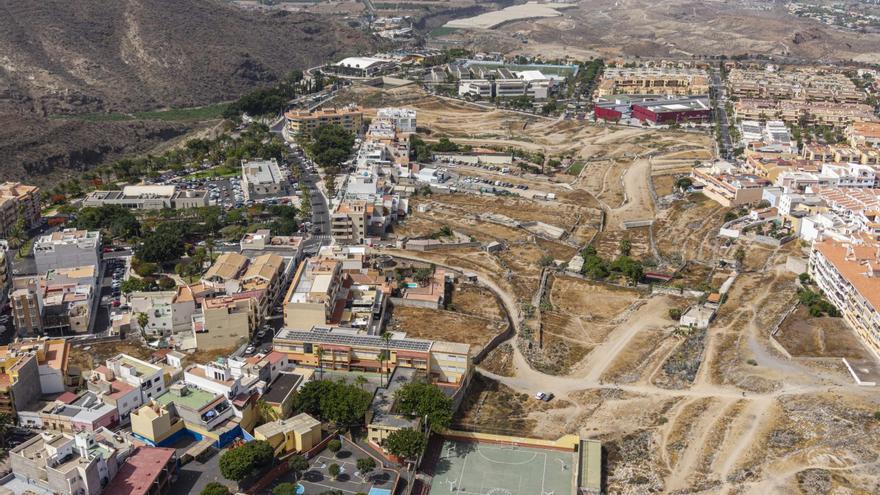
The south of Tenerife has taken the lead in the island’s push to create new housing. The municipalities on this side of the island – particularly those that have grown on the back of tourism – hold the largest reserves of developable land, and after years of drawn-out planning procedures, these are finally beginning to be unlocked. The result is the potential to build more than 6,200 homes, with capacity to house upwards of 15,000 people.
This is not the product of a single project. It is the sum of large and small developments – from newly activated partial plans to individual building schemes – that are at last moving forward. Arona and Adeje account for most of this boom, but the map extends to Granadilla de Abona, San Miguel de Abona, Guía de Isora, Santiago del Teide and Güímar too. The bulk of the land is zoned for private development, with between 20% and 30% earmarked for subsidised housing. Above all, however, the groundwork is being laid for a major economic movement over the next decade, worth more than €1.4 billion once land acquisition, construction and final marketing are taken into account.
Why the south is growing so fast
Beyond the sheer availability of large plots of developable land trapped in red tape for decades, demographic data explains why this residential transformation is concentrated precisely in the most arid part of the island. The south’s 12 municipalities are home to 330,349 people, compared with 211,957 in Santa Cruz de Tenerife. Together, they have 118,392 more residents than the capital. Adeje’s population has grown by 258% since the turn of the century, San Miguel de Abona by 209%, Granadilla de Abona by 170% and Arona by 121%.
The pressure to provide housing is therefore not a future projection. It is the direct consequence of growth that has been reshaping the south for more than two decades, closely linked to tourism development, economic activity and an influx of new residents. On top of that, the housing crisis – spiralling prices and a lack of options in the conventional rental market – means many people are simply unable to find a home. In this context, the need for new housing has become urgent.
Arona: the heart of the housing boom
Within this landscape, Arona occupies centre stage. It is the most populous municipality in the south, with 89,036 registered residents, and has some of the largest residential land reserves on the island. Among these, El Mojón stands out: a one-million-square-metre site – the largest tract of developable land in the Canary Islands – set to deliver 2,200 homes. After more than 30 years of paralysis, the town hall has finally reactivated the project by beginning to issue licences.
But Arona’s residential future does not rest solely on this new district rising above Los Cristianos. The municipality is also undergoing a significant shift in the pace at which planning permissions are being granted beyond El Mojón. Between February 2025 and June 2026, the town hall’s planning department issued 181 major works licences, 43 of which were for building works. These allow for the construction of 547 new homes across different parts of Arona. The figure is all the more striking when set against the previous five years, during which only five building licences were granted. The leap recorded over the past 18 months marks a substantial change in Arona’s ability to turn planning files into actual residential projects.
Adeje: the second major driver
The other major piece of this housing launchpad taking shape in the south is in Adeje. The town hall has set in motion the procedures to develop the El Calvario and Adeje 2020 partial plans, two adjoining areas covering 142,441 square metres and providing for 1,120 homes. The operation will allow the town centre to expand and take shape as a new urban area. Added to this are two subsidised housing blocks planned in Los Olivos, with 140 homes, also in the town centre.
Adeje is also under intense demographic pressure: it has gone from just over 14,000 inhabitants at the start of the century to 50,612 residents – the largest percentage increase on the island, at 258%.
Growth spreads across the south
The trend extends to other municipalities. Granadilla has plans for 106 new homes, San Miguel de Abona adds 90, Guía de Isora 24, Santiago del Teide 17 and Güímar a further 30. These figures are lower than those for Arona and Adeje, but they show that residential expansion is not confined to the two biggest tourist municipalities. Granadilla has grown from 20,000 residents to more than 54,000, while San Miguel has reached 24,307. Candelaria and Güímar have also seen significant increases.
The link between population growth and housing supply is key. For years, the number of residents has risen faster than the capacity to generate new housing stock, particularly in the tourist municipalities. The result has been mounting pressure on prices, rents and access to a home for those who work and live in these communities. The unlocking of land now introduces a different possibility. Large urban developments that had been pending for years can at last begin to feed into the growth of towns and cities.
More than homes: building communities
In Arona, El Mojón represents one of the largest operations of its kind, while in Adeje the new partial plans will contribute more than a thousand homes. In total, the municipalities covered by these forecasts will see more than 6,200 new homes. Arona accounts for 4,200 of these across its main identified developments and residential reserves, while Adeje adds 1,260 through new schemes and subsidised housing. The remainder is distributed across the other five municipalities in the south and south-east.
The scale of this growth, however, means housing must be accompanied by new infrastructure. Thousands of additional households mean greater demand for water, sanitation, transport, schools, health centres, green spaces and community facilities. The challenge will not simply be to build homes, but to build communities around them. The demographic map has already indicated which territory will face the greatest housing pressure. The planning map is now beginning to provide the answers.
What’s happening in the Canaries – straight to your phone
News, weather alerts and practical updates – direct from the islands, in English. We live here and know what’s going on – before the international media catch up. Everything lands on our WhatsApp channel – no middlemen, no algorithm. Curated for families, expats and travelers.