Quevedo puts Gran Canaria at the heart of his new album
For years, the path to success seemed to have only one direction: leave the Canary Islands. Move to Madrid, cross the ocean, or seek opportunities far from home. But Quevedo wants to change that narrative. In GQ’s summer cover story, the Gran Canaria-born artist uses the launch of his album ‘El Baifo’ to celebrate his roots and argue that the islands can become a cultural and musical benchmark without always having to look outward.
A declaration of intent
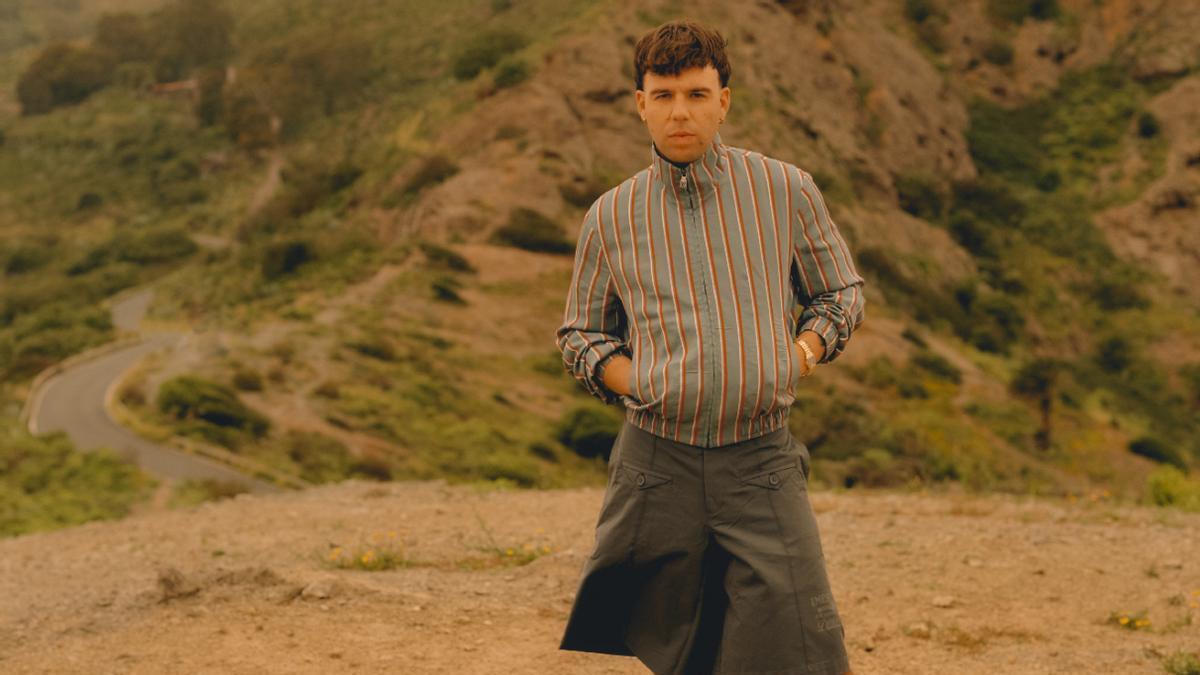
The singer, who chose Gran Canaria as the backdrop for his most personal feature yet, says his new album is born from that very sense of belonging. It is a project about coming home, reclaiming identity, and proving the Canaries have more to offer the world than just beaches and landscapes. The photos were taken in various locations in the north of the island, particularly the municipality of Gáldar, and involved Canarian professionals like photographer Adrián Ríos. Beyond promoting a new album, the feature becomes a declaration of intent regarding Canarian identity and the role the islands can play in the international music industry.
“It’s cool that I was born in Madrid, but I am Canarian. My people are here, my family is here. I feel very rooted to the land, the landscape, the beach, the mountain… It’s personal,” the artist says in the interview.
‘The album I imagined when I started’
After several years of international success, global collaborations, and record-breaking numbers on streaming platforms, Quevedo says ‘El Baifo’ is the project that most closely matches the vision he had when he first started making music. “This is the album I imagined when I started. With my other albums, I was all over the place,” he explains.
The singer insists it is not a folk album, though he acknowledges it is deeply connected to Canarian roots. “The album has that sense of coming home. It’s the perspective of a local lad. There are loads of different rhythms, but it’s not a folía album talking about our roots. It’s an urban album with choruses about love.” However, behind the project lies significant research into the history and culture of the archipelago. The artist admits to consulting historians and anthropologists to delve into elements of Canarian identity that appear in several songs.
Weaving tradition into modern music
The result is an album where references to the islands’ ancient inhabitants sit alongside traditional instruments like the timple and chácaras. It includes tributes to iconic places like Gáldar and collaborations with artists deeply linked to Canarian popular culture. One of the objectives running through the entire project is to help establish the Canary Islands as a musical benchmark in its own right, beyond its individual performers.
During the interview, Quevedo reflects on the need to strengthen a local industry so that future artists can develop their careers without having to leave the islands. He believes the growth of the Canarian music scene is part of a generational chain that began with artists like Cruz Cafuné and will continue with new creators who grew up listening to the music now being produced in the archipelago. He also laments the ingrained idea that, for decades, success meant leaving. “In the Canary Islands, we’ve been brainwashed into thinking you have to go away to succeed, but everyone who leaves wants to come back at some point and wants their children to grow up here,” he says.
Bridges with Latin America
The new album also builds bridges with Latin America, a connection Quevedo considers natural given the historical migration and cultural ties between the Canaries and the Americas. Standout collaborations include names like Tonny Tun Tun and Elvis Crespo, two historic figures in Caribbean music who are very close to Canarian audiences. “Tonny Tun Tun and Elvis are from Puerto Rico, two legendary singers who have been coming to the Carnivals for twenty years. Icons that people love as if they were from here,” he explains.
The artist admits to even being surprised when Elvis Crespo started talking to him about the ancient Guanches. “Elvis the other day was talking to me about the Guanches. I said, what are you on about? How is it possible that a lad from Puerto Rico is talking to me about the Guanches?” he laughs.
Bad Bunny’s influence and personal struggles
The conversation inevitably turns to Bad Bunny, one of the artists who has most influenced the conception of ‘El Baifo’. “Bad Bunny’s album is very inspiring. It’s very well done. It carries a lot of weight. You listen to it and you’re not the same as you were before. It inspired me a lot. Everyone knows I’ve been a mega-fan forever,” he admits. However, Quevedo highlights an important difference: while many artists seek to internationalise by moving away from their place of origin, he has chosen to put the Canary Islands at the centre of the story.
The interview also features some of the singer’s most personal confessions. Quevedo admits going through difficult times due to public exposure and the level of criticism he received on social media. “I have been the most hated person in Spain, easily,” he says. He particularly remembers the constant comments about his physical appearance and how they affected his emotional well-being during the first years of massive success. He also identifies the end of 2023 as one of the most difficult moments of his career. “I hadn’t stopped since my music started taking off, and it got to a point where I didn’t know if it was really what I wanted. I was drifting away from my personal life,” he explains.
A new chapter: roots over records
Despite his international success, Quevedo says he does not see himself spending his life on endless world tours. The singer admits he wants to keep making music, but also to build other projects and dedicate time to his personal and family life. Perhaps that is why the image he projects in this new phase seems different: less focused on numbers and more on his roots. “I think people from here are going to feel represented, and I hope it’s an injection of self-esteem for the Canary Islands, in the sense of feeling proud of being from here and searching for our identity,” he says.
More than an album
With ‘El Baifo’, Quevedo is not just releasing a new album. He is making the Canary Islands a protagonist in an international conversation about identity, culture, and belonging, using one of the biggest media platforms in current music to remind us where he comes from and where he wants to look.
What’s happening in the Canaries – straight to your phone
News, weather alerts and practical updates – direct from the islands, in English. We live here and know what’s going on – before the international media catch up. Everything lands on our WhatsApp channel – no middlemen, no algorithm. Curated for families, expats and travelers.

Los Realejos residents fight on against propane gas plant

Canarias among Spain’s poorest regions as 36.2% live on low incomes

Canary Islands bananas lose ground to imported bananas

Canary Islands bottom of Spain’s social housing table

Three migrant boats reach Canary Islands in 24 hours

Canarias proposes 10-year residency rule to buy property

Gran Canaria hotel maid arrested over stolen gold necklace

Canary Islands plan 10-year residency rule to buy a home

Canary Islands launches empty homes rental scheme