
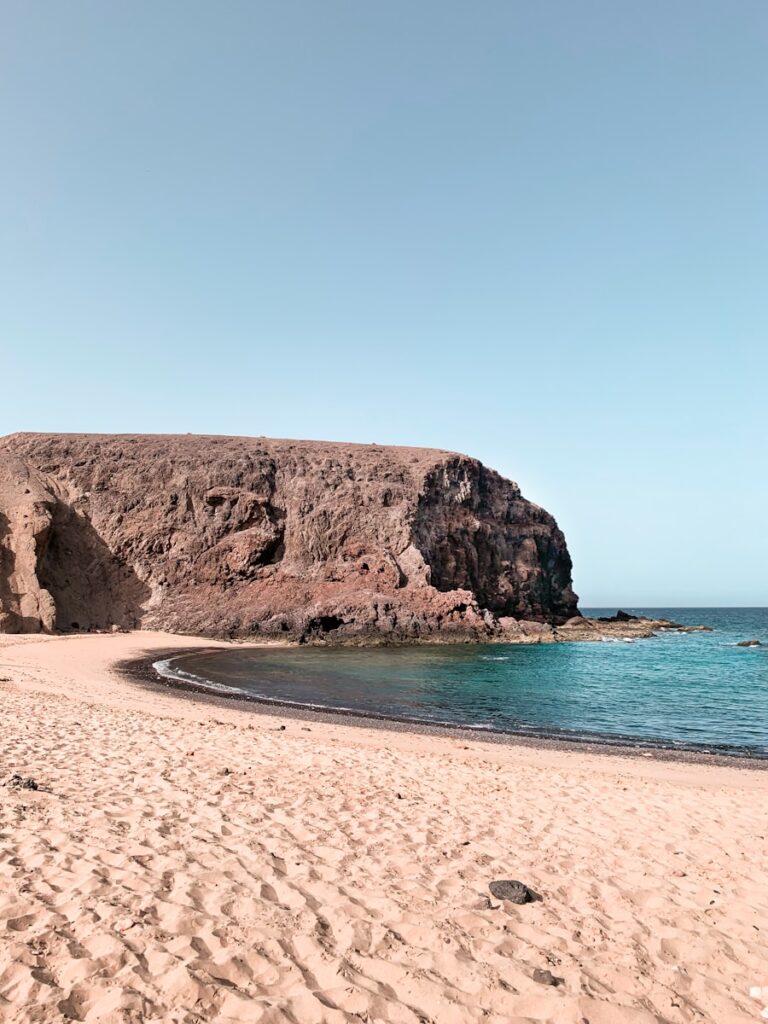
The Papagayo beaches are Lanzarote’s calling card and among the most beautiful shores in the Canary Islands. Tucked into volcanic coves at the island’s southern tip, within the Monumento Natural de Los Ajaches, they offer golden sand, turquoise water and the feeling of stumbling onto a private Caribbean beach.
Not One Beach, but an Entire Archipelago of Coves
Papagayo is not a single beach but a cluster of 6–7 small coves separated by rocky headlands, stretching along the coast. Each has its own character, yet they share one thing — crystal-clear water and golden sand framed by volcanic cliffs.
Walking from Playa Blanca eastward, you pass: Playa Mujeres (the largest, popular with nudists), Playa del Pozo (also known as Playa de la Cruz), Playa de la Cera (intimate and quiet), before reaching Playa Papagayo itself — the most famous, with a chiringuito on the cliff and views of Fuerteventura. Further east lie Caleta del Congrio and Playa Puerto Muelas.
Getting There and Entry Fee
An unpaved road from Playa Blanca (about 3 km) leads to the Papagayo beaches. At the entrance to the Los Ajaches nature reserve there’s a barrier with a booth — the vehicle entry fee is €3. Pedestrians and cyclists enter free. The road is stony but passable in a standard car.
Alternatively, a coastal footpath from Playa Blanca follows the shoreline — the walk to the first beach (Playa Mujeres) takes around 20–25 minutes. Small water taxis also run from Playa Blanca harbour, which is a great option on hot days.
What Makes Papagayo Special
Unlike many Canarian beaches, Papagayo looks almost untouched by mass tourism — despite its enormous popularity. No hotel blocks, no concrete promenades. The only structure in sight is a small chiringuito (beach bar) perched on the cliff above Playa Papagayo, serving simple food and cold drinks with views of Fuerteventura and the tiny island of Lobos.
The water in the coves is calm and shallow — the cliffs shield it from wind and waves. These are ideal conditions for snorkelling: beneath the surface you’ll find shoals of fish, octopuses and colourful anemones on the volcanic rocks. Nudism is practised on some beaches (especially Playa Mujeres and Caleta del Congrio).
Practical Information
- Number of beaches: 6–7 coves
- Entry fee: €3 per vehicle (pedestrians free)
- Facilities: minimal — one chiringuito, no sun loungers or parasols
- Water: calm, warm, ideal for snorkelling
- Nudism: tolerated on several beaches
- What to bring: shoes for the rocky descent, snorkelling gear, water and food
Which Papagayo Beach Is the Best?
It depends on what you’re after. Playa Papagayo is the most scenic and has a bar — but it can also be the most crowded. Playa de la Cera is a good compromise — beautiful yet rarely packed. Playa Mujeres is the largest and easiest to reach from Playa Blanca. For solitude seekers — Caleta del Congrio at the eastern end, where few tourists venture.
Nearby Beaches
Near Playa Blanca it’s also worth visiting Playa Flamingo — a wide, family-friendly beach with full facilities and calm water. On the eastern coast of Lanzarote you’ll find wilder spots like Playa Quemada, a rugged beach beneath volcanic cliffs. And for an entirely different Canarian beach experience, head north to Playa de Famara — the surfer’s paradise with views of the Chinijo Archipelago.
Weather at Papagayo beaches
The Papagayo beaches are a string of pristine coves on Lanzarote’s southern tip, within the Los Ajaches nature reserve. This area is the driest part of the island – rain is exceptionally rare. Check the weather forecast for Playa Blanca, the gateway to Papagayo.