Compiled with the help of artificial intelligence, based on Spanish-language information. Source below the article.
NASA honours the Canary Islands’ 112 emergency centre
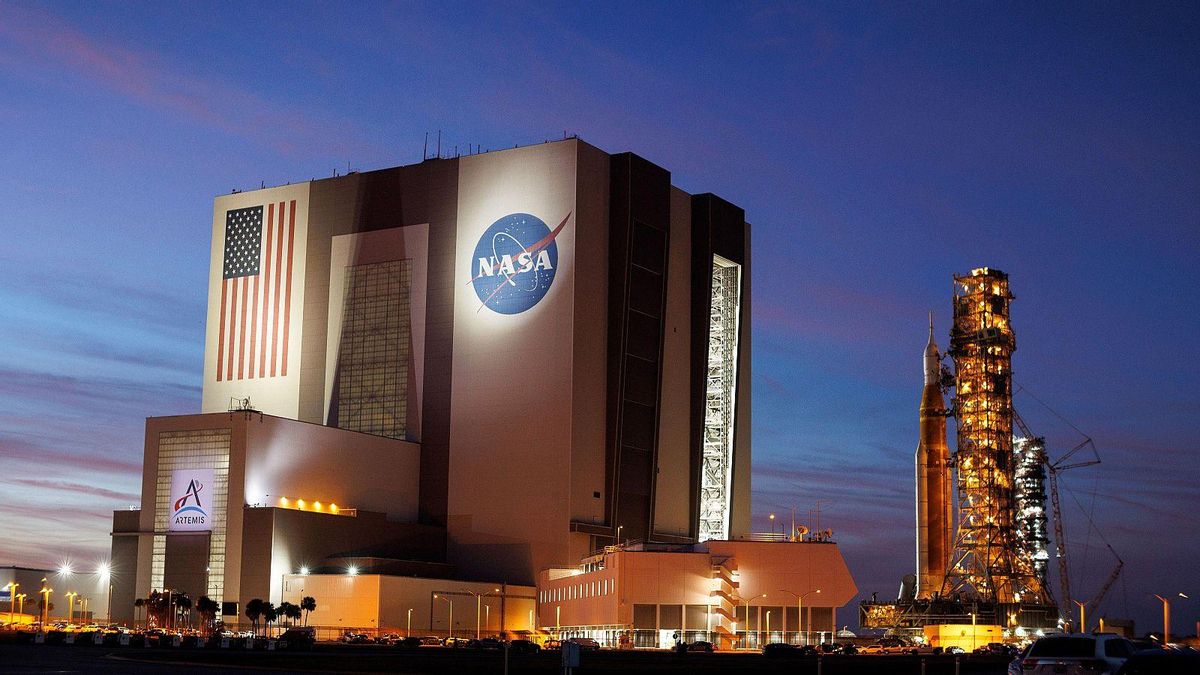
The Canary Islands Emergency and Security Coordination Centre (Cecoes 112) never imagined it would be recognised by the United States government agency responsible for the civilian space programme, known worldwide as NASA. But that is exactly what has happened — and the reason is none other than its strategic role within the Artemis lunar programme.
A visit from NASA in April 2026
In April 2026, the Canary Islands 112 centre received a visit from a NASA technical and medical delegation led by the director of Health and Medical Affairs, James Polk. The purpose was to discuss the theoretical scenario of an emergency splashdown off the Canary Islands coast and to assess whether the archipelago was prepared to serve as the ‘plan B’ should an Artemis spacecraft have to abort its mission and come down in the Atlantic.
During the delegation’s visit, the emergency centre had to demonstrate what its response times would be, what resources it would deploy and how it would manage the resulting chaos. Representatives of the Canary Islands Government showed the space agency the technical and human resources of the regional emergency system, as well as the real operation of the 112 operations rooms and their coordination mechanisms. The 112 officials, for their part, set out their action protocols in detail, demonstrating their immediate capacity to track and alert nearby vessels in the splashdown area, mobilise rescue resources and prepare hospital care simultaneously.
Two critical fronts in an emergency
The success of this logistical demonstration led the American agency to grant them the official recognition awarded last week. But what happens now? There are two critical fronts the Canary Islands would have to face if such an emergency were to occur.
Firstly, the rescue of the astronauts. The centres in Tenerife and Gran Canaria would have to coordinate, under a single command, rescue helicopters (such as those operated by Helimer), fast rescue vessels, military personnel and highly specialised medical teams to stabilise the crew and evacuate them to hospitals in the islands.
The second front would be securing the impact zone. The capsule, travelling at thousands of kilometres per hour and containing highly dangerous materials, would require the 112 service to track, alert and clear all civil maritime traffic — fishing boats, commercial vessels and pleasure craft — across a wide perimeter to avoid tragedies.
A validation of protocols with room to grow
For now, this is simply a validation of protocols. The archipelago’s main challenge will be to ensure the recognition translates into joint exercises on the ground, specialised training for Canarian medical staff or funded technological improvements for the operations room.
There is also a historic backdrop to all of this. On 21 July 1969, Maspalomas in Gran Canaria became the first place on Earth to hear Neil Armstrong speak from the Moon. The famous phrase — “That’s one small step for man, one giant leap for mankind” — which has preceded astronomical milestones for decades, bounced off the enormous antennas installed among the Canary Islands dunes, acting as a vital telecommunications bridge for the lunar module before reaching mission control in Houston and televisions around the world.
To this day, the Maspalomas station is operated by INTA (the National Institute of Aerospace Technology), but its link with NASA remains intact. In the recent Artemis II mission (April 2026), which carried four astronauts into orbit around the Moon, the Canary Islands Space Centre once again acted as a communications bridge for receiving and transmitting telemetry data and vital instructions between the spacecraft and mission control in Houston.
What is the Artemis programme?
The Artemis programme is a space exploration project led by NASA to return humans to the Moon, establish a sustainable long-term presence and use it as a springboard for future crewed missions to Mars. Following the historic landings of the Apollo programme more than half a century ago, Artemis seeks to go one step further. Among its major objectives is the exploration of the lunar south pole (where there is ice that can be used to extract water and fuel) and the construction of a permanent base. Although the schedule has undergone technical adjustments, NASA expects the first crewed landing of this new era (the Artemis IV mission) to take place around 2028.
The growing interest in the Canary Islands and the recent recognition granted by NASA stem from the fact that the archipelago has become a fundamental piece in ensuring the safety of the programme’s astronauts.
What’s happening in the Canaries – straight to your phone
News, weather alerts and practical updates – direct from the islands, in English. We live here and know what’s going on – before the international media catch up. Everything lands on our WhatsApp channel – no middlemen, no algorithm. Curated for families, expats and travelers.
Illegal gravel extraction on La Palma volcano lava fields
Two Tenerife beaches reopen after water quality alert
Canary Islands satellite spots oil spill from space
Two more Tenerife beaches closed over sewage contamination
Tajogaite’s scientific legacy five years on
Magnitude 3.0 earthquake recorded west of Lanzarote
Canary Islands look to volcanic heat for energy

Canary Islands’ ancient potatoes face climate threat
Tenerife deploys drones to cut drowning deaths