
Stranded in a Legal Limbo
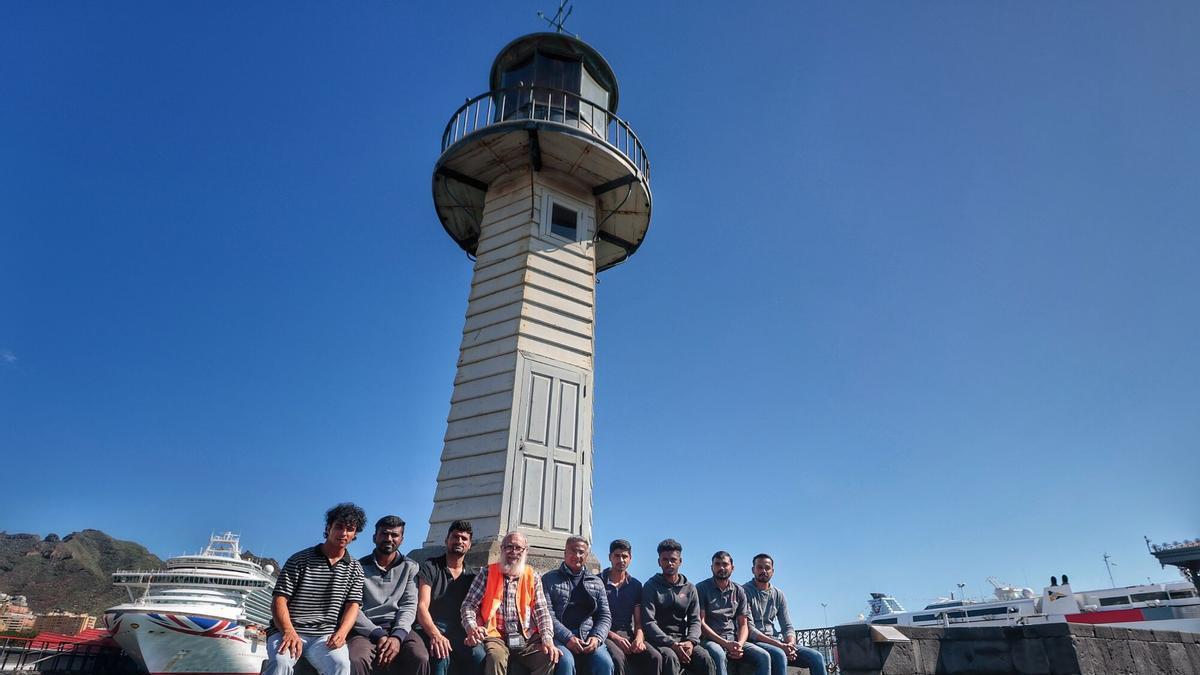
They did not arrive in Tenerife in January seeking a paradise island or of their own free will. They wanted to work on a ship, send money home, and start repaying debts incurred by their families in India. Today, two months later, Amitkumar, Chandrasen, Vishal, Shivaraj, Deepanshu, Himanshu and Asif remain on dry land, trapped in a foreign country whose language they do not understand, with no income, no work permit, and awaiting a judicial process that has put their lives on hold. They are in limbo. The seven men are aged between 20 and 26.
From Crew to Witnesses in a Major Drug Bust
They were part of the crew of the drug vessel, the United S, intercepted on the high seas while transporting a shipment of 10 tonnes of cocaine—the largest high-seas intervention in European history and among the five largest in the world. Since then, their journey is no longer measured in nautical miles, but in court appearances, nights of uncertainty, and anguished phone calls home. Only solidarity allows them to survive.
Of the thirteen crew members on board, six remain in pre-trial detention. The other seven, Indian nationals, are on provisional release, albeit with precautionary measures that severely restrict their mobility. Their passports have been confiscated, they must appear weekly before a court in Tenerife, and they cannot leave Spain.
A Potential Case of Human Trafficking
But beyond the criminal proceedings, another, less visible and profoundly human story unfolds. It is the story of young sailors who, according to information gathered by the International Transport Workers’ Federation (ITF) through its inspector in the Canaries, Gonzalo Galán, may have suffered a potential situation of human trafficking for the purpose of labour exploitation and forced work. The sailors—the truth is that six had never sailed before—were hired by the Turkish company Sea Dream Shipping.
They each paid between $4,000 and $6,000 to be able to board, following instructions from intermediaries in their country. It was the price of an opportunity. Or so they and their families believed, many of whom took out loans to raise the money. Two of the seven have not even told their real situation for fear of worsening their loved ones’ health problems.
A Journey from Hope to Coercion
They boarded in Egypt after an intensive six-month course to go from students in villages and cities across that immense melting pot that is India—they hail from Bombay, the north and the south—to sailors. All was well at first, but problems started in Brazil. On 16 October 2025, the United S changed ownership and passed into the hands of the company Capo Maritime, registered in Honduras. After that operation, part of the crew left the vessel, but the Indian sailors remained on board with the promise they would be paid what they were owed. That did not happen.
According to their testimonies, after loading salt in the port of Fortaleza, Brazil, the ship was boarded on the high seas by two armed individuals who allegedly forced the crew to participate in loading the drugs under threat of being killed and thrown overboard. This episode encapsulates much of the drama of young workers, in debt, unpaid, and in a position of extreme dependency, trapped on a vessel that ended up as the stage for an international criminal case.
Life Ashore: Surviving on Charity
And that limbo did not end when they touched land. After being granted provisional release, the seven sailors initially spent two nights without accommodation, until the organisation Stella Maris—in whose tiny headquarters in the port all seven ended up sleeping—gave them support. Later, their temporary stay on the seized vessel was authorised, but it did not meet minimum living conditions due to generator failures and a flood in the engine room. The ship had to be evacuated on the 6th of this month.
Since then, they have been housed in the Casa del Mar. The stay, which was initially due to expire tomorrow, Monday 23 March, has been extended at the eleventh hour until 6 April. The extension alleviates the immediate problem but does not resolve what will happen afterwards. The Social Services of Santa Cruz City Council, the Port Authority, and the Tenerife Port Welfare Commission are working to find a more stable housing solution. For now, there is no confirmed alternative after that date.
Waiting Without a Future
Meanwhile, the seven continue to wait. They cannot return to India. They cannot board a ship. They cannot work. They have no income. And on the other end of the phone—they have mobiles thanks to charity as their own are impounded—humble families who borrowed money to finance a job that never brought a salary, only silence, await them. Their gaze is sad, except when the restless and wise Amit, the cousins Deepanshu and Himanshu, or Asif, the cook, observe alongside the rest of their companions their guardian angels.
Juan Esteban Pérez, of Stella Maris, at 83 years old, maintains an intact spirit of helping seafarers with no expectation of return. Sunil Rijhwani from Puerto de la Cruz, president of the Hindu Community of North Tenerife, acts as a translator and has been by their side from minute one. Juan Esteban also mentions an Indian sailor, Nithi, who travelled from Las Palmas to support them. Most are only children and all carry a responsibility that is not only economic, but also moral due to the weight of not failing.
A Story Spanning Two Continents
The story does not have just one setting in the port of Santa Cruz but also extends to India, to those homes where a remittance that never arrives is still expected. The ITF continues to monitor the case from a labour and humanitarian perspective and has brought the situation to the attention of the national authorities, as well as alerting the Indian Embassy in Spain. What has the Embassy done? The answer is unanimous: “They have not contacted us.”
Their life in the island’s capital is one of continuous, aimless walking. Stella Maris provides breakfast and they have lunch at the Municipal Shelter. They are seven, but they function almost as a single organism. Alive and active by age, but paralysed by an uncertain future. The situation of these sailors reflects the vulnerability and abandonment of many maritime workers. They only ask for one thing: to work, while they wait in this limbo. To earn a wage and help their families. Dignity until Justice decides what to do with their lives. They are sailors without a ship and witnesses without a horizon. The vessel remains motionless in the port. So do they. Stranded on land.

Canary Islands Government Reopens Key Urban Planning Funding

Canary Islands Announce 686 New Teaching Posts

Tenerife Hospital Saves 97% with 3D-Printed Therapy Tools

Tenerife Funds €350k for Cancer Support Home for Children

Holiday Rentals in Canaries Fall to Two-Year Low

Canary Islands Drafts New Coastal Law to Seize Control from State

Euribor Rise Alerts Canary Island Homeowners

Canary Islands See Surge in Incoming Workers as Labour Trend Shifts

Mogán’s Urban Plan Sparks Legal and Community Row
