
Easter Week Begins with Heritage and Flavour
Experiencing the island’s traditions and trades up close, whilst sampling one of the flagship products of the municipality of El Rosario, proved to be the perfect combination to kick off Holy Week. The town hall square was transformed into the bustling hub for Traditions Day, an event celebrating its eleventh edition which brought together residents and visitors to learn more about the archipelago’s indigenous culture. Craftsmanship, agriculture, and livestock farming shared the stage with another event held yesterday in the town: the first Artichoke Festival, paying homage to one of the products most intimately linked to this Tenerife municipality.
A Showcase of Canarian Craft and Culture
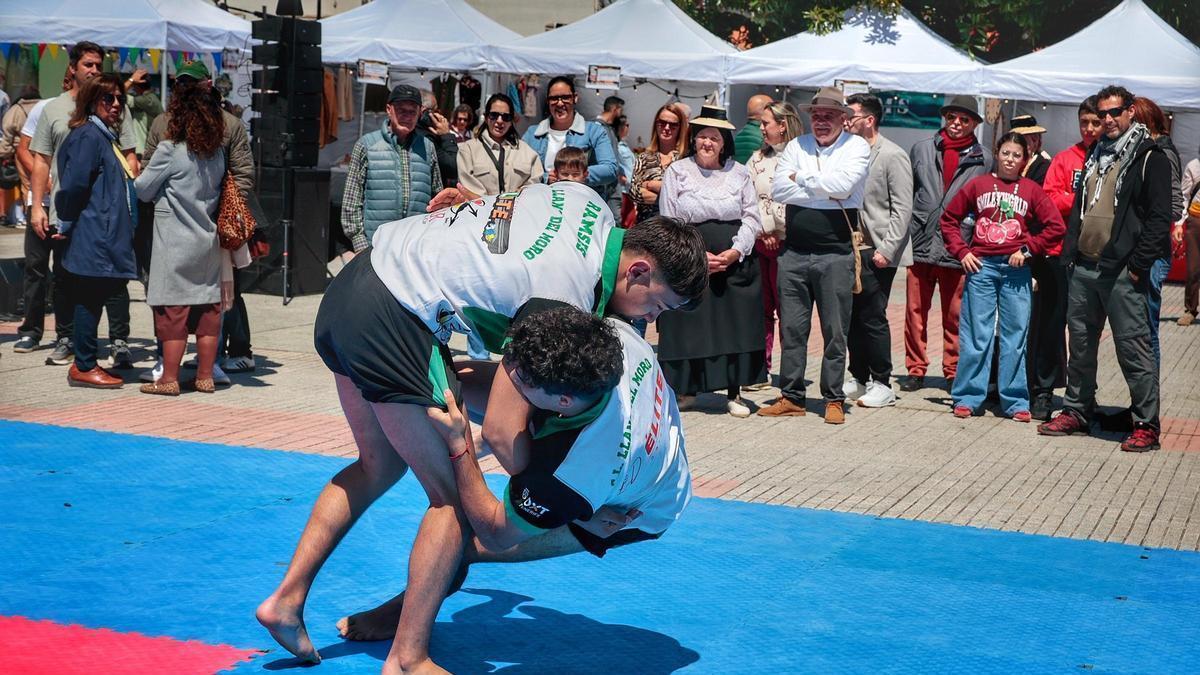
From mid-morning, the public gathered in the square in front of the town hall to enjoy the craft displays. Jewellery, basket weaving, toy-making, and traditional textiles—among which, of course, the iconic ‘manta esperancera’ blanket could not be missing—showcased their creations to curious onlookers who chose to spend the first morning of one of the year’s holiday periods in this way. On an improvised stage in the middle of the square, there were exhibitions of ‘juego del palo’ (stick fighting) by the Los Verga family; a theatrical musical performance titled ‘Traditions of My Land’ by the El Rosario ‘pulso y púa’ course and the ‘El Abuelo’ folk group; and a display of Canarian wrestling by the Llano del Moro club.
Livestock Fascinates the Youngest Visitors
Not far away, on the open ground next to the Post Office, was another focal point of the day, especially for visitors accompanied by children. The livestock display brought together cows, oxen, goats, sheep, and donkeys that fascinated the youngsters, who were able to get close to the animals. A traditional threshing demonstration also took place there. The task involved spreading dry grain—wheat or barley—on a circular threshing floor and driving a yoke of oxen over it, pulling a threshing board, a wooden plank with stones on the underside to separate the grain from the straw. Some children even dared to try and climb onto the threshing board to immerse themselves in the traditions.
“My grandparents had goats, chickens, and rabbits. My parents no longer had animals at home, and neither do we. We are the last generation that had closer contact with livestock,” explains Delia Guzmán. That’s why, now that she has one child and another on the way, she seizes every opportunity for her son Alberto to interact with animals. “These kinds of events are increasingly necessary because for many children, it’s almost the only time they can be near cows, sheep, or donkeys and learn directly,” she notes. The livestock displays are also a small boost for the farmers’ activity, who for years have complained of difficulties in raising their animals due to rising costs. “I have far fewer than before. I’ve had to reduce numbers, some have died, and you just can’t maintain more,” one farmer remarked to a colleague.
A Celebration of the Local Artichoke
After the obligatory stop at the livestock display, shortly after 12:30 pm, activity began at the Artichoke Festival with the opening of the food stalls. Visitors flocked en masse to sample some of the tapas on offer. Paella, meat in sauce, fideuá, fried artichoke, and tartare were just some of the delicacies available for four euros, provided by Bar Cuatro Caminos, El Jeito Vuelta de Tuerca, The Roots, and Restaurante Canario El Chismoso.
This festival, which complements the Artichoke Tapas Route that has been running in the municipality for years, aims to highlight a product intimately linked to El Rosario. The artichoke is so representative of the area that almost 80% of the land cultivated with it across the entire Canary Archipelago is located within this municipality. Promoting the versatility of this product, its flavour, and boosting it as a local ingredient were some of the goals of the event, where attendees could also learn more about the reality of this crop in El Rosario. To this end, talks were given by Luisa Trujillo, an agricultural engineer and Agrarian Extension Agent, who spoke about prospecting for historic artichoke varieties of La Esperanza, and Belarmino Santos, an agent from the Tenerife Island Council and a horticulture specialist.

The Hidden Cost of Holy Week in the Canary Islands

Maspalomas Carnival Grand Parade Dazzles with Circus Theme

Maspalomas Drag Gala Captivates Millions on National TV

Burger Fest Canaria: Europe’s Biggest Gourmet Burger Festival

Tenerife Chef to Compete in Spain’s National Rice Cooking Contest

Broadway Star Patti LuPone Headlines Veranos del Taoro Festival

Final Sessions of International Sustainability Forum in Adeje

Europe’s Biggest Gourmet Burger Festival Lands in Tenerife

Festivals Under Fire: The Clash Between Tradition and Tranquillity
