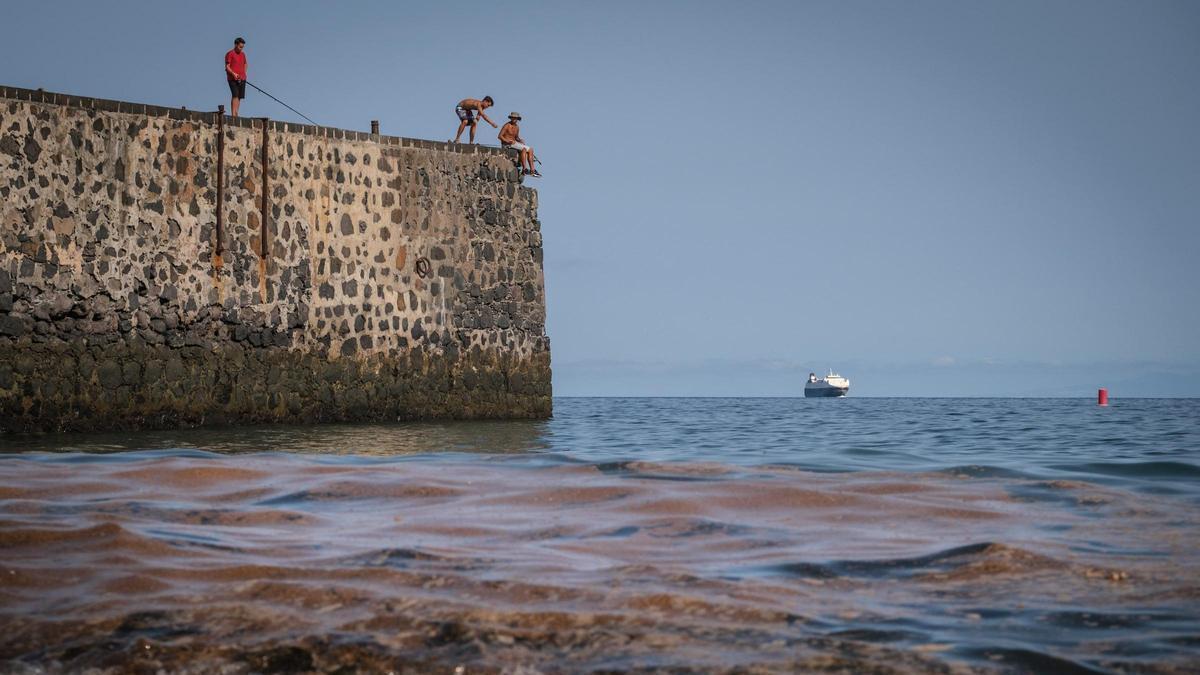
Discharging will no longer be free
For the first time, the Canary Islands are set to introduce a specific fee for discharging wastewater into the sea. The measure forms part of a new regional regulation – currently open for public consultation until 30 June – which will give the islands their own legislative tool to regulate the activity and protect marine ecosystems.
The text, driven by the Canary Islands Government’s Ministry for Ecological Transition and Energy, establishes that holders of authorised discharge permits – 109 points according to the 2025 census – will have to pay a sum calculated based on the volume discharged and its pollutant load. The regional government expects to raise around five million euros annually, although this will depend on the number of discharges. Unauthorised discharges – 180 according to the latest data – will face the penalty regime.
A watershed moment for coastal management
The creation of this fee marks a before-and-after moment in the management of wastewater that ends up on the Canary Islands’ coastline. Until now, those with administrative authorisation could discharge without facing any specific payment. With the new regulation, the Executive introduces for the first time an economic instrument designed to link the environmental cost of discharges with the obligation to contribute to their reduction.
“For the first time, a regulation of this fee appears in the Canary Islands, which did not appear, which did not exist,” explains Ángel Montañés, Director General of Environmental Quality for the Canary Islands Government. “The aim is to create an incentive to reduce these emissions and allocate resources to improving the current situation. There are many investments that need to be made to correct the current situation. Once the revenue comes in, we will decide which are the priorities,” the official adds, regarding the actions to which the revenue will be directed.
How the fee will be calculated
The payment will not be a fixed amount for everyone. The decree sets the value of the so-called “pollution unit” at 3,000 euros, which will serve as the basis for calculating how much each holder must pay. From there, the bill will depend on the maximum authorised discharge volume per year and a coefficient that takes into account the type of water being discharged, the pipeline used, and the presence of polluting substances. The result? The more you discharge and the greater the environmental impact, the more you will pay.
Ending regulatory fragmentation
But the fee is not the only novelty included in the regional regulation. Above all, the text seeks to bring order to a matter that until now was regulated through the application of various state regulations and a technical guide approved in 2017, which was advisory in nature and had no binding legal force. This fragmentation and dispersion has for years hindered both the processing of authorisations and the effective control of discharges.
“What we are looking for is to simplify and speed up the administrative procedure,” Montañés points out. The intention is that those activities whose discharges can be legally authorised can obtain permits within reasonable timeframes and under clear conditions of environmental control. Therefore, the new regulation governs everything from authorisation procedures to inspection, surveillance, registration, fee and penalty systems.
What discharges are affected?
It will affect any discharge, direct or indirect, made from land into the Canary Islands’ maritime-terrestrial public domain, regardless of its nature or physical state. In practice, this includes urban, domestic, industrial, rainwater, livestock wastewater, and overflows from sewerage networks. The text is clear and introduces an express prohibition that “no potentially polluting discharge may be carried out without prior administrative authorisation.” The possibility of authorising certain industrial discharges in especially sensitive areas, such as bathing areas, protected spaces or vulnerable sites, is restricted.
Adapting existing permits
Final approval of the decree will also require a review of already-approved authorisations. The regulation establishes that all current permits must be adapted to the new legislation within a maximum period of four years from its entry into force. The decree also stipulates that those responsible for unauthorised discharges will have one year from when the regulation comes into effect to apply for the corresponding authorisation.
The ministry led by Mariano Hernández Zapata also aims to promote transparency. The future regulation incorporates the idea of activating a Register of Discharges from Land to the Maritime-Terrestrial Public Domain of the Canary Islands, which will serve to prepare censuses, inventories, statistics and action plans, as well as “facilitate the exchange of information with other administrations.” Exactly a year ago the ministry presented an update of the islands’ discharge census, which can be consulted through the Grafcan viewer.