
Canary Islands Push for Maximum Autonomy with New Coastal Law
The future Canary Islands Coastal Law is being positioned as a “maximum” bet in the defence of self-government, according to Antonio Acosta, Director General of Coasts and Maritime Space Management. The regional government aims to assume all powers granted to it by Article 157 of the 2018 Statute of Autonomy, many of which remain under state control despite the 2022 transfer of Coastal responsibilities. The text being prepared by the Ministry of Public Works, Housing and Mobility seeks control over its seas, to regulate the tourist use of the coastline and urban areas, and to manage the fees for using the public maritime-terrestrial domain.
Public Consultation Now Underway
This process has already begun with the public preview of the report defining the law’s objectives, open to citizens since last Monday and for one month. The goal is to gather input from citizens, administrations, and relevant sectors before drafting the preliminary bill of the Canary Islands Coastal and Littoral Management Law, which will subsequently undergo a new participatory process. The government hopes the law will be passed during this legislative term.
Managing the “Water Layer” and Tourism
One of the fundamental pillars of this law is the integrated management of the so-called “water layer” or maritime space, explains Antonio Acosta. Traditionally, the coast has been thought of only as land, forgetting that the Canaries have “more sea than land” and that this space is part of its territorial reality, he adds. The law aims to regulate activities that today face complex procedures with the state, from recreational uses to environmental or energy projects, such as offshore wind. “When we touch the water layer, we have many components there and we are in a continuous battle with the State,” he explains.
Regarding tourism—which represents around 80% of the GDP in the Canaries and is concentrated on the coast—the philosophy of the law is to improve the quality of existing facilities. This ranges from seasonal services on beaches, such as kiosks, sun loungers, and umbrellas, to the remodelling of hotel infrastructure already occupying the coastline, although the door is not closed to new constructions.
Financial Conflict and Coastal Settlements
The financial conflict is another major point of friction. Currently, the State collects 100% of the fees for occupying the public maritime-terrestrial domain—hotels, concessions, or businesses on beaches—while the Canary Islands assume the management costs following the transfer of powers. According to Acosta, this revenue amounts to around €16 million annually, compared to a state investment that is “practically nil,” barely reaching one million euros, while the region bears management costs of over two million.
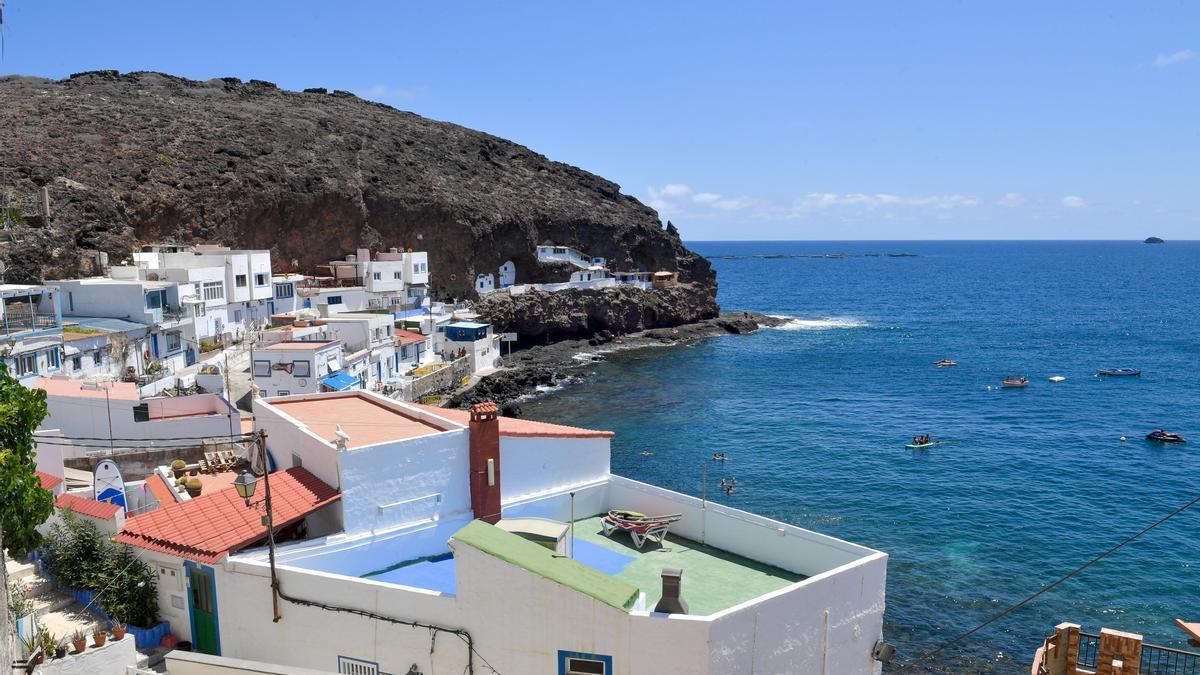
Regarding coastal settlements, the law seeks balance. The government is working on a census to identify settlements with heritage value that can be maintained, as opposed to illegal situations that will need to be reviewed. “We cannot consider rolling everything back,” warns Acosta.
A Participative Process with a Tight Timeline
The process will be participative. After this initial phase, the government will draft a bill and reopen it for contributions. It also plans to meet with the Canary Islands Federation of Municipalities (FECAM), the Island Councils (FECAI), planning departments and economic sectors, as well as organising a forum in the Canaries with other autonomous communities. The goal is for the law to enter Parliament in 2026, although the schedule will depend on the volume of input.
Challenging an “Obsolete” State Law
In parallel, a common front is maintained with regions like Galicia, Cantabria, or the Balearic Islands to demand changes to the 1988 state law, especially on issues such as fees or concessions. Antonio Acosta argues that this state law has become obsolete because the reality of the autonomous communities, the morphology of the coast, and socioeconomic relations have changed drastically since then.
The precedent of other communities that have already passed their own laws anticipates a possible appeal by the State to the Constitutional Court. Even so, the regional government is clear. “Our law will go for the maximum,” insists Acosta. And, if there is no agreement, the conflict will be resolved where it has happened before: in the courts.
Minister Cites State “Invasion” of Powers
The Minister of Public Works, Housing and Mobility, Pablo Rodríguez, maintains that this law seeks to “put an end to the permanent conflict” with the State’s Directorate-General for the Coast. Since the approval of the reform of the Statute of Autonomy in 2018, the relationship with the State has been tense, especially after the 2022 transfer of Coastal powers, which the minister describes as “absolutely insufficient, miserly, and even contrary to the law.”
Rodríguez emphasised that the State reserved powers that should be exclusive to the Autonomous Community, trying to go beyond the legal framework. As examples of this “invasion,” the minister pointed to the opening of demolition proceedings in coastal towns decades old and state interference in hotel concessions in Fuerteventura. In the latter case, this refers to the Ministry for Ecological Transition’s decision on the expiry of the concession and, therefore, the potential demolition of the Riu Oliva Beach hotel in the Dunas de Corralejo (Fuerteventura), a matter that is still in the courts.

Canary Islands Announce 686 New Teaching Posts

Tenerife Hospital Saves 97% with 3D-Printed Therapy Tools

Tenerife Funds €350k for Cancer Support Home for Children

Holiday Rentals in Canaries Fall to Two-Year Low

Euribor Rise Alerts Canary Island Homeowners

Canary Islands See Surge in Incoming Workers as Labour Trend Shifts

Mogán’s Urban Plan Sparks Legal and Community Row

Canarian Charity Opens Hotel School in Senegal to Fight Illiteracy

Canary Islands’ First Home-Grown Assistance Dog Trainers
