Record investment in Canary Islands and Balearic hotels
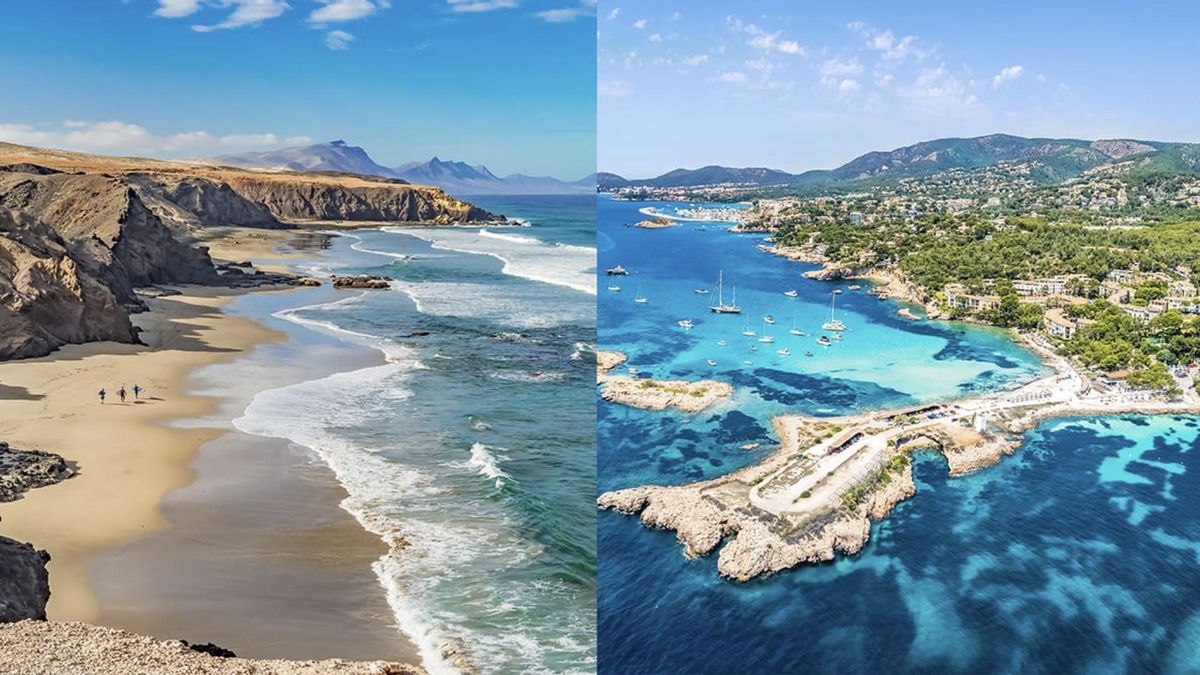
Real estate consultancy Colliers Iberia has just published a report on tourism sector profitability in the Canary Islands and Balearics, highlighting that both archipelagos have cemented their status as major drivers of hotel investment in the European holiday segment, attracting over €1 billion annually. However, Laura Hernando, director general of hotels and future CEO of Colliers Iberia, adds that constraining supply will be key to maintaining profitability and investor interest in the coming years.
€8.1 billion in joint investment since 2019
According to the “Destination Islands: Canaries vs. Balearics 2026” report compiled by Colliers, both archipelagos have captured a combined investment of €8.1 billion between 2019 and 2025, with nearly €7 billion of this figure concentrated in the last five years alone. This renewed investment cycle is underpinned by profitability indicators at record levels.
Revenue per room reaches historic highs
Revenue per available room (RevPAR) has reached historic highs in both regions, standing at €120 in the Canary Islands (up 5.6% year-on-year) and €129 in the Balearics (up 8.7%), guaranteeing the continued flow of capital towards hotel assets in the islands. Tourist spending has also climbed to figures never seen before in 2025. In the Canary Islands’ case, total expenditure rose to €24.4 billion (6.8% more than the previous year), with an average daily spend per tourist of €191. The Balearics, meanwhile, recorded expenditure of €21.06 billion (up 5.2%), with a notable daily spend of €214, a figure significantly above the national average.
Average daily rates on the rise
In terms of rates, the average daily rate (ADR) in the Canary Islands stood at €142, while in the Balearics it climbed to an overall average of €153, with Ibiza and Formentera leading the luxury segment with an ADR of €199. According to Gonzalo Gutiérrez, managing director of Hotels at Colliers, the Canary Islands face the future from a position of clear strength, supported by year-round operations, robust demand, and extensive repositioning opportunities. “The archipelago has consolidated its position as the leading holiday destination for hotel investment in Spain, with positive prospects for improving the main hotel profitability indicators.”
Constrained supply boosts market stability
The report highlights that market stability is bolstered by a structurally constrained supply. While hotel supply in the Canary Islands contracted by 1.2% in 2025 – partly due to closures for comprehensive refurbishments – bed growth in the Balearics slowed to 0.6%, its lowest rate in five years. Regulatory developments in both archipelagos are prioritising asset repositioning and value generation over volume growth. Laura Hernando, director general of hotels and future CEO of Colliers Iberia, says that constraining supply will be key to maintaining profitability and investor interest in the coming years.
A resilient tourism model
Colliers points out that the islands’ tourism model shows great resilience. The Canary Islands have become the leading holiday destination for investment thanks to their year-round operations, while the Balearics stand out for the growing interest from high-end brands, reinforcing their premium profile for long-term investment strategies. In total, between 2021 and 2025, combined tourist spending in the two archipelagos exceeded €173 billion, reflecting a shift in model focused on quality and attracting demand with higher spending capacity.
What’s happening in the Canaries – straight to your phone
News, weather alerts and practical updates – direct from the islands, in English. We live here and know what’s going on – before the international media catch up. Everything lands on our WhatsApp channel – no middlemen, no algorithm. Curated for families, expats and travelers.

Tenerife faces huge tourism expansion despite moratorium calls

El Bejeque in Las Canteras adds sea to its fire

Siam Park Gran Canaria must build its own desalination plant
Fuerteventura’s biggest resort to open on 1 November
Gran Canaria to teach tourism history in schools
Canary Islands see 0.3% rise in foreign tourists in August

Row over 368-bed hotel project in La Gomera

Spanish astronaut trains in Lanzarote for Moon mission

Tivoli La Caleta hosts first red tuna Kaitai in Canarias