
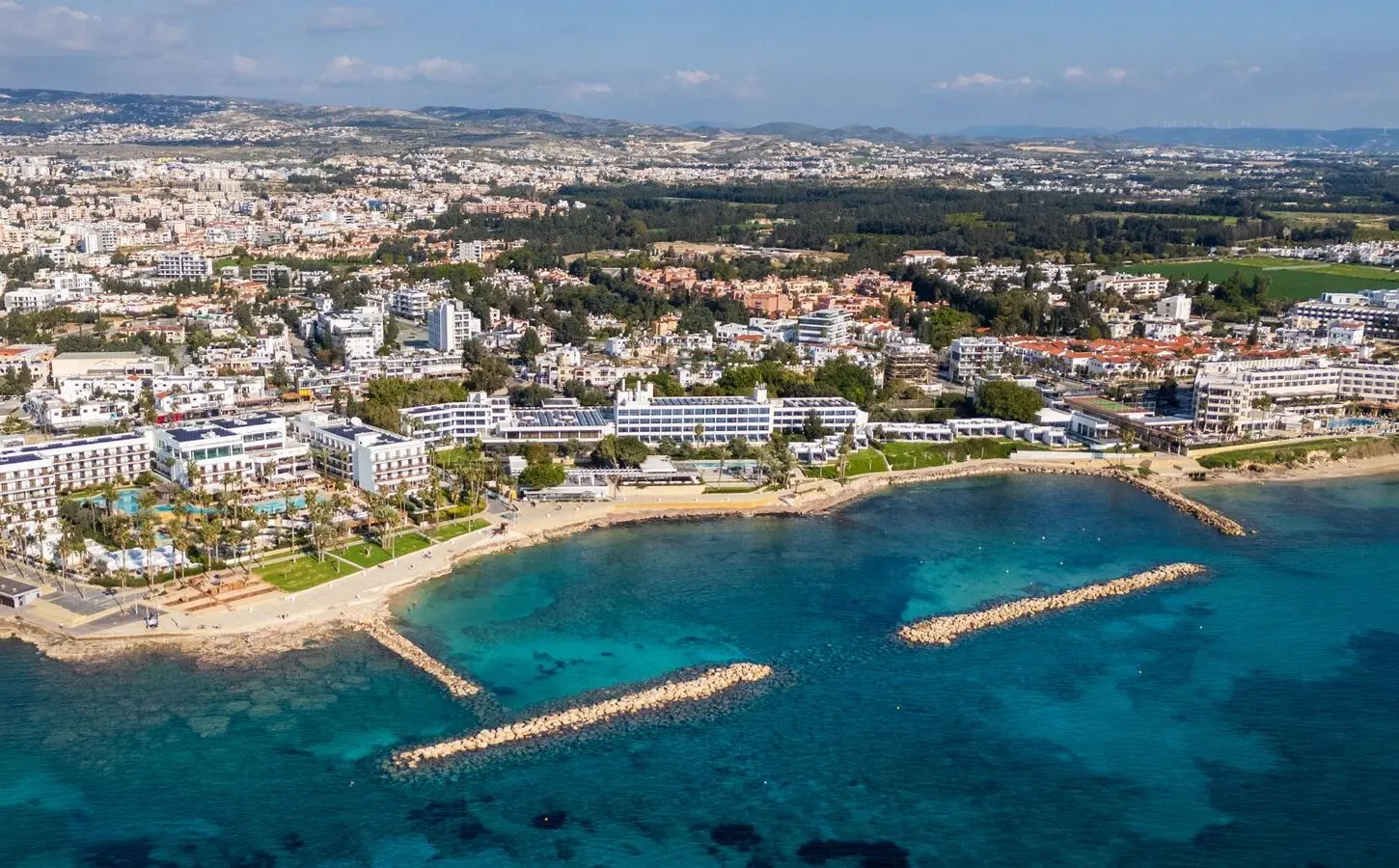
When planning a family trip to Cyprus, Larnaca with kids is often the natural first choice. The city, home to the island’s main airport, offers families very convenient logistics, gentle and safe beaches, and a relaxed pace. Our step-by-step guide explains why this region is worth considering as a base and how to organise your time to keep both younger and older children happy. For general tips on travelling around the whole island, read our comprehensive guide Cyprus with kids, which will help you sort out the logistics of your whole Cypriot holiday.
This guide has no superficial descriptions or unverified hotels. We focus on the specifics: from 2026 ticket prices and exact opening hours to practical tips on avoiding crowds and planning routes. We take a close look at the famous camel park, assess the city and suburban beaches, and clear up a popular myth about the local aquarium. We point out quiet corners where you can escape the sun, and show you how to plan meals in Cypriot tavernas sensibly so you don’t waste food or money. Expect a solid dose of practical knowledge.
- Larnaca as a base for exploring Cyprus
- 1. Camel Park Mazotos – camels in Cyprus and family fun
- 2. Beaches in Larnaca – where to spend time by the water, or Larnaca beaches for families
- 3. Larnaca Salt Lake and flamingos in Cyprus – winter birdwatching
- 4. Church of Saint Lazarus – what to see in Larnaca on a walk
- 5. Larnaca Medieval Castle – historic attractions in the centre
- 6. Protaras Ocean Aquarium – why there is no aquarium in Larnaca
- The best family trips from Larnaca
- Paphos or Larnaca – which is better for a family holiday?
- Where to stay in Larnaca with children
- What to eat in Larnaca with children
- Getting to Larnaca and getting around
- A 5-day plan for Larnaca with children
- Frequently asked questions – Larnaca with children
- Is Larnaca worth visiting with children?
Larnaca as a base for exploring Cyprus
For families with children, Larnaca above all means convenience. Larnaca International Airport (LCA) is just a few kilometres from the city centre. That means after landing and collecting your bags, you can be in your hotel room in under fifteen minutes. Compared with a transfer to Paphos, which can take up to two hours from the same airport, this is a key advantage, especially when travelling with children tired after a long flight. The proximity of the airport and efficient bus connections give you plenty of flexibility from the very first moments of your stay.
The city is also well connected to the rest of the island by motorway. With a hire car, you can reach Nicosia or Ayia Napa in under forty minutes, and Limassol in an hour. The terrain in Larnaca itself is flat, which makes walking with a pushchair much easier. The promenades are wide, without troublesome steps or kerbs, so getting around the city is straightforward. Larnaca is an excellent starting point for exploring both the coast and the Cypriot villages inland.
It’s also worth noting that Larnaca keeps the character of a normal city that functions all year round. Unlike purely tourist resorts that shut down out of season, here you’ll always find open shops, pharmacies, local tavernas and a working public transport network. Prices in local supermarkets and restaurants can be noticeably lower than in the busy resorts on the east of the island. This gives a sense of security and makes everyday life with a family easier, without worrying about access to basic children’s supplies or medical help.
1. Camel Park Mazotos – camels in Cyprus and family fun

If your children love close encounters with animals, Camel Park in Mazotos will certainly be one of the most popular places during your stay. Located just fifteen minutes’ drive south-west of the airport, the park is a great space to spend half a day. The main attraction is a herd of over a hundred camels, which you can not only watch but also feed by hand with carob bread bought at the ticket office. Besides them, you’ll meet llamas, alpacas, ostriches, lemurs, kangaroos, deer, goats and tortoises. Close contact with nature and the chance to feed animals by hand gives children a lot of joy.
The senses work overtime here. You’ll notice the distinctive warm smell of hay, hear the grunting of camels waiting for treats, and feel the rough, thick fur of the animals under your fingers. On hot days, relief comes from the sight of blue water in the large swimming pool, surrounded by the smell of sun cream and fresh juices served at the bar. The sound of children’s laughter from the playground mixes with the rustle of palm leaves on the site, creating a proper holiday atmosphere.
For children, the biggest thrill is a ride on a camel’s back. The route runs along a marked track inside the park, and the animals are led by experienced handlers. Older children enjoy the large, well-shaded playground, the mini train and the mirror room. The park also has a small traditional Cypriot museum, where you can see what life on the island was like in the last century. A big plus for families is the clean swimming pool (including a shallow paddling area for little ones), which lets you cool off after walking among the animal enclosures.
During our visit we did come across a few minor difficulties. Attractions such as the mini train, bumper cars and skill games cost extra and require one or two euro coins. It’s worth carrying a supply of coins so you don’t disappoint children standing by machines that won’t work without them. Also, in the hottest midday hours the smell around the camel enclosures becomes quite strong, which may bother more sensitive people. It’s worth planning your visit for the morning, when the animals are most active and keen to eat.
Camel Park admission includes free use of the pool, so be sure to pack swimwear, towels and UV protection in your hand luggage so you can spend the second part of the day there.
Tip for parents: buy two or three packs of carob bread at the ticket office straight away. The feed disappears at lightning speed, and walking back to the ticket office from the far end of the park in the burning sun is a chore. Keep an eye on younger children too, as camels can snatch treats quite abruptly from small hands.
🕐 Opening hours: Summer season (April – October): 09:00 – 19:00. Winter season (November – March): 09:00 – 17:00.
💰 Ticket prices (2026): Adult admission: €8.00, child admission: €5.00 (pool included). Camel ride: adults €7.00, children €5.00.
⏱️ Time needed: About 3 – 4 hours (half a day including the pool).
2. Beaches in Larnaca – where to spend time by the water, or Larnaca beaches for families
Warm sea and safe entry into the water are the foundation of a successful holiday with children. Looking at what the local beaches in Larnaca offer, you’ll quickly notice that the coastline here has dark grey or grey-brown sand of volcanic origin. Although there’s no snow-white sand like in other parts of Europe, the water is very clean and the seabed slopes very gently. This means little ones can safely paddle in shallow water even several dozen metres from the shore. In the city area you’ll find four main beaches, each with a slightly different character and advantages.
Walking along the seafront, your senses will pick up the distinctive smell of sea breeze mixed with the aroma of traditional coffee served in the seafront cafes. Underfoot you’ll feel the warmth of the fine, damp sand, and your ears will fill with the steady sound of waves, interrupted now and then by the low, powerful roar of jet engines from passing planes. The water feels pleasantly warm from early summer, and its salty taste on your lips reminds you to rinse off under the shower after swimming.
Finikoudes Beach is the main city beach, running along a wide promenade lined with date palms. The water here is calm, there are almost no waves, and the band of shallow water stretches a long way out. Full facilities are available: toilets, lifeguards, and sun loungers and parasols. The second, Mackenzie Beach, located right by the airport, is a real treat for young aviation fans. Passenger planes come in to land directly over the sunbathers, which makes a huge impression on children of all ages. The water here is equally shallow, and the seabed is sandy and free of stones.
We did notice a few drawbacks. The public showers on Finikoudes beach are paid (50 cents for a short cycle of water), and the machines take coins only. In peak season this beach gets very crowded, so finding a free lounger near the water after ten in the morning is close to impossible. On Mackenzie Beach, meanwhile, the proximity of trendy music clubs means it can get quite loud on weekend afternoons, which may disturb younger children’s naps.
For the best views of planes landing over Mackenzie, set up in the middle section of the beach, near the restaurant and playground, where the planes come in lowest over the waterline.
Tip for parents: if you’re looking for more peace, head to Faros beach in Pervolia, south of the city, or east to CTO beach in Pyla. They offer much more space, large playgrounds for children right on the sand, and no city noise, while still having a gentle entry into the water.
🕐 Opening hours: Open around the clock. Lifeguards are on duty in the summer season from morning to late afternoon.
💰 Prices (2026): Free entry. Sun lounger or parasol hire: about €2.50 – €3.00 each. Use of the shower on Finikoudes: €0.50 (coins required).
⏱️ Time needed: From 2 hours to a full day.
3. Larnaca Salt Lake and flamingos in Cyprus – winter birdwatching
🌐 www.cyprusalive.com/en/location/aliki-larnakas
The Salt Lake in Larnaca (Aliki) is one of the most important wetland areas on the island, known for the thousands of pink birds that stop here during migration. It is an excellent place for an outdoor walk and a nature lesson for children. Right next to the lake, surrounded by tall palms and cypresses, stands the historic Hala Sultan Tekke mosque. The place feels peaceful and lets children see traditional Muslim architecture and meet hundreds of friendly cats that live in the gardens around the shrine. Entry to the mosque requires appropriate dress (covered shoulders and knees), which is worth planning before your trip.
The senses take in very different things here than at the beach. You will hear the quiet rustle of reeds moved by the wind and the distant calls of water birds. Underfoot, depending on the season, you may feel the crunch of a dry, hard salt crust or soft, damp earth. The eye is drawn to delicate shades of pink and white moving across the surface of the water, and in the mosque gardens there is the scent of flowering shrubs and pine needles. The cool of the stone floors inside the mosque brings instant relief to feet tired from the sun.
For children the biggest attraction is spotting the pink birds and interacting with the cats around the mosque. The cats are used to visitors and happily let themselves be stroked, which for younger children can be the highlight of the trip. However, there is a very important practical point to remember. Flamingos are on the lake only from November to March or April. In the summer months the water evaporates completely, leaving only a thick layer of salt. If you visit Cyprus in July or August, you will not see a single flamingo here.
During our visit we found that getting close to the birds is impossible. Because of nature protection, there is a strict ban on entering the lake bed. Trying to get closer through the wet mud at the edges ends in immediately getting stuck and ruining your shoes with sticky, clay-like mud. The birds stay away from the shores, in the middle of the lake, which means that without the right equipment children may only see small pink dots in the distance.
Most of the flamingos stay a considerable distance from the shore, so do take binoculars or a camera with a strong zoom so that children can see these birds properly.
Tip for parents: If you plan to visit the Hala Sultan Tekke mosque, remember that women must cover their heads with a scarf, and all visitors must have their knees and shoulders covered. Suitable wraps can be borrowed on site free of charge, but in peak season they can be damp and not entirely clean. It is better to bring your own light scarves and long, breathable trousers from the hotel.
🕐 Opening hours: Salt Lake: accessible 24/7. Hala Sultan Tekke mosque: winter season (16 September – 15 April): 08:30 – 17:00; summer season (16 April – 15 September): 08:30 – 19:30.
💰 Admission prices: Free entry to both the lake area and the inside of the mosque.
⏱️ Time needed: About 1 – 2 hours.
4. Church of Saint Lazarus – what to see in Larnaca on a walk

The ninth-century Church of Saint Lazarus, rising in the very heart of the old town, is one of the most valuable religious monuments in Cyprus. According to Christian tradition, the church was built over the tomb of Lazarus, who after being raised by Jesus came to Cyprus and became the first bishop of Kition (the former Larnaca). The building impresses with its fine limestone architecture and a richly decorated, gilded iconostasis. For families visiting, it is a chance to show children living history and Orthodox tradition, so different from what they know from churches at home.
Stepping inside the church, you will immediately feel the striking cool of the thick stone walls, a relief after the burning sun outside. In the air there is a strong smell of incense and burning wax candles. Your ears pick up muffled footsteps on the stone floor and the quiet whisper of people praying. The half-light inside is lit by dozens of small candle flames, reflected in the gold frames of old icons. Going down into the crypt, you will feel the slight damp and chill of an enclosed space.
For children the most interesting part of the visit is going down the narrow stone steps to the underground crypt beneath the altar. There you can see stone sarcophagi, including the one in which, according to belief, the body of Lazarus lay. It is worth telling children this legend beforehand so that the visit underground feels like an adventure to them. Next to the church there is a small Byzantine Museum showing valuable icons and liturgical vessels. Because of the nature of the place, this attraction is most suitable for older children (from 7-8 years old) who will be able to respect the silence inside the church.
One small difficulty to note. The crypt under the church is very cramped, low and poorly ventilated. When an organised tour group enters the church, the underground space immediately becomes crowded and stuffy, which may make younger children anxious or reluctant to go in. It is worth waiting a few minutes outside until the group leaves the crypt, so you can go down calmly at your own pace.
Before entering the church, make sure you have your shoulders and knees covered – protective robes can be borrowed on site free of charge, but children prefer to wear their own light clothes.
Tip for parents: The square around the Church of Saint Lazarus is free of traffic and surrounded by plenty of cafes. It is an ideal place for a short break with ice cream or a cold drink, while children can run safely around the stone courtyard within your sight.
🕐 Opening hours: Summer season (March – October): Monday – Saturday 08:00 – 18:30, Sunday 06:30 – 12:30 and 15:30 – 18:30. Winter season (November – February): Monday – Saturday 08:00 – 12:30 and 14:30 – 17:30, Sunday 06:30 – 12:30 and 15:30 – 17:30.
💰 Admission prices: Entry to the church and crypt is completely free. Ticket to the Byzantine Museum next door: €1.00 per person.
⏱️ Time needed: About 30 – 45 minutes.
5. Larnaca Medieval Castle – historic attractions in the centre

Larnaca Medieval Castle (also known as Larnaca Fort) is at the southern end of the Finikoudes promenade, where the modern city beach ends and the historic Turkish quarter begins. Built in the 14th century to protect the port, the fort changed hands and purpose many times, serving among other things as a prison in British times. Today its interior houses a small museum showing weapons, vessels and old photographs, but for families the main draw is the defensive walls with historic cannons, which offer a nice view of the sea and the city.
While exploring the castle, the senses respond to the rawness of the place. You will feel the rough texture of the old, sun-warmed defensive walls and the smell of salt carried by the wind hitting the base of the fort. You will hear the loud cries of seagulls circling over the port and the steady sound of waves breaking against the stone breakwaters. The eye is drawn to the dark, heavy barrels of historic cannons aimed at the horizon and the intense blue of the sea contrasting with the light shade of the sandstone from which the fortress was built.
For children it is a great chance to climb and play at knights or pirates. The castle courtyard is safe, and the chance to look closely at real cannons always sparks a lot of interest. Older children happily go up to the upper defensive terraces, from where they can watch ships and boats entering the port. The fort is small, so the visit will not tire the youngest members of the family, and at the same time it offers a short, interesting history lesson on site.
We did notice, however, that the stairs leading up to the defensive walls are very steep, narrow and made of uneven stone. There are no handrails at a height suitable for younger children, which requires constant attention and holding little ones by the hand going up and down. In addition, on hot summer days the stone courtyard acts like a frying pan, storing heat and offering almost no shade, which can quickly tire children.
The castle walls offer an excellent view over the whole Finikoudes promenade, which makes this an ideal spot for souvenir photos at sunset.
Tip for parents: Plan your visit for late afternoon. The temperature is much more pleasant then, and the light is ideal for taking photos. After leaving the castle you can head straight for a walk towards the Skala quarter to see traditional houses with whitewashed walls and blue shutters.
Opening hours: Winter season (16 September – 15 April): Monday – Friday 08:00 – 17:00, Saturday – Sunday 09:30 – 17:00. Summer season (16 April – 15 September): Monday – Friday 08:00 – 19:30, Saturday – Sunday 09:30 – 19:30.
💰 Admission prices (2026): €2.50 for a single ticket. Multi-day cards are also available (1-day €8.50, 3-day €17.00, 7-day €25.00) covering other state museums.
⏱ Time needed: About 1 hour.
6. Protaras Ocean Aquarium – why there is no aquarium in Larnaca
Many parents planning a trip search online for local water parks or aquariums. They often come across incorrect mentions of the “Larnaca Aquarium”. It is worth clearing up this myth directly: there is no aquarium in Larnaca itself, and there never has been. The place that some bloggers and guidebook authors wrongly locate there is actually the Protaras Ocean Aquarium. It is in Protaras, about a 45-minute drive east of Larnaca. If your children dream of seeing exotic fish and penguins, a short trip out of town awaits you.
A visit to this aquarium is a strong experience for the senses. Once you enter the penguin pavilion, you will be hit by cool, damp air with a distinctive smell, contrasting with the dry heat of the Cypriot sun. In the dark corridors, your eye is drawn to the bright, fluorescent colours of reef fish moving through the water and the slow movements of Nile crocodiles in their enclosure. You will hear the hum of water filters, the splash of water as the penguins jump in, and the delighted shouts of children watching the animals being fed. Outside, in the tropical garden, you will smell exotic flowers and the warm dampness of the soil.
For children, the biggest attraction is the penguin house (where you can see these birds up close in a specially cooled environment) and the crocodile enclosure. The aquariums hold more than a thousand species of marine and freshwater animals, including piranhas, stingrays, turtles and moray eels. The site is surrounded by a large tropical garden of more than twelve thousand square metres, with shaded walking paths, a children’s playground and a cafe where you can rest and have an ice cream.
We did come across one drawback here. The cost of entry tickets for a family of four is relatively high, especially once you add the cost of fuel or a bus journey from Larnaca. The site itself is fairly small and smaller than the flagship aquariums in other European cities, which may leave older children, used to giant theme parks, feeling a little underwhelmed after the journey from Larnaca.
If you are planning a trip to the Protaras aquarium, combine it with a visit to the nearby Ayia Napa beaches, such as Fig Tree Bay, to make the most of your day.
Tip for parents: before you go, check the official website for the penguin and crocodile feeding times. Catching these moments makes the visit much more exciting and lively for children, and the animals are at their most active and easiest to observe.
🕐 Opening hours: Summer season (April – October): 10:00 – 18:00.
💰 Ticket prices (2026): Adult entry: approx. €15.00, child entry (2-12 years): approx. €8.00.
⏱️ Visit duration: About 2 – 3 hours (plus travel time from Larnaca).
The best family trips from Larnaca
Larnaca is an excellent base for organising day trips. Within a few dozen kilometres you will find places showing a completely different side of the island: from Neolithic settlements under UNESCO protection, through traditional villages known for their crafts, to historic monasteries on hilltops. Trips like these let children take a break from the beach and get to know Cypriot culture. Below are four of the most interesting ideas for short outings that you can easily do in a single day.
The first place worth visiting is Choirokoitia. It is one of the most important archaeological sites in the eastern Mediterranean, listed as a UNESCO World Heritage Site. You will see reconstructed round huts made of clay and stone, which give an idea of how people lived in the Neolithic period. For children it is a fascinating encounter with history in the open air, where they can step inside the old dwellings and see their primitive fittings. A walk along the well-prepared paths takes about an hour and a half to two hours. Entry costs €2.50, and in the summer season the site is open from 08:30 to 19:30 (until 17:00 in winter).

Another suggestion is the mountain village of Pano Lefkara, known for its traditional silverwork and unique lace called “Lefkaritika”, which according to legend impressed Leonardo da Vinci himself. Narrow cobbled streets, stone houses with colourful doors and flower pots hanging overhead create a distinctive atmosphere. Children can watch older women embroidering on their doorsteps and craftsmen working in the silver workshops. It is a great place for a quiet stroll, buying original souvenirs and trying the traditional Cypriot dessert loukoumi. Exploring the village usually takes about two to three hours.
If you are looking for absolute quiet and an escape from commercial bustle, head to the neighbouring village of Kato Drys. Located on the wine route, this quiet agrotourism village is known for its traditional 19th-century architecture. Walking through the empty stone lanes, you can admire the traditional buildings and rest in the shade of olive trees. It is an ideal place for a short walk (about one to two hours) that lets children see quiet village life in Cyprus, away from the resorts and main tourist routes.
Finally, it is worth mentioning Stavrovouni Monastery, situated on top of a steep hill at 750 metres above sea level. The view from there is memorable, but when planning this trip you must remember a very strict rule. The monastery has “Avaton” status, which means that women are absolutely forbidden from entering its grounds. They may only visit the small Chapel of All Saints located in front of the entrance gate. Men and boys may go inside, provided they dress appropriately (long trousers and covered shoulders). Entry is free, and opening hours vary by season (in summer: 07:00-12:00 and 15:00-19:00).
Paphos or Larnaca – which is better for a family holiday?
Before booking flights, many families face a dilemma: choose the east or the west of the island? The comparison of Paphos or Larnaca is one of the most common topics on travel forums. Both regions have clear advantages, but also features that may decide how well your holiday goes, depending on your children’s ages and how you like to spend your time. Below we set out the main differences to help you make the best decision.
Logistics and transfers are the first category where Larnaca beats its rival. The main airport in Larnaca handles flights from many cities, and the transfer to your hotel takes just ten minutes. If you land in Larnaca and your hotel is in Paphos, you face a journey of nearly two hours across the whole island, which can be a challenge with small children. Larnaca also wins on beaches – they are sandy, very wide and have a very shallow, safe entry into the water. Paphos is dominated by rocky and pebbly shores, and the water gets deep much sooner, though you will find some nice bays there, such as Coral Bay.
Paphos makes up for this with its range of historical and entertainment attractions. It is home to a large water park, a zoo and UNESCO-listed archaeological sites such as the Tombs of the Kings and the famous mosaics. In Larnaca the attractions are smaller and centred on nature (the salt lake with flamingos, plane spotting at Mackenzie) and the well-known camel park in Mazotos. Larnaca is also a flatter, more compact city, which makes it easier to get around on foot or by local bus, while in Paphos the attractions are widely spread out and require longer journeys.
| Feature / Category | Larnaca | Paphos |
|---|---|---|
| Transfer time from LCA airport | About 10 – 15 minutes | About 90 – 120 minutes |
| Beach characteristics | Wide, sandy, very shallow and calm water | Often stony or rocky, deeper entry (exception: Coral Bay) |
| Main family attractions | Camel Park Mazotos, plane spotting at Mackenzie, flamingos | Paphos Zoo, Aphrodite Waterpark, Tombs of the Kings, mosaics |
| Getting around locally | Easy on foot, flat terrain, good public transport | Attractions spread out, car hire recommended, hilly terrain |
| Best for which ages? | Best for babies and younger children (up to 7-8 years) | Great for older children (over 8) and teenagers |
To sum up this comparison: if you are travelling with a baby or a young child, value a short transfer, flat ground for walking with a pushchair and safe paddling in the sea, Larnaca will be the more convenient choice. If, however, your children are older school-age kids who need lively attractions such as big water slides or a zoo visit, and car journeys are not a problem for them, Paphos may turn out to be the more interesting destination.
Where to stay in Larnaca with children
Choosing the right location for your accommodation is crucial to how comfortable your stay is. When deciding where to stay for Larnaca with children, it is worth considering two main areas, each offering completely different advantages and suiting a different style of holiday. The first is the city centre near Finikoudes beach, and the second is the Mackenzie area, located closer to the airport. In addition, a strip of large resort hotels runs along the road heading east (Dhekelia Road).
Staying in the centre, close to Finikoudes, works well for families who don’t plan to hire a car for the whole trip. You’ll find plenty of restaurants, grocery shops and easy access to local and intercity bus stops. The downside can be noise from the busy promenade on weekend evenings. The Mackenzie area is quieter in terms of town traffic, the beach there is very shallow, and children get an extra attraction in the form of planes flying overhead. To reach the centre you’ll need to walk about twenty to thirty minutes along the coastal path or take a bus.
It’s important to fact-check your accommodation carefully for family suitability. In recent years (2025-2026) Cyprus, including Larnaca, has seen a clear trend of properties converting to adults-only hotels. The newly opened Warner Boutique Hotel in the city centre, which opened in early 2026, accepts guests aged 21 and over only. Similarly, popular city properties such as Hotel Indigo Larnaca and The Ciao Stelio Deluxe Hotel by Mackenzie beach are adults-only and do not accept bookings with children. When looking for accommodation in these areas, check the age policies carefully.
Fortunately, the large, traditional beach hotels along Dhekelia Road east of the centre, such as Lordos Beach Hotel, Golden Bay Beach Hotel and Sandy Beach Hotel, have not followed this trend and remain fully family-friendly. They offer full facilities for children: paddling pools, water slides, playgrounds and kids’ clubs with activity staff. Choosing one of these hotels guarantees a comfortable stay in a typically family setting, though it does mean taking a bus or taxi into Larnaca centre.
What to eat in Larnaca with children
Cypriot food is mild, full of fresh vegetables, grilled meat and halloumi cheese, so children will easily find dishes to suit them. The flagship order at any traditional taverna is meze – a set of a dozen or so small dishes showing the range of local flavours. It comes in a meat version (meat meze) or a fish version (fish meze). Portions in Cypriot tavernas are huge, though, which poses a real challenge for families of four.
Ordering a full meze for four people (two adults and two children) almost always ends in wasted food and unnecessary expense. The vast majority of tavernas require a minimum of two meze portions to prepare it at all. The best and most economical solution for a family of four is to order meze for the two adults and single dishes from the menu for the children. This could be traditional pita bread with hummus or tzatziki, grilled halloumi or a portion of chips with roast chicken. That’s more than enough for everyone to leave the table full.

If you’re looking for tried-and-tested places with traditional food, we recommend tavernas such as To Sieradiko, Militzis and To Kazani. In 2026 the cost of a traditional meze at these places ranges from 11 to 20 euros per person. The average bill for lunch for a family of four with drinks comes to between 35 and 60 euros, which given the portion sizes here is very reasonable value for money. Avoid the restaurants aimed at international tourists on the seafront, as prices there are higher and the food rarely matches the quality of traditional tavernas a few streets back.
Getting to Larnaca and getting around
When planning your trip, choosing the right flight is a key step.
Getting from the airport to the city centre is very simple and cheap. A taxi takes about ten minutes and costs 15 to 20 euros depending on the time of day. Alternatively, city buses 425 or 429 run regularly every thirty minutes. A single ticket costs around 2.00-2.50 euros at the daytime rate (after 21:00 a night rate of around 3.00 euros applies). Children under six travel free, while older school-age children are entitled to a fifty per cent discount on the ticket price.
If you decide to hire a car, you need to remember one key thing: Cyprus drives on the left, a legacy of the British era. Hire cars have distinctive red number plates, which makes it easier for other drivers to spot tourists on the road. Child seats are compulsory and hire companies offer them at 3 to 7 euros per day. Because availability of child seats is limited at the peak of the holiday season, we strongly recommend booking them in advance when booking the car online, to avoid problems after landing.

A 5-day plan for Larnaca with children
To make it easier to organise your time there, we’ve put together a ready-made, balanced day-by-day plan. It combines beach time, animal encounters, exploring history and one-day car trips, which keeps children engaged and prevents them getting tired from too much stimulation. The plan is designed to make the best use of time without long daily drives.
- Day 1: Arrival, settling in and a walk by the sea
After landing at LCA and a quick transfer to your hotel (in the centre or the Mackenzie area), it’s time for a first taste of the city. Take an afternoon walk along the wide Finikoudes promenade in the shade of the date palms. Visit Larnaca Medieval Castle at the end of the promenade, where children can walk on the walls and see the cannons. End the evening with dinner at the traditional Militzis taverna, ordering local specialities and resting after the journey. - Day 2: Camels in Mazotos and an afternoon relaxing
In the morning head to Camel Park in Mazotos, when the animals are most active. Buy feed at the ticket desk and let the children feed the camels, llamas and goats. After camel rides, spend time at the on-site playground. The second part of the day is for relaxing by the pool, included in the entry price, or heading back to the hotel and an afternoon on the shallow Finikoudes beach. - Day 3: Planes overhead, the salt lake and cats
Spend the morning at Mackenzie Beach. It’s time for the beach and spectacular views of planes landing right over the shoreline. After lunch and cooling off at the hotel, head to the Salt Lake and the Hala Sultan Tekke mosque. Children will love watching the dozens of cats in the mosque gardens, and if you’re travelling in winter or early spring, bring binoculars to spot pink flamingos on the water. - Day 4: A journey back in time and Cypriot traditions
Time for a car trip inland. The first stop is the Neolithic settlement of Choirokoitia, where children can see round reconstructed huts made of clay and stone. Then drive to the mountain village of Pano Lefkara for a walk through narrow stone lanes in search of traditional crafts. Finally, stop for a quiet walk in Kato Drys, then return to Larnaca for an evening meal. - Day 5: A sea adventure and farewell to Cyprus
The last day is a trip east to the Protaras Ocean Aquarium. Spend about three hours there watching penguins, crocodiles and exotic sea fish. The drive back is a chance for a short stop in the neighbouring Ayia Napa area at one of its bright beaches. After returning to Larnaca, spend a farewell evening on the beach collecting shells and planning your next family trip.
Frequently asked questions – Larnaca with children
Yes, Larnaca is a great choice for families thanks to its sandy, very shallow beaches, a short 10-15 minute transfer from the airport and gentle, safe entry into the water.
Camel Park in Mazotos is the main family attraction in the area, and it is also worth visiting Mackenzie Beach with its landing planes, the Medieval Castle and the Salt Lake with flamingos.
From November to March or April you can watch pink flamingos on the salt lake in Larnaca. In summer the water evaporates completely and the lake dries out, so the birds are not there.
Adult entry is 8 euro, while a child ticket costs 5 euro in 2026. The ticket price includes use of the on-site swimming pool.
Mackenzie Beach and Finikoudes are the best city beaches for families, offering a gentle and very shallow entry into the water, fine sand and full sanitary facilities.
Larnaca wins with its proximity to the airport and gentler beaches ideal for younger children, while Paphos offers a richer base of historic sites and larger amusement parks for older kids.
Larnaca Airport (LCA) is 5 kilometres from the city centre, which means a taxi ride of about 10 minutes or a city bus journey of just under 20 minutes.
Yes, more and more such boutique hotels are opening in the centre and near Mackenzie, including the Warner Boutique Hotel, opened in 2026, and older properties such as Hotel Indigo.
No, there is no such facility in Larnaca itself. The only oceanarium in the region is Protaras Ocean Aquarium, about a 45-minute drive east of the city.
Is Larnaca worth visiting with children?
To sum up, Larnaca with children is a stable, safe and very convenient choice logistically for a family holiday. The proximity of LCA airport removes the problem of long, tiring transfers to the hotel, and the wide, sandy beaches of Mackenzie and Finikoudes guarantee a relaxed time by the water, even with the youngest children. Although the city does not have spectacular water parks or zoos, the proximity of Camel Park in Mazotos and the chance to watch landing planes are a huge attraction for children.
If you are planning a trip to Cyprus and want flexibility, Larnaca will be an excellent base for exploring other corners of the island. It is worth combining a stay here with day trips to places such as the Neolithic site of Choirokoitia or the mountain village of Lefkara. Before choosing your accommodation, however, make sure the property you pick is not adults-only, and check the seasonal timing of the flamingos carefully to avoid disappointment on arrival. The trip will certainly leave plenty of positive memories.
We encourage you to read our other articles, which will help you plan a stay in neighbouring areas. See what family sightseeing in the historic west looks like in the guide Paphos with children, or plan a transfer to the sunny eastern part of the island described in the article Ayia Napa with children. You will find the full picture of what the island of Aphrodite offers in our main hub Cyprus with children.