Compiled with the help of artificial intelligence, based on Spanish-language information. Source below the article.
The peak season for British visitors to the Canary Islands is already under way. But this year, alongside the extreme heat that is increasingly becoming a drawback for some travellers, a new challenge has emerged: tighter border controls following the definitive implementation of the Entry/Exit System (EES). For UK citizens, whose stay in the European Union has been capped at a maximum of 90 days within any 180-day period since Brexit, the system introduces a check that leaves little room for interpretation.
EES now automatically detects overstayers
The EES completed its adaptation period on 6 September and now automatically detects so-called overstayers — travellers who exceed the permitted length of stay. What until now could partly depend on manual checks by border officers is now recorded in a digital system that automatically calculates the number of days each visitor has spent on European territory.
The new Entry/Exit System began its rollout at European airports and borders through pilot tests on 12 October 2025. In April this year, the system became mandatory and fully functional at crossing points on the external borders of Schengen Area countries. What is new now is that this settling-in phase has ended and the system is fully operational in Spain, generating alerts for possible breaches that can lead to fines and entry restrictions. The system represents one of the biggest modernisations of European borders in decades and rests on three pillars.
Airport pressure in Tenerife, Gran Canaria, Lanzarote and Fuerteventura
Restrictions stemming from Brexit had already reduced this type of long stay. Now, with the EES fully operational, exceeding 90 days can be automatically logged in the system. Bearing in mind that roughly one in three tourists arriving in the Islands is British, any change to entry controls has a direct impact both on airport operations and on international tourism.
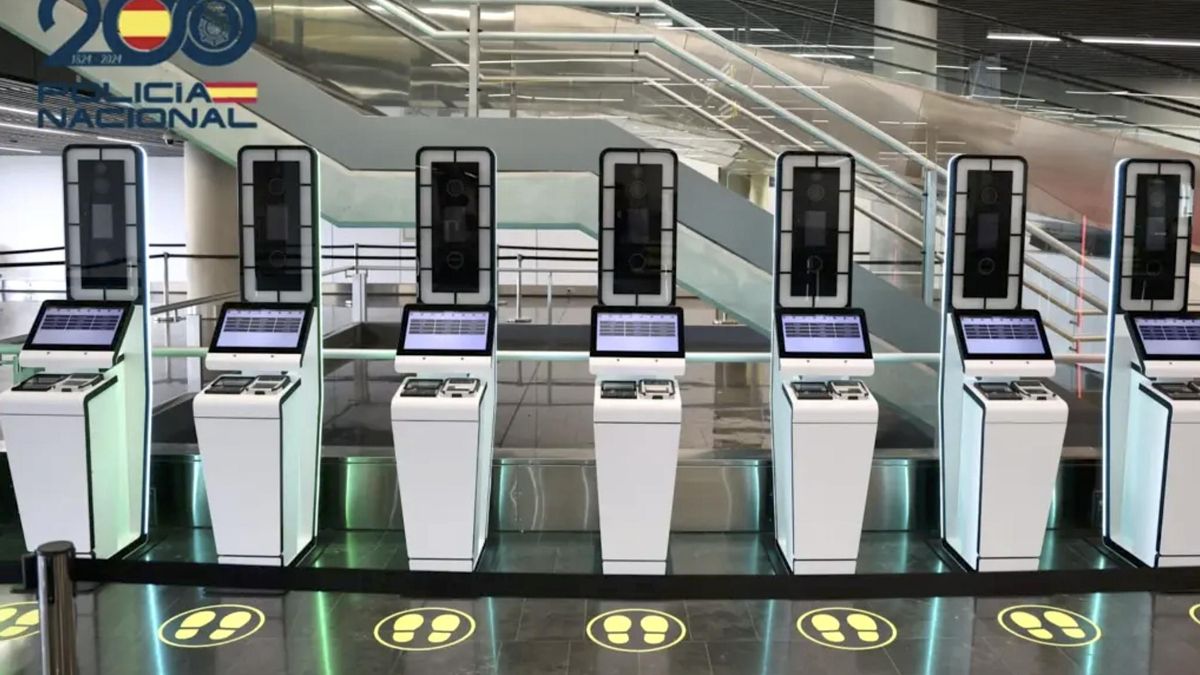
Tenerife South, Gran Canaria, Lanzarote and Fuerteventura have had to adapt their terminals to the rise in international traffic and the new procedures. Although the aim of the EES is to speed up checks in the long term, each traveller’s first entry requires their fingerprints and photograph to be registered at the machines provided for that purpose. The problem arises particularly when several arrivals coincide. Where previously an officer could process the arrival of a British passenger in around 15 seconds, the new procedure can multiply that time. At Canary Islands airports where five or six full flights from the UK land within less than an hour, the result is queues that can stretch considerably at passport control.
Alejandra Ruiz, Ryanair’s spokesperson in Spain, warned several months ago in El País that Tenerife South and Lanzarote airports did not have sufficient resources to guarantee the smooth running of the EES. “The system fails, it is very slow and some airports do not have the so-called kiosks working at full capacity,” she said. Lanzarote is precisely one of the airports registering the most incidents, especially on flights from the UK.
Reputational risk despite loyal British market
The first answer is yes, but it depends on the type of tourist. The Brit who habitually spends their summer holidays or Easter Week in the Canaries is not going to stop coming because they have to register their fingerprints or have a photograph taken on entry. However, there is a reputational risk. After a four-hour flight, finding queues of up to two hours to clear border control can generate enough frustration to make people consider other destinations. The British press has already reported on these difficulties. The Guardian, for example, has described the problems experienced by travellers in Lanzarote, where some machines were not working properly and the registration process became an additional source of delays.
Winter visitors and long-stay tourists hit hardest
The profile that could be most affected is a different one: the winter tourist, especially retirees and long-stay travellers. Those who traditionally arrived in the Canaries in November and did not return to the UK until March or April can no longer maintain that travel pattern under the current stay rules. With the EES, when a passport is scanned, the system can automatically know how long that person has been within the European area. If they have exceeded the permitted limit, an alert is generated. This can lead to additional checks, fines and restrictions on future entries. As a result, this type of tourist is forced to shorten their stays to a maximum of three months, unless they hold a residence permit or another authorisation allowing them to remain longer.
However, if the bureaucratic hassles stemming from Brexit have not so far deterred British tourists from coming, the EES is not expected on its own to cause a drastic fall in visits either. What may increase is tension at airports and the perception that travelling to certain European destinations is becoming ever more complex.
UK remains the Canary Islands’ leading market
The data, for now, continues to show the strength of the British market in the Canary Islands. According to figures compiled by ISTAC, the UK remains the islands’ main tourist market and is bucking the slight slowdown recorded in other European markets, such as Germany and the Nordic countries. In July alone, 576,338 British visitors arrived, more than 37% of the archipelago’s international tourism market share, which also represents an increase of 27,104 tourists — 0.74% — compared with the same month in 2025.
Spaniards travelling to the UK now need an ETA
The reverse flow also has its own requirement. If you hold a Spanish passport and are travelling to the UK — whether for tourism, business, short-term study or to visit family — you need to apply for an ETA (Electronic Travel Authorisation). This is an electronic permit similar to the ESTA required by the United States and is mandatory in order to travel. It is no longer enough to have started the process. If the ETA has not been approved before you reach the airport, the airline may prevent you from boarding.
The digital permit currently costs £10 and is valid for two years or until the passport to which it is linked expires. During that period it allows entry to the UK as many times as you wish for stays of up to six months per trip. Applications are made exclusively online, through the official UK Government app or its website. Although approval is usually granted quickly, the authorities recommend applying at least three days before travelling. The ETA is linked electronically to the passport. Therefore, if the document is lost or renewed, the authorisation ceases to be valid and a new one must be applied for and paid for. Those who are already legal residents in the UK with their status regularised through the EU Settlement Scheme (EUSS), as well as those holding a work, study or other visa permitting entry to the country, are exempt.
What’s happening in the Canaries – straight to your phone
News, weather alerts and practical updates – direct from the islands, in English. We live here and know what’s going on – before the international media catch up. Everything lands on our WhatsApp channel – no middlemen, no algorithm. Curated for families, expats and travelers.

Tenerife’s Lava nominated in TheFork Awards 2025

Canary Islands journalists among Spain’s most influential

British family sues Jet2holidays over Fuerteventura illness

Canary Islands’ hidden gems ruined by social media tourism

Free Loro Parque entry for Punta Brava residents

Imserso holidays in Canarias: 879,213 places on sale

Guachinche Tenderete: traditional food in Tenerife

Casa Rafael: Tenerife restaurant famous for its rabbit stew

Playa Grande and Charcón reopen after water quality scare