Floating power station defended as ‘only viable option’ for Gran Canaria
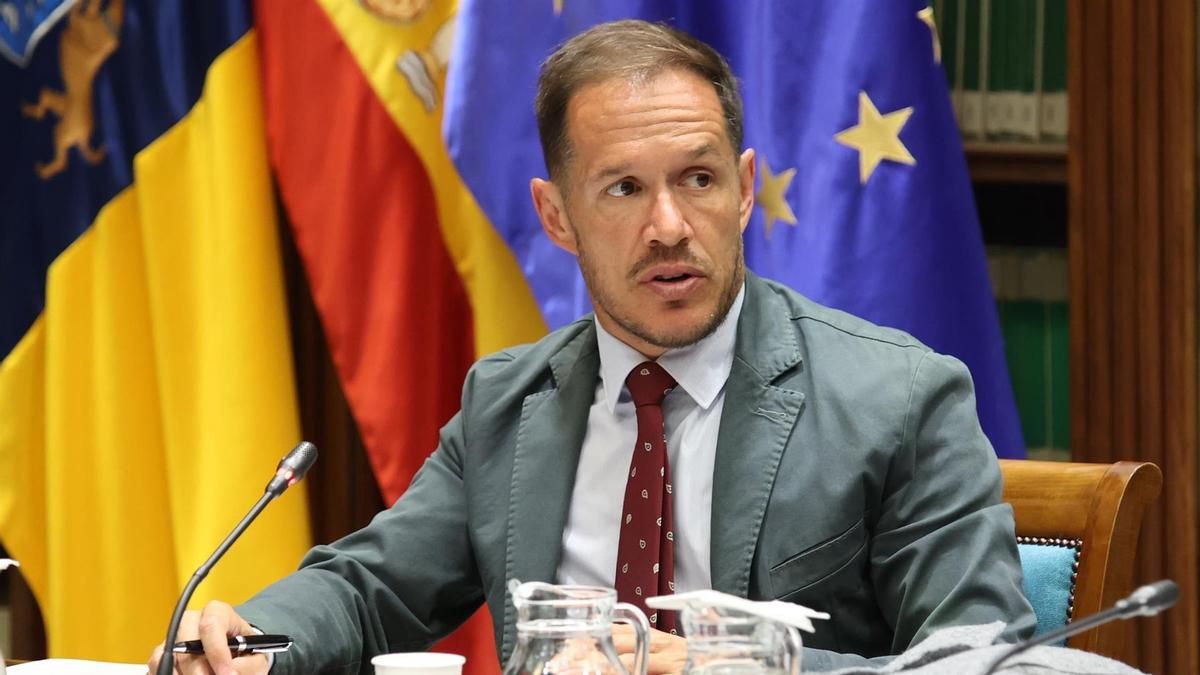
The Canary Islands minister for ecological transition, Mariano Hernández Zapata (PP), insisted this Wednesday that the installation of a floating power station in the Port of La Luz and Las Palmas would be a “temporary and punctual” measure which would not affect port operations. Responding to a question from the Socialist Group in a parliamentary committee, he stated the vessel would only be activated if there was a risk of blackouts on Gran Canaria, and only after all other generating units had been brought online. The ship would leave port once the central government completes its tenders for the renewal of thermal power stations, a process which is expected to take years – indeed, the tender announced this year has been scheduled for 2031.
Guaranteeing supply when all else fails
Zapata insisted the vessel was the only viable option to guarantee electricity supply on Gran Canaria, as it can provide up to 100 megawatts of capacity. He noted that although the ship sails under the Turkish flag, it would fully comply with all European Union environmental requirements. “What we absolutely could not do as a government was to sit back and do nothing,” he commented. The minister ruled out using battery storage, arguing that the technology is not yet mature enough to meet the high demand of islands such as Gran Canaria or Tenerife. He made clear that the ship will only begin operating once the entire environmental impact assessment process has been completed.
Coordination with Madrid and criticism of former government
Zapata highlighted the coordinated work being carried out with the Ministry for Ecological Transition to make emergency generation a reality in the Canary Islands, while criticising the previous “Pacto de las Flores” coalition government for doing nothing when they had a report from Red Eléctrica warning of the risk of blackouts on the islands. It is worth recalling that the tender to provide additional electricity generation capacity to the Canaries was the responsibility of the central government, and was only completed during this parliamentary term after a 13-year delay – it should have been resolved while Mariano Rajoy was still prime minister.
Opposition raises health and environmental concerns
Alicia Vanoostende (PSOE) said her group had “certain concerns” about the installation of a floating thermal power station that uses fossil fuels and would be located close to residential neighbourhoods, port areas and marine environments of enormous environmental value. She stated that “the government’s obligation is not only to guarantee electricity supply, but also to guarantee maximum transparency, maximum safety and maximum protection of public health and the environment.” She warned of the vessel’s track record, pointing out that it has been involved in hydrocarbon spills in the Dominican Republic, had projects in South Africa that became mired in legal proceedings and were ultimately cancelled, and has faced contractual disputes in other countries.
Comparison to Totisa and calls for independent studies
The Socialist deputy also recalled the significant public opposition to the installation of the Totisa plant, also very close to Las Palmas de Gran Canaria, due to its potential effects on air quality, polluting emissions and public health. She called on the regional government to commission an independent study on the potential impact of installing the ship on air quality, and to disclose the expected emissions of various gases including nitrogen oxide, sulphur oxide, particulate matter and greenhouse gases. She also argued that a specific study on the potential health effects on people in the area is needed, along with a contingency plan in the event of a hydrocarbon spill or any other maritime accident.
Call for cleaner alternatives
Vanoostende also called for more coherent alternatives for electricity generation, such as battery storage, noting that while citizens are being told to reduce emissions and install their own renewable generation, the government is betting on fossil fuels.
What’s happening in the Canaries – straight to your phone
News, weather alerts and practical updates – direct from the islands, in English. We live here and know what’s going on – before the international media catch up. Everything lands on our WhatsApp channel – no middlemen, no algorithm. Curated for families, expats and travelers.
Canary Islands international air arrivals fall 1.3% in September
Helicopter evacuates US cruise passenger near Tenerife

El Hierro airport sees 3.6% rise in September passengers
Gran Canaria approves €509k works to shore up GC-200 slope

Canary Islands gets €47.5m for free public transport in 2026
Canary Islands airports see 0.9% fall in September passengers
El Rejo road in La Gomera to close for six hours on Tuesday
Man, 65, seriously injured in GC-1 crash in Agüimes
Las Palmas traffic changes for emergency sewer works