One empty home in over ten years: a housing failure exposed
Another figure to explain the current housing crisis: the Government of the Canary Islands has only managed to mobilise a single empty home since 2015, according to a resolution from the Canary Islands Housing Institute (ICAVI), obtained by Canarias Ahora through the Transparency Portal. It was already known that the previous regional government programme designed to bring unoccupied homes onto the market had barely succeeded in mobilising one. That happened in 2023, in Las Palmas de Gran Canaria, under the Canary Islands Housing Plan 2020-2025. Now it has been confirmed that this has been the only property mobilised in more than a decade.
Minister admits programme was a failure
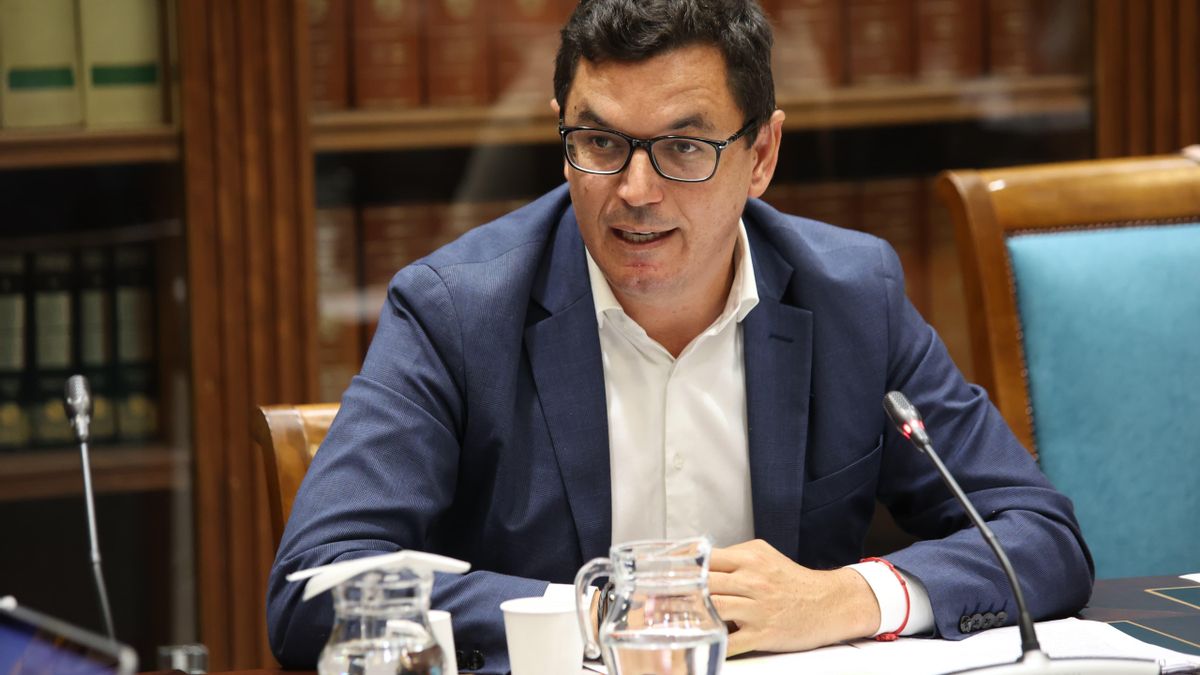
The Regional Minister for Housing, Pablo Rodríguez of Coalición Canaria (CC), went so far as to say that the initiative was a failure because the regional government, through its public housing company Visocan, tried to act as a landlord in a complex procedure that ultimately proved almost impossible to implement, despite several modifications. Visocan argued that “various complications arose which required resolving issues relating to the interpretation of the resolution governing the programme,” according to an extraordinary report on housing from the Office of the Ombudsman in 2023. “At the time of its publication, only 85 homes had been offered. One was being rented out, another was pending incorporation, six were in the process, and the other 77 had been archived for various reasons.” “I say this not to point the finger at anyone, but to illustrate the complexity of this programme which, despite a financial outlay of eight million euros, never worked,” the minister stated in a parliamentary committee in 2024.
New plan: 100 homes in two years – a drop in the ocean
The ICAVI notes in its resolution that, “in light of the analysis of the results obtained,” the Canary Islands government has just announced a new plan to mobilise empty homes, costing one million euros from public coffers and aiming to bring 100 properties onto the market in two years. If extended for another two years, the total expenditure would rise to 1.86 million euros. The ICAVI believes this programme will “enable the development of a comprehensive service covering territorial diagnosis, the acquisition of homes, the identification and pre-assessment of applicants, mediation between owners and tenants, the formalisation of contracts, and the monitoring of rentals.” Mobilising 100 empty homes in two years after having incorporated just one in ten could be considered a success. However, even in that case, it would cover barely 0.05% of the Archipelago’s vacant housing stock, estimated at 211,000 properties by the National Institute of Statistics (INE) in 2021. Rodríguez himself stated that it would be “spectacular” to release at least 20% of that total onto the market.
No official register of empty homes exists
This newspaper’s public information request also asked the Canary Islands government for its own estimate of the number of vacant homes in the Archipelago, given that Minister Rodríguez has repeatedly argued that the INE figure “overestimates reality” and that its calculation methodology “has significant limitations.” The government has commissioned a study costing 90,000 euros to determine how many of the 211,000 homes projected by the INE are genuinely empty. However, the ICAVI has noted in its resolution that the regional government has still not created the Register of Unoccupied Homes, as required by Law 2/2003 on Housing in the Canary Islands, which was conceived as “the basic instrument for monitoring and tracking this type of property.” “In this context,” adds the ICAVI, “it is not possible to provide an exact figure for the number of unoccupied homes in the Autonomous Community of the Canary Islands, as there is no established administrative register that allows their quantification, in accordance with the objective parameters set out in the applicable regulations.”
What’s happening in the Canaries – straight to your phone
News, weather alerts and practical updates – direct from the islands, in English. We live here and know what’s going on – before the international media catch up. Everything lands on our WhatsApp channel – no middlemen, no algorithm. Curated for families, expats and travelers.

Canary Islands tourism chief offers dialogue on residentialisation

Canary Islands office helps small councils ditch the peseta

Two tonnes of illegal tropical fruit seized at Tenerife port

Canary Islands approves new €1.6bn development fund

Mogán mayor says her €65,000 salary is too low

Abandoned cars in Canary Islands: hundreds left to rot
Work resumes on 27 affordable rental homes in Las Palmas

Los Realejos residents fight on against propane gas plant

Canarias among Spain’s poorest regions as 36.2% live on low incomes