Housing funds row
A 35-year age gap is at the heart of a new political battle for the Canary Islands. The archipelago will fight on Thursday in the Sectoral Housing Conference for a “fair” distribution of funds from the 2026-2030 State Housing Plan. The mega-programme, which designs the entire aid framework — backed 60% by the State and 40% by the autonomous communities — allocates funding based on the country’s population base, but uses data from 1991, leaving 760,000 Canarians, a third of the population, out of the equation.
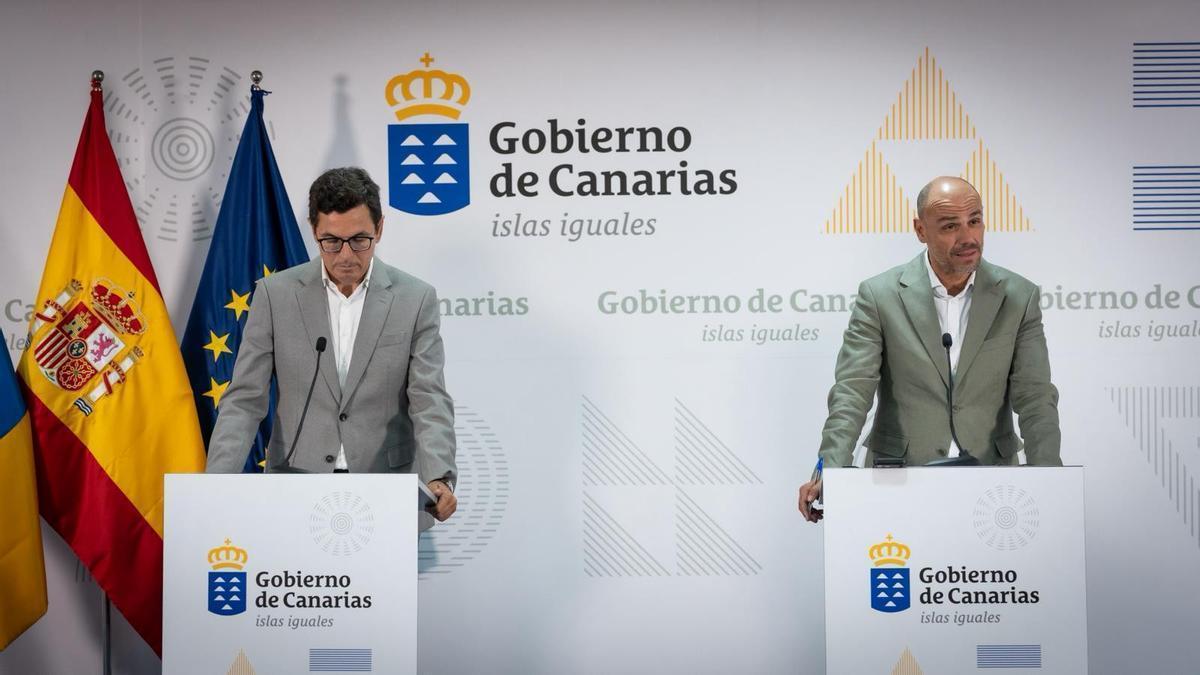
“We calculate that if the data were updated, the funds corresponding to the Canary Islands would be around 500 million euros, not the just over 300 million euros currently on the table,” explained Pablo Rodríguez, the regional Minister for Public Works, Housing and Mobility, at a press conference after this morning’s government council meeting. Over the past 35 years, the population has changed significantly in most of Spain’s autonomous communities, but the archipelago is one of the regions worst affected, having seen growth of over 50%. “A lot of water has gone under the bridge, and we are clearly disadvantaged by this outdated data,” the minister denounced.
New mortgage scheme for young buyers
Housing was a key topic in the weekly executive meeting. Rodríguez announced afterwards that the Young Mortgage – My First Home programme is now underway and could be operational before summer. The initiative will allow people aged between 18 and 40 to access financing of up to 95% of the purchase price of their first home, surpassing the usual 80% limit that financial institutions typically offer.
“This way, we remove one of the main barriers to buying a home, which is the ability to save for a deposit,” Rodríguez explained, adding that the scheme had been used successfully at the beginning of this century but disappeared after the financial crisis. “It was one of the goals we had set ourselves: to bring back a tool that had enormous success and that we are convinced will be highly relevant again in today’s climate,” he insisted.
Timeline and requirements
The text is now being sent to the Advisory Council, which will have a maximum of 30 days to issue its opinion. The next step will be to return it to the Government Council for final approval. “From there, we will begin signing agreements with financial institutions. Many have already told us they are interested,” the minister said. The banks with which agreements are in place will be responsible for directly managing applications and processing mortgages.
In addition to those under 40, Rodríguez explained that large families and single-parent families can also benefit, with no age limit. The regional government has set out a series of requirements for accessing the programme. The first is legal and continuous residence in the Canary Islands for the two years prior to the application. The initiative aims to address the housing emergency in the archipelago and help young people become independent, so buyers must not already be the owner of another property. The purchased home must also be used as the buyer’s primary and permanent residence for a minimum period of two years.
Income and property limits
The applicant’s financial situation will also be a factor. The net asset limit for each applicant, or each individual in the case of a joint purchase, must not exceed €150,000. Furthermore, applicants’ income must not exceed five times the IPREM (the Public Indicator of Multiple Effect Income). In the case of a joint application by two people, their combined income must not exceed the sum of the limit set for each individual. This amount will be increased by 0.3 times the IPREM for each dependent child.
“In the case of single-parent families, the income limit will be increased by 70%,” the regional government explained. The properties must be located in the Canary Islands and have a maximum purchase price of €250,000, excluding taxes and associated costs. The programme will include both new-build and second-hand homes, whether free-market or publicly subsidised properties from private developers.
What’s happening in the Canaries – straight to your phone
News, weather alerts and practical updates – direct from the islands, in English. We live here and know what’s going on – before the international media catch up. Everything lands on our WhatsApp channel – no middlemen, no algorithm. Curated for families, expats and travelers.

Canary Islands tourism chief offers dialogue on residentialisation

Canary Islands office helps small councils ditch the peseta

Two tonnes of illegal tropical fruit seized at Tenerife port

Canary Islands approves new €1.6bn development fund

Mogán mayor says her €65,000 salary is too low

Abandoned cars in Canary Islands: hundreds left to rot
Work resumes on 27 affordable rental homes in Las Palmas

Los Realejos residents fight on against propane gas plant

Canarias among Spain’s poorest regions as 36.2% live on low incomes