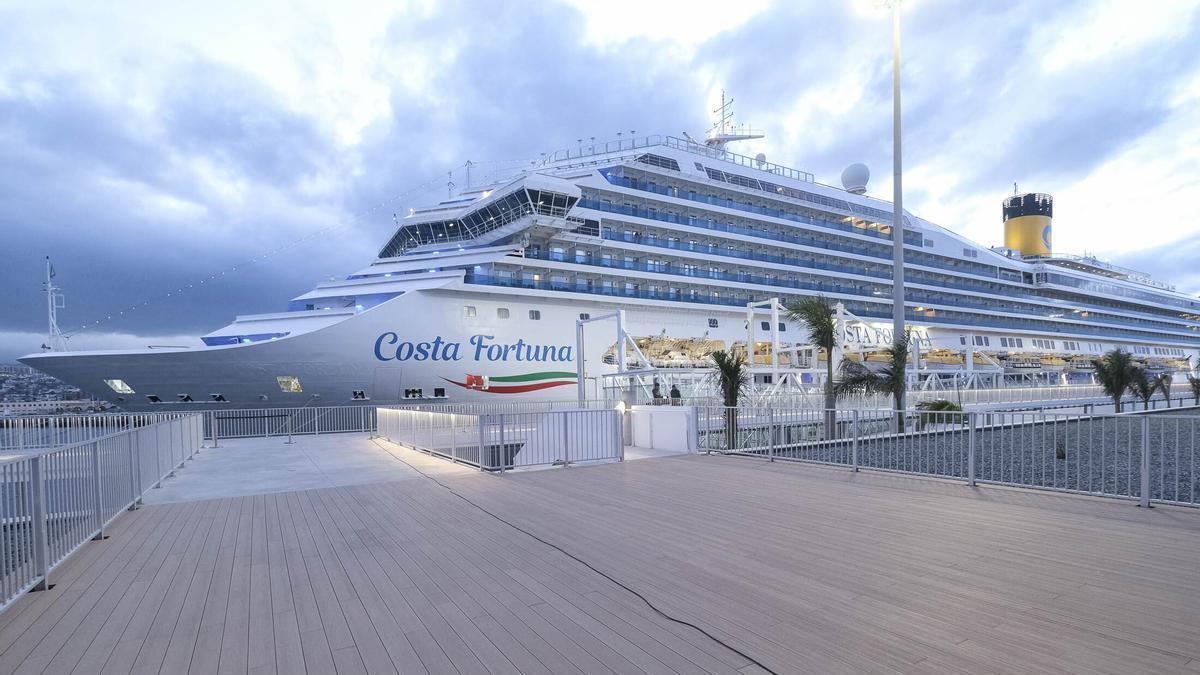
Cruise Lines Chart a Course for Canarian Ports
Cruise ships hold the advantageous status of floating hotels, able to move to wherever demand is greatest. Since the outbreak of war in Iran by the United States and Israel on 28 February, ports across the Canary Islands have noted a marked interest from shipping companies in docking at their facilities. Some companies already operating in the Canaries have requested to add unscheduled calls, while others not normally featuring the Islands on their itineraries have opted to change route and head for these “safe” ports, as described by the President of the Port Authority, Beatriz Calzada.
Soaring Passenger Numbers Defy Global Tensions
The number of passengers choosing the Atlantic, and specifically the Canaries, for a break where the only concerns are the times of the all-you-can-eat buffet and shore visits to island capitals, continues its upward trend. Before the 2020 pandemic brought the tourism sector to a sudden halt, a total of 2.5 million tourists made a stop at one or more of the eight archipelago ports that receive cruises, according to data from the Canary Islands Institute of Statistics (Istac). Compared to current figures, growth has not only surpassed 2019 levels but has nearly doubled, with a rise of 45.9%. In total, the Institute recorded around 3.7 million people. Growth compared to the previous financial year was more modest at 16.5%, but still shows a positive trend.
Conflict or Demand: The Reasons Behind the Shift
Nevertheless, the port authority attributes the estimated increase for the 2026-2027 winter season to the war in Iran. “Due to recent international incidents, there is clear demand for ports away from the Eastern Mediterranean zone or outside the Persian Gulf area,” stated the President of State Ports, Gustavo Santana. The conflict has already begun to be felt in the wallets of Canary Island residents filling up their cars: fuel prices have risen by over 15% in less than a month. This is compounded by the announcement of the shutdown of the Qatari crude oil industry, which has caused gas prices to spike even more than fuel.
The conflict was also a topic at the International Tourism Exchange (ITB), a key sector event which brought together German business owners and tour operators. There, a cautious eye was cast on a Middle East that could not only make the tourism supply chain more expensive – fuel, transport, food – but could divert tourist demand towards safer destinations like the Canaries.
However, now 27 days into the war, predictions for a winter season still eight months away remain unreliable. For its part, the cruise company MSC, which has a strong presence in the Islands, dismisses the war started by the US and Israel as the reason for cancelling its offerings near Iran. Instead, it focuses on the powerful demand in the Canaries.
Investing in a Growing Maritime Tourism Sector
A breakdown of the ships that have docked in island ports with this company reveals a seasonally increasing trend. In the winter months of 2024-2025, the shipping line had a maximum capacity of 2,679 passengers. Today, that volume of tourists has nearly doubled, and the ship for the months of November to March 2026-2027 has dimensions that allow it to host a maximum of 4,363 people.
Proof of this growth in maritime tourism is the investment being made in cruise infrastructure. Most recently, on 19 March, a new terminal was inaugurated in the Gran Canarian capital – the largest in Europe. It allows for the simultaneous docking of four cruise lines, although the port of Santa Cruz de Tenerife already exceeds this capacity, with experience of six cruise ships docking at the same time. In short, capacity is increasing in line with the demand from tourists opting for a highly differentiated tourism model.
What’s happening in the Canaries – straight to your phone
News, weather alerts and practical updates – direct from the islands, in English. We live here and know what’s going on – before the international media catch up. Everything lands on our WhatsApp channel – no middlemen, no algorithm. Curated for families, expats and travelers.

Tenerife’s Char Fuego y Brasas named 13th best steak restaurant in Europe

Gran Hotel Taoro: a foodie destination in Puerto de la Cruz

Canary Islands hotel prices rise 4.11% in September

Icod de los Vinos launches twelve self-guided routes
Four new openings shaking up Las Palmas dining scene

Tenerife faces huge tourism expansion despite moratorium calls
El Bejeque in Las Canteras adds sea to its fire

Siam Park Gran Canaria must build its own desalination plant
Fuerteventura’s biggest resort to open on 1 November