
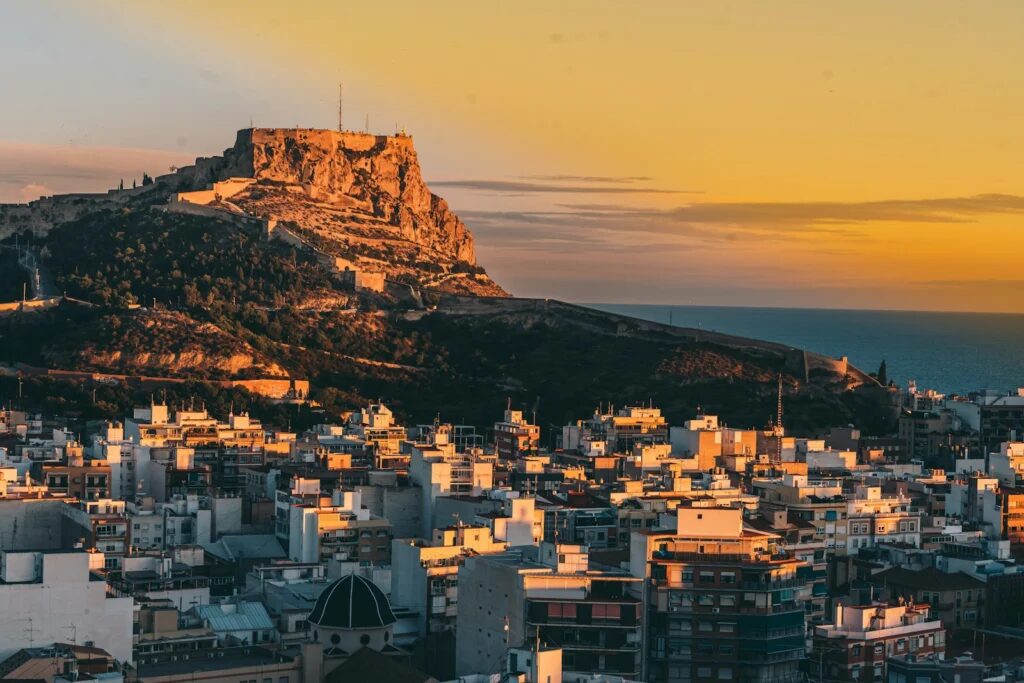
Planning a family trip to the Spanish Mediterranean coast? Alicante with kids is one of the best decisions you can make. Known as the “City of Light,” this sun-drenched gem on the Costa Blanca offers something genuinely rare: a destination where history, beaches, culture and hands-on fun all come together in one walkable, affordable city. We spent a full week here with our two school-age kids and came back with a list of 20 things to do in Alicante with kids that we’d happily revisit tomorrow.
The best part? Alicante isn’t just a summer destination. With 300 sunny days a year and temperatures reaching 26°C even in November, it’s a fantastic option for families looking to escape the crowds and high prices of peak season. Whether you’re planning a long weekend or a full week, this guide covers every must-see attraction, practical tip and family-friendly beach you need to know.
- Things to Do in Alicante with Kids – Overview
- 1. Castillo de Santa Bárbara – The Castle on Top of the World
- 2. Barrio de Santa Cruz – The Fairytale Quarter
- 3. El Carrer dels Bolets – Alicante's Famous Mushroom Street
- 4. Museo de Fogueres – Where Fire Festival Giants Come to Life
- 5. MARQ Archaeological Museum – Where History Becomes an Adventure
- 6. Park El Palmeral – Palm Trees, Ducks and Playgrounds
- 7. Pola Adventure Park – Ropes, Climbing Walls and Zip Lines
- 8. Aquopolis Torrevieja – The Best Water Park Near Alicante
- 9. Mercado Central – Alicante's Historic Market Hall
- 10. MACA and Casa de la Aseguarda – Modern Art in Alicante's Oldest Secular Building
- 11. La Explanada de España – The Famous Mosaic Promenade
- 12. The Port Area – Sculptures, a Free Museum and a Zero-Level Monument
- 13. San Juan and Muchavista Beaches – 5km of Sand and Calm Water
- 14. Park Ereta – Walking the City Walls with a View
- 15. Alicante City Hall – A Dalí Sculpture, a Blue Salon and a World Record Nativity
- 16. La Ciudad Descubierta – Underground Archaeology Next to City Hall
- 17. Hotel Gran Sol Balcony – Free City Views from the 26th Floor
- 18. Playa del Postiguet – The Urban Beach at the Foot of the Castle
- 19. Plaza de los Luceros – The Iconic Horse Fountain Square
- 20. Chocolate Museum (Museu de la Xocolata) – A Sweet Ending
- Free Things to Do in Alicante with Kids
- Alicante with Kids Itinerary – 3 Days
- Alicante with Kids Itinerary – 1 Week
- FAQ – Alicante with Kids
- Is Alicante Worth Visiting with Kids? Our Final Verdict
Things to Do in Alicante with Kids – Overview
Before diving into the full list, here’s a quick snapshot of the best things to do in Alicante with family, from free landmarks to paid attractions worth every euro.
| Attraction | Best For | Cost | Time Needed |
|---|---|---|---|
| Castillo de Santa Bárbara | All ages | Free (lift: €2.70) | 90 min |
| Barrio de Santa Cruz | All ages | Free | 30-45 min |
| Carrer dels Bolets | Young kids | Free | 20 min |
| Museo de Fogueres | Kids 6+ | Free | 30 min |
| MARQ Museum | Kids 8+ | €5 / €3 Sun | 60-75 min |
| Park El Palmeral | Toddlers & up | Free | 1.5-2 hrs |
| Pola Adventure Park | Kids 4+ | from €12 | 1.5-2 hrs |
| Aquopolis Torrevieja | Kids 4+ | from €21 (kids) | half day |
| Mercado Central | All ages | Free | 20-30 min |
| MACA Museum | Kids 10+ | Free | 30 min |
| La Explanada de España | All ages | Free | 20 min |
| Port Area & Ocean Race Museum | All ages | Free | 30-40 min |
| San Juan / Muchavista Beaches | All ages | Free | as long as you like |
| Playa del Postiguet | All ages | Free | 1+ hrs |
| Chocolate Museum | Kids of all ages | check website | 1-1.5 hrs |
1. Castillo de Santa Bárbara – The Castle on Top of the World
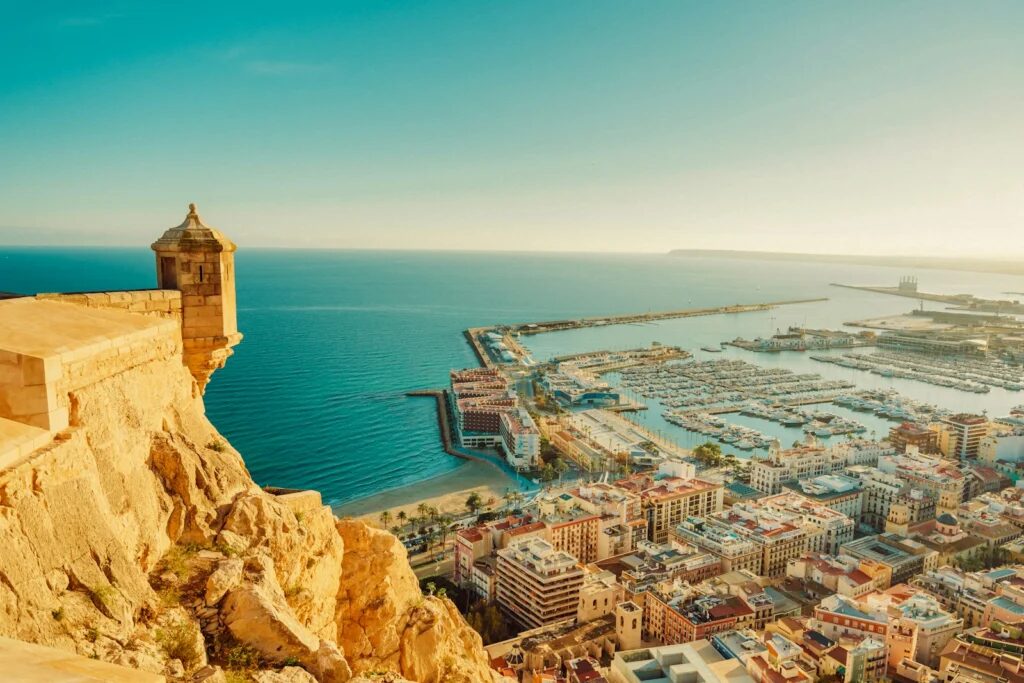
If you only do one thing in Alicante with kids, make it this. Perched 166 metres above the city on the rocky Benacantil hill, Santa Bárbara Castle is not just the most recognisable landmark in Alicante – it’s one of the most impressive medieval fortresses on the entire Mediterranean coast.
What to Expect Inside
The castle is bigger than it looks from below. Three separate defensive levels, massive stone bastions, watchtowers and interconnected courtyards create a genuine labyrinth that kids absolutely love to explore. The upper section contains the oldest remnants, including the 9th-century Arab Alcazaba, though most of the visible structures date from the 16th to 18th centuries when the fortress defended the coastline from sea attacks.
Hidden inside the castle walls is the City of Alicante Museum (MUSA) – tucked into old storehouses and underground chambers. The collection includes archaeological finds ranging from Iberian figurines to Roman coins and Moorish ornaments. The exhibits themselves are relatively modest, but exploring them inside an actual medieval fortress makes the whole experience feel like a real discovery mission for younger visitors.
The Legend of the Moorish Face
Here’s something to do before you even set foot inside the castle: stand near the Basilica of Santa Maria and look up at the western face of the hill. The rocky outline forms a unmistakable human profile – brow, nose and chin. This is the famous Cara del Moro (the Moorish Face), and the legend behind it is the kind of story kids remember for years.
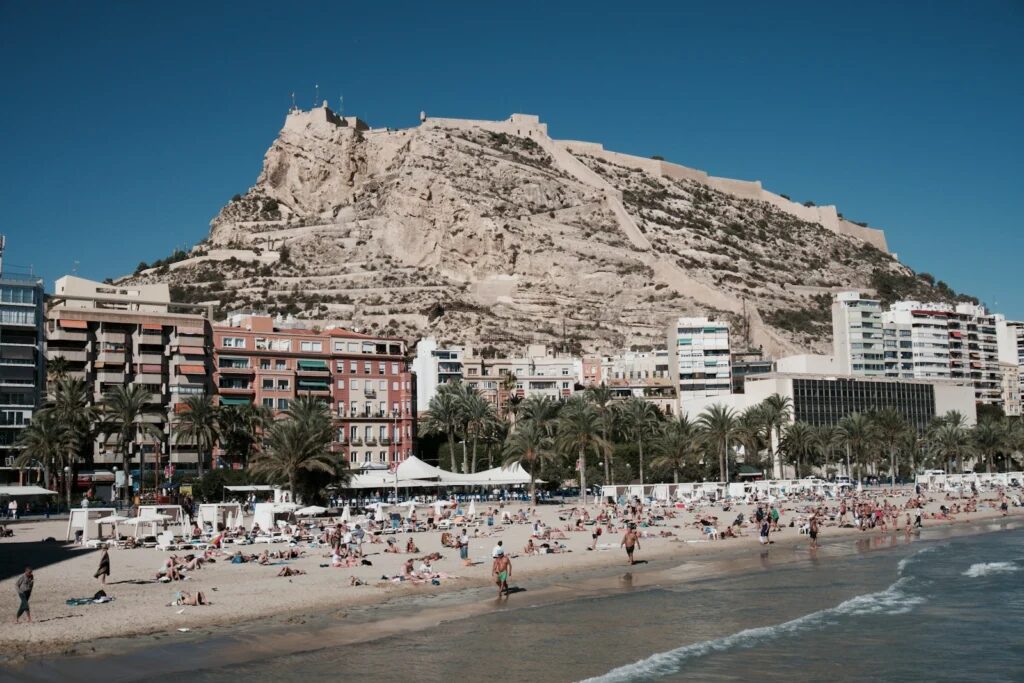
The story goes that a Moorish governor’s daughter, Zahara, fell in love with a Christian knight named Fernando. Her father, obsessed with his treasury, had the young man killed. Devastated, Zahara threw herself from the hilltop, and the face of her grief-stricken father was carved into the rock by his own tears. The image appears on Alicante’s coat of arms to this day.
Practical info:
- The lift from Postiguet Beach costs €2.70. Alternatively, walk up through Park Ereta (20-30 min) for beautiful views along the way
- Entry to the castle itself is free
- The castle is open year-round
⏱️ Time to allow: 90 minutes for a relaxed visit with kids 🌐 Official website: Castillo de Santa Bárbara
2. Barrio de Santa Cruz – The Fairytale Quarter
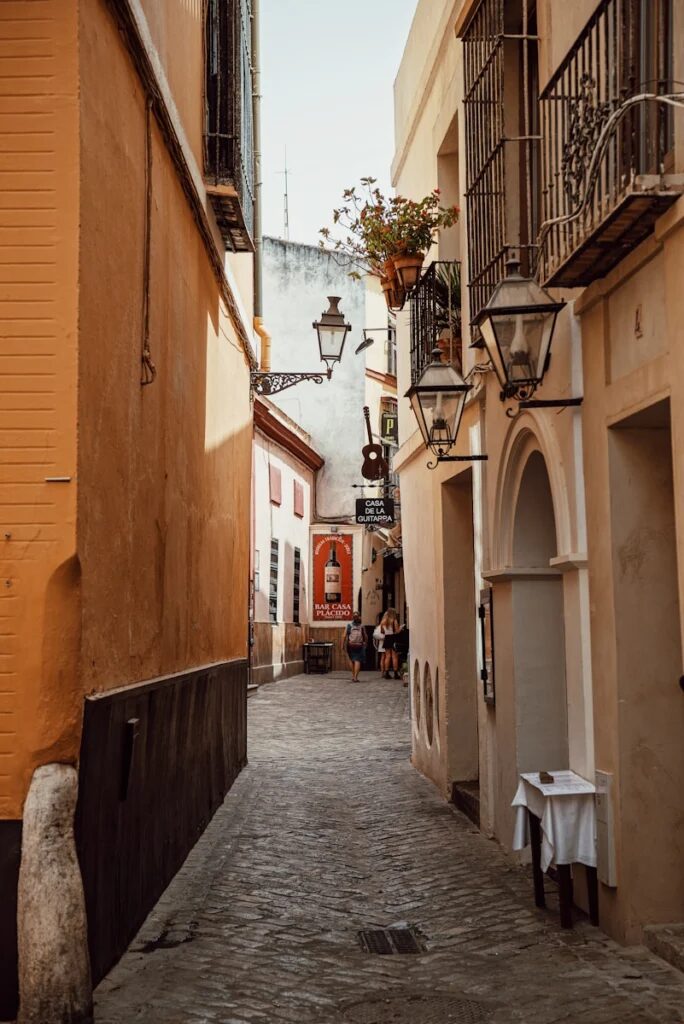
Forget the generic Mediterranean Instagram spots – this is the real thing. The Santa Cruz neighbourhood, draped across the hillside just below the castle, is Alicante’s oldest quarter and one of its most magical corners. Narrow whitewashed lanes, low pastel-coloured houses and cascades of bougainvillea tumbling from every balcony make it feel genuinely timeless.
The Blue-Pot House
The undisputed star of Santa Cruz is La caseta dels cossiols blaus – a house on Calle Dean Zaragoza decorated with dozens of bright blue flower pots. It’s the most photographed spot in the neighbourhood, and for good reason. But the real charm is in the surrounding alleyways, where every corner reveals something new: hand-painted ceramic tiles, sun-warmed stone steps, cats dozing in patches of light.
The Hermitage and Viewpoint
At the top of the neighbourhood stands the Ermita de la Santa Cruz, an 18th-century chapel built on the foundations of a medieval watchtower. Just next to it, the Mirador de la Santa Cruz terrace offers a sweeping view over the rooftops of the old town with the castle rising above. It’s a perfect spot for a family photo with the whole city as your backdrop.
How to explore it: Enter from Plaza del Carmen via Calle San Rafael (mostly steps). Head up to the blue-pot house, then a few more minutes to the hermitage and viewpoint. From there, wander back down through different lanes – every street holds a little surprise.
⏱️ Time to allow: 30-45 minutes 📍 Start point: Plaza del Carmen
3. El Carrer dels Bolets – Alicante’s Famous Mushroom Street
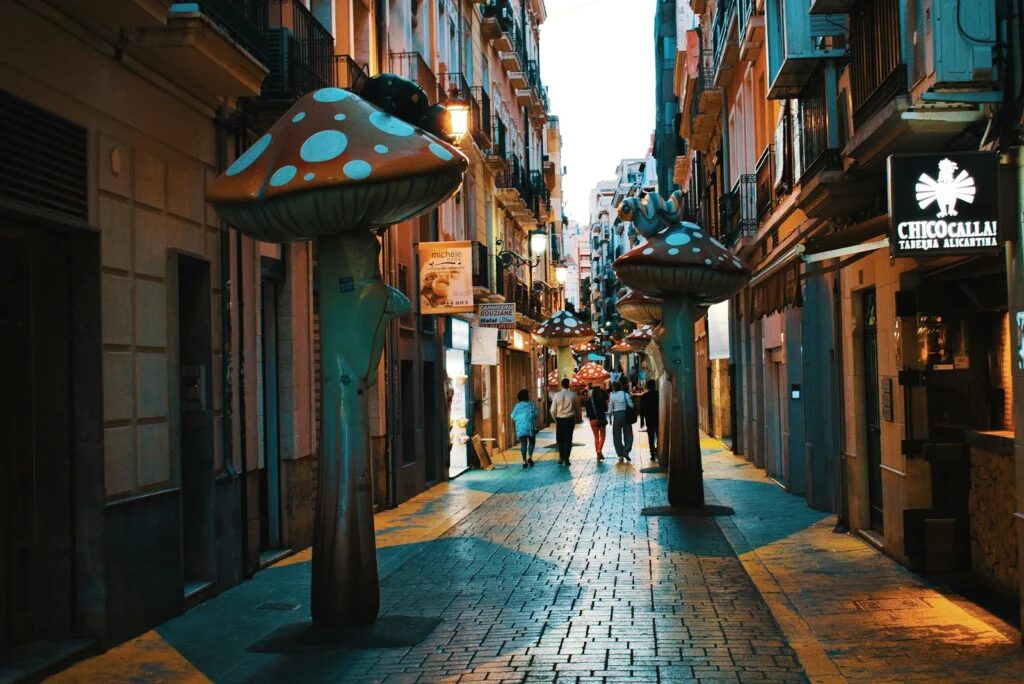
Not every city regeneration project involves giant fungi, but Alicante decided to go there – and it works brilliantly. Calle San Francisco, known locally as Carrer dels Bolets (Mushroom Street), is one of those places you genuinely can’t believe exists until you’re standing in it.
Giant Mushrooms in the Middle of the City
The entire street is lined with a colourful art installation of oversized mushrooms, crawling with giant insects and snails the size of small children. The tallest clusters reach 4 metres high. It all started as a neighbourhood regeneration project – this street was once run-down and unsafe. A local artist famous for creating the ceremonial sculptures used in Alicante’s fire festival proposed the idea, and it transformed the area entirely.
Kids can peek inside the smaller mushrooms, which quickly becomes a firm favourite game. The whole scene looks like a set from a woodland fairy tale, especially in the soft morning light when the shadows play between the sculptures’ vivid colours.
Bonus stop: At the end of the street, Plaza Gabriel Miró is arguably Alicante’s most beautiful square – centred on a fountain featuring Aphrodite and the god Pan, surrounded by enormous century-old fig trees whose canopies create a natural green cathedral.
⏱️ Time to allow: 15-20 minutes + a stop at Plaza Gabriel Miró 📍 Location: Connects Mercado Central with Plaza Gabriel Miró
4. Museo de Fogueres – Where Fire Festival Giants Come to Life

Alicante’s biggest annual event is the Hogueras de San Juan – a week-long fire festival culminating on the night of 23-24 June, when the entire city burns. Gigantic painted sculptures fill the streets, fireworks light up the sky, and then, in a single spectacular night, everything is set alight. If your trip doesn’t coincide with the festival, the Museo de Fogueres lets you experience the magic year-round.
The Ninots – Sculptures That Tell the Truth
The ninots are towering constructions built from wood, cardboard and plaster – some reaching several metres in height. Each neighbourhood creates its own sculpture, usually satirical, poking fun at politicians, local personalities or social trends. They’re colourful, witty, sometimes biting, and every single one is ultimately destined to be burned.
Except for the ones in this museum. The survivors were spared by public vote, and the collection shows how the art form has evolved over the decades – from traditional storybook scenes to Pixar-style characters and sharp political commentary. Kids love wandering through them, spotting characters they recognise and marvelling at the sheer scale.
The museum also features photographs from the festival itself: the daily Mascletà (a daytime fireworks display that’s felt as much as heard), the street parties and, of course, the burning.
Practical info: Entry is free. The museum is in the city centre, close to City Hall, making it easy to combine with other sights. Descriptions are mostly in Spanish, but the sculptures speak for themselves.
⏱️ Time to allow: 30 minutes 🌐 Official website: Museo de Fogueres
5. MARQ Archaeological Museum – Where History Becomes an Adventure
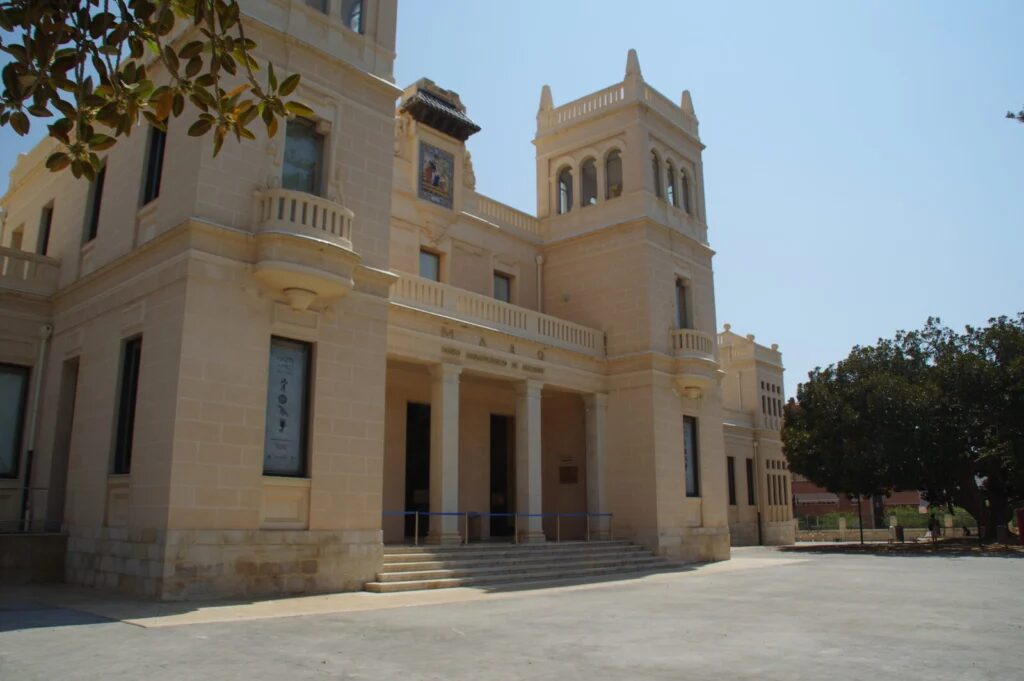
The MARQ – Museo Arqueológico Provincial is one of the most genuinely impressive museums we’ve visited anywhere in Spain – and it won European Museum of the Year in 2004. This is not a place where you shuffle past dusty cases reading tiny labels. It’s an immersive journey through 10,000 years of the region’s history, complete with special effects, reconstructed environments and interactive displays.
Five Eras, Three Methodology Rooms
The permanent collection is arranged chronologically:
- Prehistory – flint tools, early ceramics, burial remains
- The Iberian Period – including the star exhibit: La Dama de Cabezo Lucero, a limestone bust of a woman from around 400 BC (think a local rival to the famous Lady of Elche)
- The Roman Era – mosaics, coins and a sculpted arm holding a sword hilt
- The Medieval Period – split between Moorish and Christian rule, with beautiful Arabic ornaments and coins
- The Modern Age – through to relatively recent history
What makes MARQ extraordinary are the three separate rooms dedicated to showing how archaeology actually works: an excavation inside a church, a cave dig and an underwater excavation. Each features a large-scale model and a film showing how layers of history build up over centuries. The central hall’s visual timeline of Alicante through the ages is not to be missed.
Note: Most exhibit descriptions are in Spanish only, though the multimedia apps and exhibition titles are in English. Don’t let that put you off – the reconstructions and artefacts are engaging enough to carry the experience.
💰 Price: €5 standard, €3 on Sundays and public holidays ⏱️ Time to allow: 60-75 minutes 🚋 Transport: Tram, stop MARQ-Castillo 🌐 Official website: marqalicante.com
6. Park El Palmeral – Palm Trees, Ducks and Playgrounds
After days of castle climbing and museum exploring, Park El Palmeral is exactly what a family needs. This enormous city park – over 30 hectares – is the largest palm garden in Europe outside the natural palm forest in nearby Elche. And it’s much more than a patch of grass with a few trees.
Why Kids Love It Here
The park is a genuine oasis, threaded with walking paths, small bridges, hidden playgrounds and the kind of quiet corners where you can spread out a picnic without another family in sight.
Highlights for families:
- Around 1,000 palms of different species, some over 200 years old
- Lakes with ducks and swans that come right to the bank
- Two large, modern playgrounds with safe rubberised surfaces
- Cycling and walking paths throughout
- Small streams and seasonal waterfalls (spring and summer)
- A small Water Museum (Museo del Agua) at the entrance
We visited in September and it was perfect – the water was sparkling, the palms provided shade and the temperature made running around genuinely pleasant. Fair warning: in peak summer (July-August), the lakes can dry up or shrink considerably, which disappoints children expecting to spot swans.
One important tip: If you want to feed the ducks, skip the bread (it’s genuinely bad for them) and bring cut vegetables or specialist waterfowl feed instead. The ducks are tame and will swim right up to you – a highlight for younger kids.
🕐 Opening hours: Daily from dawn to dusk (no gates) 💰 Price: Free entry 🚇 Transport: Bus lines 4, 22, 23 (El Palmeral stop); Tram lines 1, 3, 4 (Hospital General, 10 min walk) ⏱️ Time to allow: 1.5-2 hours (longer if you bring a picnic) 🌐 More info: alicanteturismo.com
For parents: There are benches at every playground, so you can sit in the shade while the kids run wild. After two days of climbing castle walls and trekking through museums, this was our most welcome recovery spot of the whole trip.
7. Pola Adventure Park – Ropes, Climbing Walls and Zip Lines
When the kids need to burn off energy and you’ve had enough of “just looking at things,” Pola Adventure Park delivers. Located inside the Gran Vía shopping centre, this indoor ropes course was the highlight of our rainy afternoon – and honestly, we’d have gone back even if it hadn’t rained.
What’s Inside
Everything is indoors and air-conditioned – a serious bonus during Alicante’s summer heat.
- 3 levels of rope courses – from beginner routes 1.5m off the ground to advanced challenges at 6m
- Zip lines crossing the full width of the hall (kids queued to go again immediately)
- Climbing walls at different difficulty levels, fully harnessed
- Trampoline zone for younger children (4-8 years)
- Ninja Warrior obstacle course – inspired by the TV show, huge hit for older kids (10+)
Safety requirements:
- Minimum height: 110cm for easier routes, 140cm for advanced
- Children under 12 must have a guardian in the park (not necessarily on the course)
- Full harness, helmet and safety briefing provided for all participants
We went mid-week in the afternoon and practically had the place to ourselves. Weekend and school holidays are significantly busier – online booking is strongly recommended and saves you queuing at the desk. Staff speak enough English to explain the safety instructions clearly.
🕐 Opening hours: Mon-Thu: 10:00-21:00, Fri-Sun: 10:00-22:00 💰 Prices: 1 hour: approx. €12 (kids), €15 (adults) | 2 hours: approx. €18 (kids), €22 (adults) | Family pack 2+2 (2 hrs): approx. €55 🚇 Transport: Tram line 2, 4 (Gran Vía stop); Bus lines 11, 22 (Gran Vía shopping centre stop) ⏱️ Time to allow: 1.5-2 hours including kitting up and the safety briefing 🌐 Official website: Pola Adventure Park
For parents: You are not required to take part yourself – there’s a café seating area with a clear view of all the courses. After a full day of walking, sitting with a decent coffee while the kids exhaust themselves was, frankly, one of the best moments of the holiday.
8. Aquopolis Torrevieja – The Best Water Park Near Alicante
When the temperature breaks 30°C – which in Alicante happens regularly from June through September – Aquopolis Torrevieja becomes the answer to everything. Located around 40km south of Alicante, this is by far the best water park near Alicante and one of the best decisions we made the entire holiday.
The Rides and Zones
This is not a single pool with a couple of slides. Aquopolis is a multi-level water kingdom with something for every age:
- Kamikaze – near-vertical extreme slide (12+ years, strong hearts required)
- Splash – family raft ride for 4-6 people
- Crazy Race – side-by-side mat racing on parallel slides
- Black Hole – a slide in complete darkness (our older son rode it seven times)
- Multipistas – wide multi-lane slide for younger children
- Zig-Zag – winding slides for the middle range
- Mini Park – a dedicated zone for toddlers and small children with gentle slides and water jets
- Wave Pool – artificial waves generated every 15 minutes (the biggest crowd-puller)
The queue situation: In peak season (July-August), the most popular rides can mean 20-30 minutes of waiting. We visited in September and waited no more than 10 minutes for anything, which was entirely manageable.
Essential Things to Know Before You Go
- Sunbeds and umbrellas are available to rent (€8-12 per set)
- Lockers available (€3-5)
- Food and drinks on site (expect park prices, not city centre prices)
- Lifeguards stationed at every pool and slide
Most important tip: bring water shoes. The concrete surrounds heat up to frying-pan temperatures in the Spanish sun, and children will complain bitterly within minutes. We learned this the hard way on day one.
🕐 Opening hours: June-September, 10:00-18:00/19:00 (check the website before visiting) 💰 Prices: Adults approx. €28 (cheaper online) | Children 4-12 approx. €21 (online: €18-19) | Under 4s: free | Parking: €6 🚗 Getting there: By car – 40km (40 min) via the AP-7 motorway | By bus: Alicante to Torrevieja (1 hour), then local bus or taxi ⏱️ Time to allow: Minimum half a day (4-5 hours), but you could easily fill a full day 🌐 Official website: Aquopolis Torrevieja
For parents: There are shaded lounger areas where you can keep an eye on smaller children in the Mini Park while older ones tackle the bigger slides. It’s genuinely one of the only moments of the holiday where everyone is happy simultaneously.
9. Mercado Central – Alicante’s Historic Market Hall
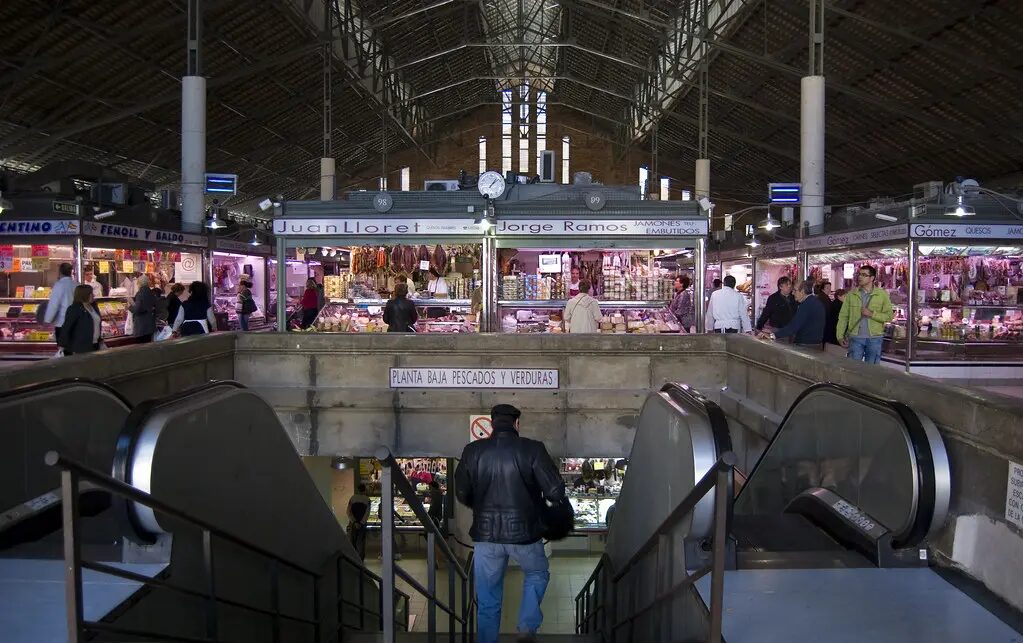
Spain does covered markets better than almost anywhere in the world, and Alicante’s Mercado Central is a fine example of the form. The foundation stone was laid in February 1911 in the presence of King Alfonso XIII; the market opened eleven years later, and it’s been the heartbeat of daily Alicante life ever since.
What You’ll Find Inside
The building is an eclectic structure with Valencian modernist touches, spread across two levels thanks to the clever use of the sloping terrain:
- Lower level: fruit and vegetables, fish and seafood, sweets, bread and wine
- Upper level: meat, cheese, hams and charcuterie
The stalls are less theatrical than Valencia or Barcelona’s markets, but this is precisely why locals still use it for their everyday shopping. You feel the genuine rhythm of Spanish market life rather than a tourist performance.
A Piece of History You Won’t Find in the Guidebooks
On the ground floor, near the escalators, look for a stopped clock showing 10:20. On 25 May 1938, during the Spanish Civil War, Italian bombers attacked Alicante. Several bombs hit the market roof, killing hundreds of civilians. The clock has been left frozen at the moment of the attack – a quiet, sobering memorial in the middle of the city’s busiest food hall.
Before you leave: Outside the entrance, a family-run stall has been selling Turrón – the local almond nougat – for generations. It’s worth sampling.
⏱️ Opening hours: Monday-Saturday, 7:00-14:30 ⏱️ Time to allow: 20-30 minutes
10. MACA and Casa de la Aseguarda – Modern Art in Alicante’s Oldest Secular Building
The Museo de Arte Contemporáneo de Alicante is a treat for anyone who enjoys 20th-century art – and even those who don’t will likely be won over by the building itself. Casa de la Aseguarda, dating from 1685, is the oldest secular building in Alicante. The ground-floor arches are enormous, and the city’s coat of arms is carved into the facade.
Three Floors Worth Exploring
- Top floor: Works by Eusebio Sempere, a locally born master of op-art. His geometric pieces create striking light and movement effects – a member of staff activates them specially for visitors, and children find it genuinely mesmerising
- First floor: A collection of 20th-century avant-garde works including two pieces by Joan Miró (displayed in the central space) and a sketch by Salvador Dalí. There’s also a striking piece nicknamed “the arrest” that generated strong reactions in our family
- Ground floor: Paintings and drawings by Juana Francés, a significant local artist
The museum also owns a work by Pablo Picasso, though it was under restoration on our visit – you may have better luck.
Practical info: Entry is free. The collection is the right size for a focused 30-minute visit without feeling overwhelmed. The building has a lift.
⏱️ Time to allow: 30 minutes 🌐 Official website: maca-alicante.es
11. La Explanada de España – The Famous Mosaic Promenade
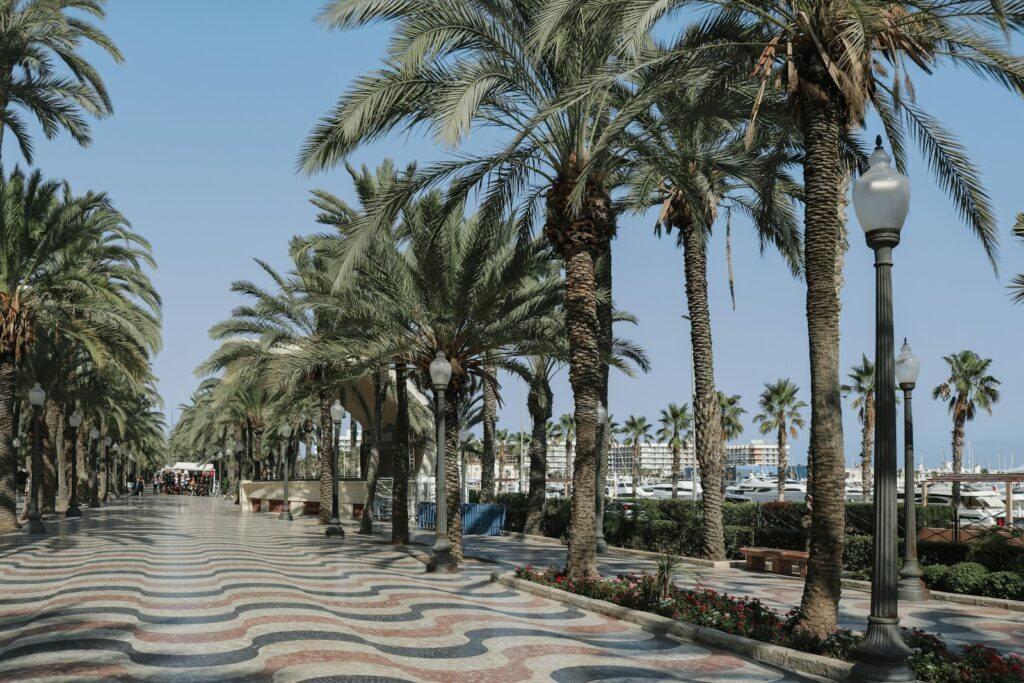
No visit to Alicante for families is complete without a walk along La Explanada de España – the 500-metre palm-lined promenade running along the seafront. Designed in 1959, it’s famous for two things: four rows of towering palms and a wave-patterned marble floor made from 6.5 million individual tiles in red, white and black.
The Mosaic Inspired by Lisbon
The undulating three-colour pattern was inspired by the famous pavements of Lisbon’s Praça do Rossio. The effect is genuinely hypnotic – the ground appears to ripple underfoot, and on sunny days the reflected light makes the whole promenade shimmer.
What Else to Look Out For
- Casa Carbonell (number 1) – a grand 1920s building originally constructed as a private residence for a local industrialist
- Parque Canalejas at the far end of the promenade – a park whose star attraction is a grove of enormous century-old fig trees creating a cathedral-like canopy overhead. Two stone lions guard the entrance, and inside you’ll find sculptures, a fountain and an outdoor gym
Tip: In high season and on weekends, the Explanada gets extremely busy. Early morning or late afternoon gives you the promenade at its best – quieter, with better light for photos.
⏱️ Time to allow: 15-20 min walk + a stop at Parque Canalejas 🌐 More info: alicanteturismo.com
12. The Port Area – Sculptures, a Free Museum and a Zero-Level Monument
The harbour area is more than a backdrop for yachts – wander through it and you’ll find three genuinely worthwhile stops tucked into the waterfront.
Three Highlights in the Port
1. The Queen’s Staircase (Escala de la Reina) features a striking sculpture of Icarus, reimagined as a surfer diving into the water. Look for the Cota Cero column nearby – this is the reference point from which all altitudes above sea level across the whole of Spain are measured. A small detail, but kids find it strangely exciting to be standing at the origin point of the entire country’s elevation system.
2. Passeig Volado is a modern pier extending into the harbour, lined with sculptural metal palm trees. It offers open views of the port and castle and is a lovely place to pause and breathe after the denser streets of the old town.
3. Museo The Ocean Race is a free museum dedicated to the famous round-the-world sailing race, fully described in English. The scale models of past race-winning yachts are genuinely impressive, and even non-sailors will find it worth 20 minutes of their time.
Just a short walk away is Playa del Postiguet, the city’s main urban beach – described in full below.
⏱️ Time to allow: 30-40 minutes for the promenade + museum 💰 Price: Museo The Ocean Race – free
13. San Juan and Muchavista Beaches – 5km of Sand and Calm Water
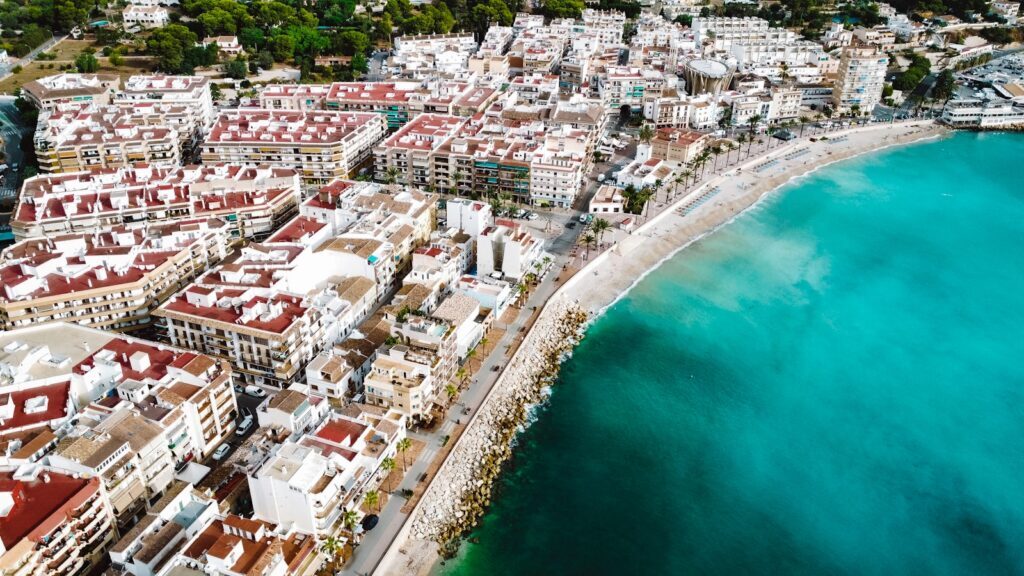
If Postiguet gets too crowded for your liking – and in summer it will – Playa de San Juan and Playa de Muchavista are the answer. They stretch for around 5km and flow seamlessly into each other (San Juan belongs to Alicante municipality, Muchavista to the neighbouring town of El Campello).
What Makes These Beaches Great for Families
- Wide sandy beach with a very gentle slope into the sea – ideal for young children
- A palm-lined promenade running the full length
- Full infrastructure: playgrounds, volleyball courts, outdoor gym equipment, lifeguard posts
- Restaurants and beach bars along the promenade
- Significantly less crowded than Postiguet, especially further north
In peak season, the southern end (near the Alicante hotels) fills up first. Walk a little further north and you’ll find noticeably more space. The roads don’t run along the beach here – it’s a major improvement in atmosphere compared to Postiguet.
These beaches are also genuinely beautiful outside of summer. In autumn and spring, you’ll mostly share them with local joggers and dog walkers, which feels like a privilege.
🚋 Transport: Tram – direct stops along the promenade (Carrabiners, Muchavista, Les Llances)
14. Park Ereta – Walking the City Walls with a View
Parc de l’Ereta drapes across the western slope of the castle hill and ranks among the most beautiful spots in all of Alicante. It serves two purposes perfectly: it’s the most scenic walking route up to Castillo de Santa Bárbara, and it’s worth visiting as a destination in its own right even if you don’t continue to the castle.
What You’ll Find on the Way Up
- Panoramic viewpoints over the old town, port and Mediterranean at multiple levels
- Original sections of the city’s defensive walls, which you can walk along
- Olive trees and shaded paths that make the climb feel genuinely pleasant
- A hilltop restaurant with jaw-dropping views (pricey, but the location is hard to argue with)
- The resident colony of cats who have decided this is their park
Best route: Start from behind the Basilica of Santa Maria. The entrance is discreet, but once you’re on the stone path winding upwards, every fifty metres offers a new perspective on the city.
⏱️ Time to allow: 20-30 minutes as a standalone destination; 30-45 minutes if continuing to the castle
15. Alicante City Hall – A Dalí Sculpture, a Blue Salon and a World Record Nativity
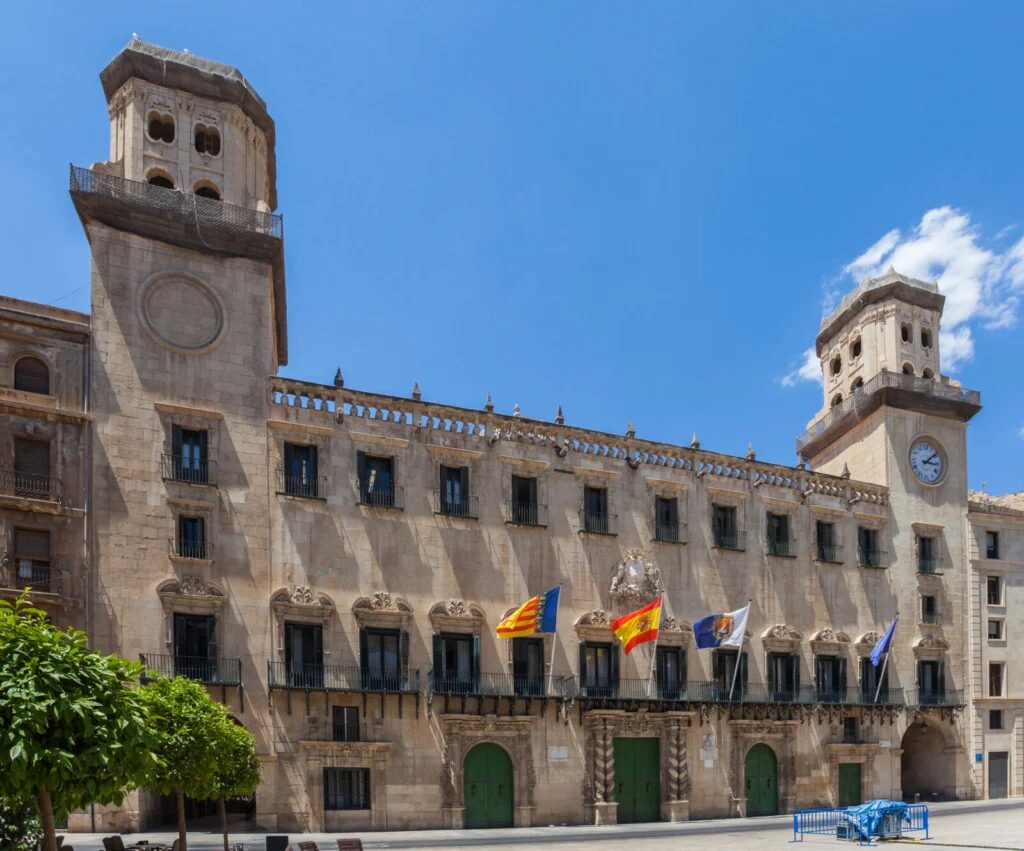
The baroque Ayuntamiento de Alicante was completed in the late 18th century and features twin bell towers and a richly decorated facade – including, somewhat unexpectedly, a carved bust of Miguel de Cervantes, the author of Don Quixote.
Three Surprises Inside
1. The Dalí sculpture – a 3-metre golden figure of Saint John the Baptist, created by Salvador Dalí himself. It stands on the main staircase and is genuinely striking up close.
2. The Cota Cero monument – a reference point used for measuring altitude across Spain (the true zero point is actually closer to the waterfront, but this is the symbolic marker inside City Hall).
3. The Blue Salon – decorated for a visit by Queen Isabella II in 1858 to mark the inauguration of the Madrid-Alicante railway line. The upper floors include several official rooms that are open to visitors.
A world record worth knowing about: During the Christmas season, the square in front of City Hall hosts the world’s tallest nativity scene – a Guinness World Record set in 2019. The figure of Saint Joseph alone stands 18 metres high.
⏱️ Time to allow: 20 minutes 🕐 Visiting hours: Weekdays only, morning hours (check current times before visiting) 💰 Price: Free
16. La Ciudad Descubierta – Underground Archaeology Next to City Hall
Just around the corner from City Hall, descend a flight of steps below street level and you’ll find La Ciudad Descubierta – a preserved archaeological site that tells the violent history of old Alicante in a very literal way.
The city was essentially levelled twice: first by French artillery in 1691 (seven days of sustained bombardment) and again during a British siege in 1706. Together, these events destroyed up to 90% of the historic urban fabric.
What’s Preserved Below Ground
- Foundations of houses and shops from both the Moorish and Christian periods
- Remnants of 16th and 17th-century streets
- An original section of defensive wall from the 13th or 14th century, later incorporated into the buildings above
- Scale models of what medieval Alicante looked like before the destruction
Practical info: Usually open on weekdays in the morning (check current hours). There’s limited explanatory material on-site, so 15 minutes is sufficient. If you arrive outside opening hours, you can still peer through the glass panels at street level.
⏱️ Time to allow: 15 minutes 💰 Price: Free
17. Hotel Gran Sol Balcony – Free City Views from the 26th Floor
We don’t normally include hotel restaurants in a list of Alicante’s best things to do for families, but this one is the exception. The Hotel Gran Sol – the only genuinely tall building in Alicante’s city centre – has a restaurant and bar on the 26th floor with an open outdoor balcony that offers one of the best views in the city.
Why It’s Worth Going Up
The view from the balcony sweeps across the old town, the castle and the port. Come before sunset to watch the light change colour across the Mediterranean – the castle glowing amber, the harbour gradually filling with gold. It’s a genuinely memorable experience.
How to get there: Simply walk into the hotel and take the lift as high as it goes, then walk up two flights of stairs. Fair warning: the lift is elderly and slightly theatrical in its movements – there’s some swaying and the sound of wind – which some children find exciting and others find alarming.
Note: The balcony is part of the restaurant space, so during lunch and dinner service you may not be able to step outside. Check timing accordingly, or be prepared to order something from the bar (prices are reasonable).
💰 Price: Free (though ordering a drink is good form) ⏱️ Time to allow: 20-30 minutes
18. Playa del Postiguet – The Urban Beach at the Foot of the Castle
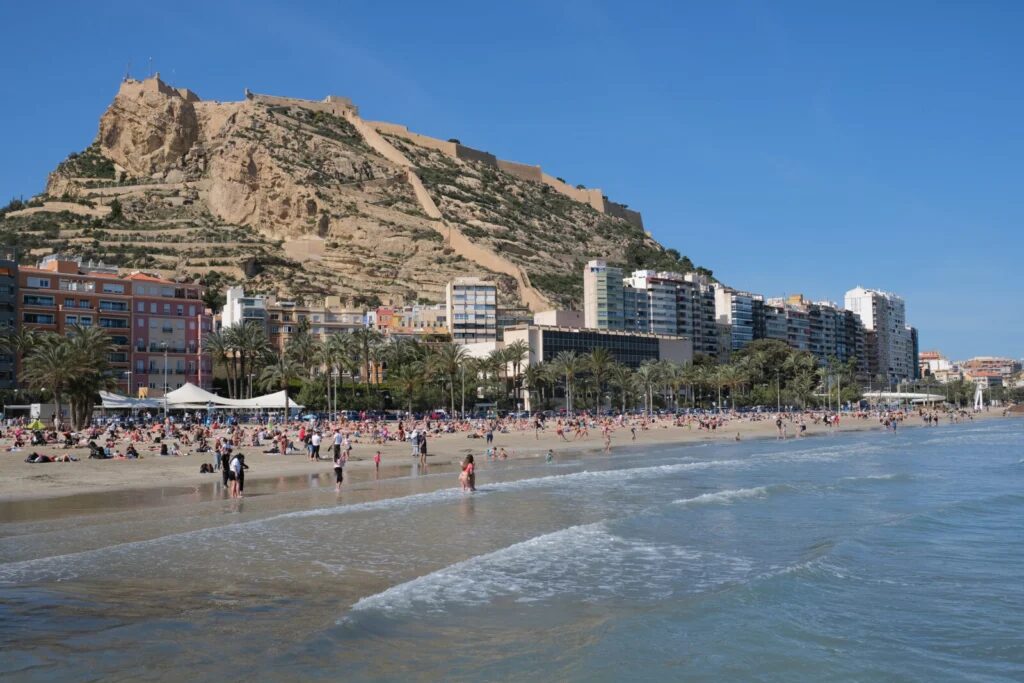
Playa del Postiguet is Alicante’s most central beach and the one most visitors end up on first. Stretching 900 metres in length and 50 metres wide, it sits directly at the base of the Benacantil hill, with the castle watching over it from above.
What Makes It Special
- Central location – a few minutes’ walk from the old town and the Explanada
- A promenade lined with palms, laid with unusual 3D-effect tiles
- Full facilities: sunbed and parasol rental, showers, toilets, lifeguards, playgrounds
- Bars and restaurants along the promenade
- Blue Flag certified (water quality and safety standards)
- That castle view, which you genuinely never get tired of
The beach gets very busy in summer, and there are always people here even in winter – Alicante’s daytime temperatures rarely drop below 15-18°C, so you’ll occasionally spot locals sunbathing in December, and the bravest actually swimming.
If you’re after space and quiet, San Juan is the better choice. But for convenience and atmosphere, Postiguet is hard to beat.
⏱️ Time to allow: 1 hour minimum 🚇 Transport: Walk from the city centre; the castle lift is on Avenida Juan Bautista Lafora
19. Plaza de los Luceros – The Iconic Horse Fountain Square
Plaza de los Luceros is Alicante’s central square, where four of the city’s main avenues converge. At its heart stands a majestic fountain built in 1930 by local sculptor Daniel Bañuls Martínez. It’s known colloquially as Plaça dels Cavalls – Horse Square – because of the four horses at its base.
The fountain’s full iconography is worth a second look: the horses support a central obelisk crowned with female figures representing the Hesperides (nymphs from Greek mythology), topped by a ceramic star. The name “Luceros” comes from those decorative stars (the Spanish word lucero means “bright star”).
The square is also genuinely alive throughout the year – it hosts the daily Mascletà fireworks during the Hogueras festival, and spontaneous celebrations whenever the local football club Hércules de Alicante achieves something worth celebrating.
⏱️ Time to allow: 10 minutes (a natural stop on any city walk)
20. Chocolate Museum (Museu de la Xocolata) – A Sweet Ending
We’ve saved the most popular one with children for last. Alicante’s Chocolate Museum is a pure delight for anyone with a sweet tooth – and, honestly, that’s everyone in our family. We weren’t able to visit during our stay, but everything we gathered about it points firmly to: absolutely worth it.
What Awaits Inside
- The history of chocolate – from ancient Mesoamerican civilisations to modern confectionery, including the period when cacao beans were used as currency
- Chocolate sculptures – full-scale replicas of famous buildings and historical figures created entirely in chocolate
- Chocolate-making workshops – the real draw for families. Children and adults can create their own truffles and desserts, learning the production process hands-on
- The chocolate shop – a broad selection from traditional bars to unusual flavour combinations and experimental creations
Practical info: Workshops are usually bookable in advance – check the official website for current prices, opening hours and workshop availability before you go.
⏱️ Time to allow: 1-1.5 hours (with workshop)
Free Things to Do in Alicante with Kids
One of the genuinely pleasing surprises about Alicante is how much you can see for free. Here’s the complete list:
Landmarks and Viewpoints
- ✅ Castillo de Santa Bárbara – free entry (lift: €2.70)
- ✅ Park Ereta – city wall walk with views
- ✅ Barrio de Santa Cruz – the blue-pot house and hermitage viewpoint
- ✅ Concathedral of San Nicolás – main nave (tower and cloisters have a charge)
- ✅ City Hall – Dalí sculpture, Blue Salon, Cota Cero marker
Museums and Exhibitions
- ✅ MACA (Contemporary Art Museum) – works by Miró and Dalí
- ✅ Museo de Fogueres – fire festival sculptures
- ✅ La Ciudad Descubierta – underground archaeology site
- ✅ Museo The Ocean Race – sailing museum in the port
- ✅ Pałac Portalet – city history exhibition (Calle Labradores 15)
Parks and Public Spaces
- ✅ Carrer dels Bolets – Mushroom Street art installation
- ✅ Plaza Gabriel Miró – Aphrodite fountain and ancient fig trees
- ✅ Parque Canalejas – century-old figs near the Explanada
- ✅ Plaza de los Luceros – horse fountain and star column
- ✅ La Explanada de España – the mosaic promenade
- ✅ Passeig Volado – harbour pier with castle views
- ✅ Park El Palmeral – palm forest with playgrounds
Beaches
- ✅ Playa del Postiguet – urban beach below the castle
- ✅ Playa de San Juan and Muchavista – 5km of sandy beach with promenade
Bonus: The Hotel Gran Sol viewpoint (26th floor balcony) – free, though ordering a drink at the bar is encouraged.
Alicante with Kids Itinerary – 3 Days
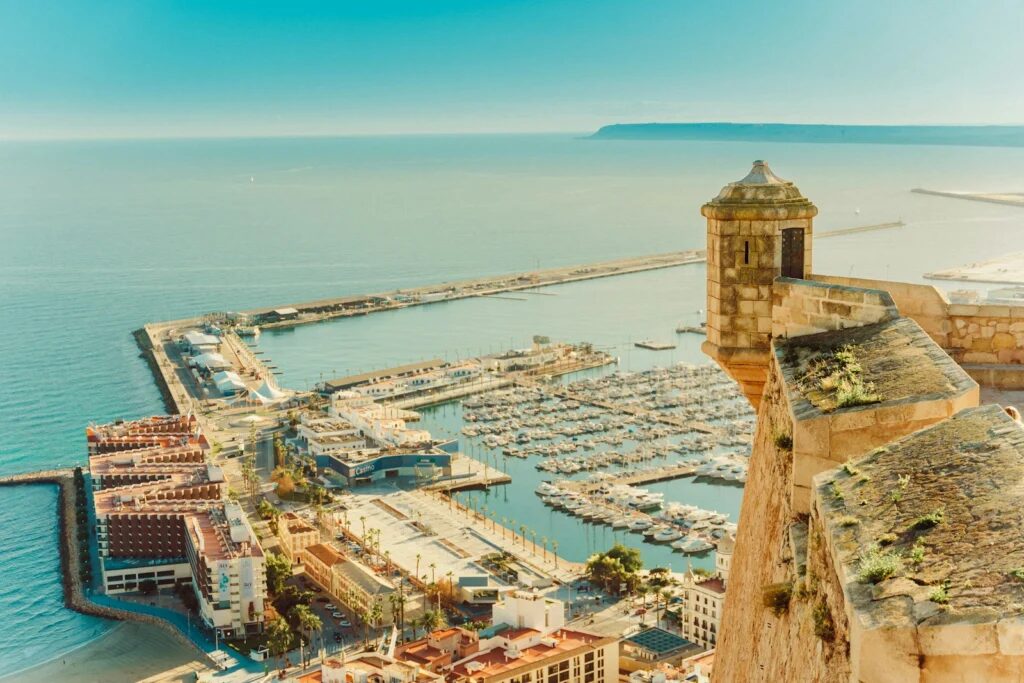
Short on time but want to see the highlights? Here’s a tried-and-tested plan that balances history, culture, beach and food for families.
Day 1: Old Town, Castle and the Legend of the Moorish Face
Morning (9:00-13:00):
- City Hall – Dalí sculpture, Blue Salon, Cota Cero (30 min)
- La Ciudad Descubierta – underground archaeology next door (15 min)
- Basilica of Santa Maria – oldest church in the city, bell tower climb (60 min)
- Barrio de Santa Cruz – narrow lanes, blue-pot house, hermitage viewpoint (45 min)
- Park Ereta – scenic walk up to the castle (30 min)
- Castillo de Santa Bárbara – full exploration of the fortress (90 min)
Lunch: Descend via Park Ereta or take the lift. Eat near Mercado Central or the Explanada.
Afternoon (15:00-18:00):
- Mercado Central – historic market hall (30 min)
- Carrer dels Bolets – Mushroom Street (20 min)
- Plaza Gabriel Miró – fountain and century-old figs (15 min)
- La Explanada de España – mosaic promenade, Casa Carbonell, Parque Canalejas (30 min)
Evening: Dinner at the port, walk along the Passeig Volado. If energy allows, head up to the Gran Sol balcony before sunset.
Day 2: Museums, the Concathedral and Plaza de los Luceros
Morning (9:00-13:00):
- Concathedral of San Nicolás – cloisters and diocesan museum (30 min)
- Calle Labradores – beautiful historic palaces, Portalet exhibition (30 min)
- MARQ Archaeological Museum – prehistoric to medieval, fully interactive (75 min)
Lunch: Return by tram or walk down from MARQ (20 min). Eat in the centre or near Postiguet beach.
Afternoon (14:00-18:00):
- MACA Contemporary Art Museum – Miró, Dalí, op-art (40 min)
- Museo de Fogueres – fire festival sculptures (30 min)
- Plaza de los Luceros – the horse fountain (10 min)
- Playa del Postiguet – beach and sea (as long as you like)
Evening: Tardeo alicantino – early evening tapas near the old town. Try arroz a banda, gambas al ajillo and tortilla de patatas.
Day 3: Roman Ruins and San Juan Beach
Morning (9:00-13:00):
- Tossal de Manises (Lucentum) – Roman city ruins: forum, baths, walls (75 min)
- Transport: Tram to Albufereta, 10-min walk uphill
- Playa de San Juan – wide sandy beach with promenade (minimum 2 hours)
Lunch: Restaurant on the San Juan promenade (arroz con costra or paella alicantina)
Afternoon (15:00-18:00):
- Continue walking the 5km San Juan and Muchavista promenade
- Alternative: return to the centre for the Chocolate Museum or Park El Palmeral
Evening: Farewell dinner near the port. Pick up Turrón from the ESPI shop or the stall outside Mercado Central – the perfect edible souvenir.
<a name=”1week”></a>
Alicante with Kids Itinerary – 1 Week
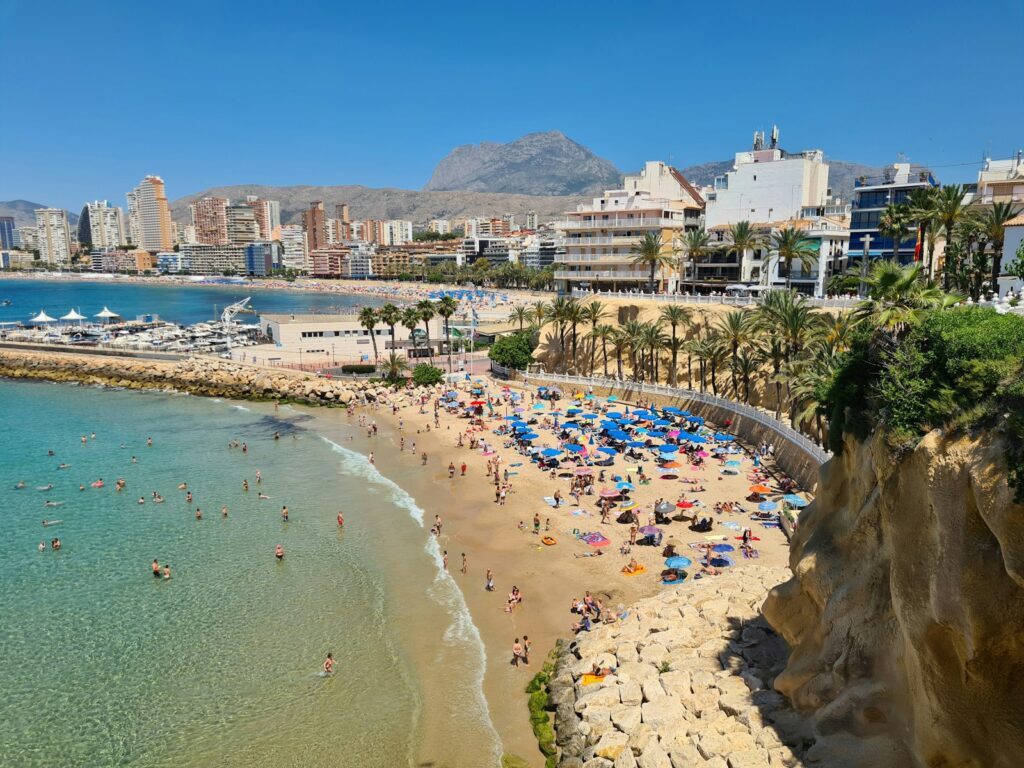
A full week in Alicante gives you everything: the city’s highlights at a relaxed pace, time on the beaches, lesser-known corners and at least one day trip into the surrounding region.
Days 1-3
Follow the 3-day itinerary above exactly.
Day 4: Beaches and Palms – Muchavista and Park El Palmeral
Morning: Head to Playa Muchavista – the quieter continuation of San Juan beach. Take the tram to the Muchavista or Les Llances stops. Swim, walk the promenade, let the kids loose on the sand.
Afternoon: Park El Palmeral – palms, ducks, playgrounds. If the Chocolate Museum hasn’t been visited yet, this afternoon works well for it.
Evening: Return to the centre, stroll the Explanada by night – fewer crowds, softer light, a different atmosphere entirely.
Day 5: Off the Beaten Track
Morning:
- Castillo de San Fernando – a different fortress, different angle on the city (45 min)
- Museo de Belenes – a museum dedicated to nativity scenes with intricate figures (45 min)
- Museo de Aguas – water history museum with access to 19th-century reservoirs (45 min)
Afternoon:
- Illeta dels Banyets – an archaeological site on a small headland 9km north of Alicante, with a beach nearby
- Alternative: Civil War underground shelters (guided tours available – check booking requirements)
Day 6: Day Trip – Villajoyosa or Guadalest
Time to leave the city for a day. Two excellent options:
Option A: Villajoyosa – a colourful fishing village 30km up the coast
- Transport: Tram (around 40 minutes)
- See the famous multicoloured harbourfront houses, visit the Valor Chocolate Museum, walk the beach, visit the church of Nuestra Señora de la Asunción
- Lunch: Fresh fish at a harbour restaurant
Option B: Guadalest – a castle perched impossibly on a rocky spike above an inland village
- Transport: Bus from Alicante (around 1 hour)
- Explore the castle, visit the quirky miniature museum and the old oil mill, take in the dam views
- Lunch: Traditional Valencian food in one of the village restaurants
Day 7: Last Morning, Souvenirs and Farewells
Morning:
- Return to a favourite spot (the castle? the beach?)
- Souvenir shopping: Turrón from ESPI, the stall at Mercado Central, or the famous 1880 brand
- Final walk through the market
Afternoon:
- Last stroll along the Explanada and port
- Plaza de Toros (bullring) – if interested, audio-guided tours available (€9, 60 min)
- Alternative: final afternoon on Postiguet beach
Evening: Farewell dinner at your favourite restaurant of the week. One last look at the castle lit up against the night sky before heading home.
<a name=”faq”></a>
FAQ – Alicante with Kids
Without question. Alicante has a remarkable range of family-friendly attractions: interactive museums (MARQ, Fogueres), imaginative outdoor spaces (Santa Cruz, Mushroom Street), proper medieval castles to explore, sandy beaches with good infrastructure, and parks with proper playgrounds. Spanish culture is genuinely welcoming to children – in restaurants, bars and public spaces, kids are always made to feel at home.
A long weekend (2-3 days) is enough to cover the major highlights – the castle, old town, main museums and a beach day. A full week allows for a much more relaxed pace, day trips to the surrounding region (Guadalest, Villajoyosa, Tabarca Island) and proper time on the beaches.
May, June and September are ideal – temperatures of 22-26°C, noticeably fewer tourists and accommodation prices typically 30-40% lower than peak season. July and August bring intense heat (35°C+) and serious crowds, which can be exhausting for children. Winter (December-February) offers 15-18°C during the day – great for sightseeing, though swimming is for the bold only.
Yes, in around 95% of places. Cards are accepted at restaurants, hotels, supermarkets and major attractions. Keep €50-100 cash for small ice cream stalls and occasional car park machines.
Budget realistically for around €1,100-1,500 excluding flights. This covers: accommodation (self-catering apartment) around €600-900, food around €350-450 (with some self-catering), attraction tickets €150-250, and local transport around €50. The biggest saving is cooking breakfasts and some evening meals rather than eating out three times a day.
Yes – all tram vehicles have low floors and ramps, and drivers are helpful. Buses are also low-floor throughout. The main challenge is the castle: the lift (€2.70) is far easier than pushing a buggy up the hill. Most of the old town centre has cobbled streets, so a lighter, more manoeuvrable buggy is worth considering over a full travel pram.
Sun hats and SPF50+ sunscreen (non-negotiable even in spring), a second pair of walking shoes (the first pair will be soaked from sweat after a day of 12,000+ steps), water shoes for water parks and rocky beach sections, and a power bank – children drain phones taking photos within four hours.
Very safe. Crime levels are low, much of the centre is pedestrianised and Spanish people are consistently warm and welcoming to families with children. Beaches have lifeguards during the season. The main practical risk is the sun – water, sunscreen and hats solve it.
Is Alicante Worth Visiting with Kids? Our Final Verdict
Absolutely, and without hesitation. Alicante is one of the best family destinations in Spain – it combines Mediterranean beach holidays with real history, genuine culture and the kind of everyday Spanish city life that you simply don’t get in more overtouristed places. Unlike Barcelona’s crowds or Marbella’s prices, Alicante remains accessible, authentic and human-scaled.
Our top 3 things to do in Alicante with kids:
- Castillo de Santa Bárbara – exploring a real medieval fortress, with the legend of the Moorish Face to fire up imaginations
- Barrio de Santa Cruz – the prettiest neighbourhood in the city, still magical even with other visitors around
- Museo de Fogueres – giant, colourful festival sculptures that stop children in their tracks
Bonus: Playa de San Juan – five kilometres of calm, shallow water and sandy promenade where kids can genuinely run free.
If we went back (and we would, without any debate), we’d go in September – cooler, quieter and just as beautiful. We’d bring better walking shoes, twice as much sunscreen and a larger appetite for the local rice dishes.
Alicante with kids isn’t just a tick on a travel list. It’s a place where children discover that history can be thrilling (Roman ruins!), that culture can be joyful (the fire festival!), and that sunshine, sea and pistachio ice cream are a perfectly valid formula for a happy family holiday. See you on the Costa Blanca.