
Parliamentary Probe into Coastal Works Admitted
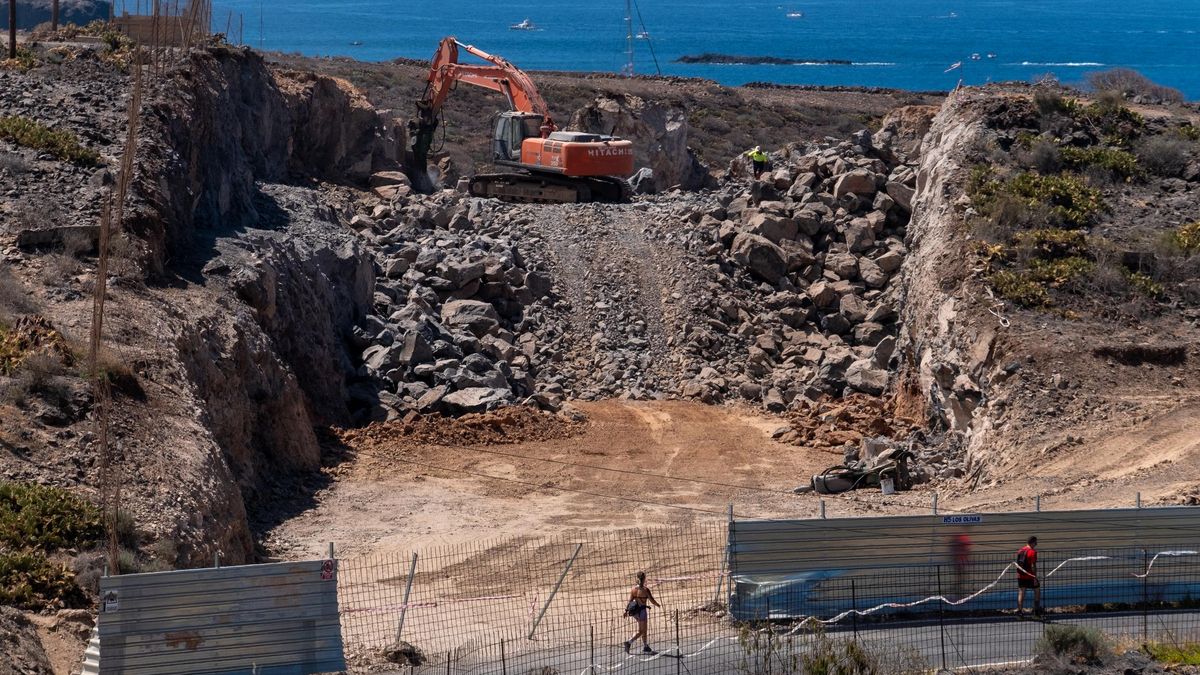
The Parliament of the Canary Islands has taken the initial step to investigate the works for the controversial Cuna del Alma tourist project within a protected coastal zone. The regional government authorised the development at the beginning of last year, arguing it was beneficial for tourism, as was first reported by Canarias Ahora. The parliamentary bureau has admitted for processing an administrative complaint filed by several social and environmental groups, including El Tagoror Permanente Rotativo, Rebelión Científica Canarias, La Gaveta 20A, and the Asamblea Reivindicativa Canaria (ARCAN), alongside the Galindo family, who are affected by an expropriation in El Puertito de Adeje.
Complaint Circulated to Authorities
The complaint has also been sent to the regional government’s Ministry of Public Works, Housing and Mobility, the Canary Agency for the Protection of the Natural Environment (ACPMN), the Tenerife Island Council, and the national Ministry for Ecological Transition and the Demographic Challenge. Parliament has now instructed the Committee on the Statute of MPs and Petitions, which includes members from all political parties, to study the allegations. Its members must issue a final agreement and notify the complainants, whom they could summon for a special hearing to present the details of their case.
Limited Powers But Significant Scrutiny
Although the Parliament’s powers are limited—it cannot halt the works, for example—it can demand that the government, formed by Coalición Canaria and the Partido Popular, hand over all files, reports, and documents related to Cuna del Alma. It can also demand accountability or even open a full commission of inquiry. In principle, it has three months to reach a decision. The committee members are Marcos Guillén (PSOE), Socorro Beato (CC), María Saavedra (PP), Yone Caraballo (Nueva Canarias), Paula Jover (Vox), Jesús Chinea (ASG), and Raúl Acosta (mixed group).
Allegations of Institutional Complicity
The groups denounce the institutional complicity of the Canary Islands Government in smoothing the path for Cuna del Alma. This tourist project plans to build more than 3,600 tourist beds in one of the last undeveloped areas in the south of Tenerife, surrounded by a Special Area of Conservation (ZEC), a Site of Scientific Interest (SIC), and a Place of Geological Interest (LIG) designated by the Geological and Mining Institute (IGME). Specifically, they focus on works authorised by the General Directorate for the Coast in the coastal protection strip, where permitted uses are highly restricted.
Construction is only allowed for works, installations, and activities that, by their nature, cannot be located elsewhere—such as marine aquaculture facilities or coastal salt pans—or those that provide services necessary or convenient for the use of the public maritime-terrestrial domain. However, the regional executive gave the green light to the works, which include an open-air swimming pool, a restaurant, and a buggy car park, arguing the development was “convenient for the Canary Islands’ economic model based on mass tourism.”
Contested Justification and Broader Impact
The Coast authority had initially drafted a report rejecting the works, arguing they could be located outside the coastal protection strip and did not provide a necessary or convenient service to the public maritime-terrestrial domain. However, after the developer appealed, the authority adopted their arguments and finally authorised the construction to ensure “[Canary Islands beaches] are equipped with this type of service.” It should be noted this concerns only a small part of the Cuna del Alma development in Puertito de Adeje—specifically, 5.25% of plot T2, covering some 45,000 square metres. The overall plan spans approximately 430,000 m².
The complainants argue that an authorisation of this kind requires robust justification, which is either non-existent or insufficient in this case. They state the rationale—that it is good for tourism—is “generic, abstract, and decontextualised,” failing to consider the territorial and socio-economic reality of Adeje, one of the islands’ municipalities under the greatest urban and tourist pressure. The complaint states that giving Cuna del Alma the go-ahead “aggravates existing territorial imbalances, increasing pressure on the coastline, making it harder for residents to access housing, and deepening a model of tourist saturation and runaway development widely documented and strongly questioned by a large part of the Canarian population who already suffer its consequences: runaway price inflation, road collapse, pollution of water, land and skies, lack of resources, healthcare collapse, increase in mafias, speculation and political corruption.”
Warnings and Demands for Action
The complaint also references a report from MITECO (the Ministry for Ecological Transition) which warned of a lack of information to properly evaluate these same works within the coastal protection strip. The state requested further documentation and studies, but there is no record of it having been provided. The groups maintain there is institutional complicity through action by the regional government to favour the controversial project. They recall that the regional Minister for Ecological Transition and Energy, Mariano Zapata (PP), promised in September 2023 that he would “not look the other way” and would be “scrupulous with the law.” Two and a half years later, however, environmentalists argue there has been a change of heart and a failure to act on his part.
The complaint further warns of a “dynamic of faits accomplis” where the advance of construction precedes any real guarantee of protecting historical heritage, “increasing the risk of irreversible damage.” It also denounces alleged coercion and numerous irregularities in the functioning of the project’s Compensation Board. The groups are demanding the immediate suspension of the works, an inspection of the El Puertito area to check the state of archaeological remains and ensure their conservation, and the accountability of senior officials or civil servants who permitted the works in a context of grave environmental and heritage risk.
No post found!