Compiled with the help of artificial intelligence, based on Spanish-language information. Source below the article.
Snow still caps Spain’s highest peak
Mount Teide is sporting its distinctive white hat once again. The snow that fell this Sunday as the low-pressure system passed through continues to cover Spain’s highest peak, while rain keeps lashing the Archipelago, especially the westernmost islands of La Palma, La Gomera and El Hierro, which remain on alert for the risk of heavy or very heavy rainfall.
Tenerife eases restrictions as instability lingers
In Tenerife, conditions have improved compared with Sunday. The island council (Cabildo) downgraded the Island Emergency Plan (PEIN) to pre-alert across the island in the early hours of this Monday, allowing the restrictions affecting cultural and sporting facilities run by the island authority to be lifted. The improvement does not mean the instability has disappeared entirely, however, as Aemet maintains yellow warnings for rain and storms in Tenerife and parts of Gran Canaria, although any rainfall is expected to be less intense than that recorded on Sunday. The most complex situation remains in the so-called Green Islands, which are also under an orange warning from Aemet.
Seven Teide trails closed over ice and snow
The snow that fell during the bad weather continues to have consequences in the highest areas of the National Park, and the Cabildo has therefore kept access restrictions in place on seven trails because of the presence of ice and snow, particularly on sections above 2,700 metres in altitude. The limitations affect seven trails in the National Park, including Montaña Blanca-La Rambleta, Teide-Pico Viejo, Telesforo Bravo, the La Fortaleza and Pico Viejo viewpoints, Los Regatones Negros and Chafarí. Access to these routes is reserved for experienced mountaineers with the appropriate winter equipment to negotiate sections where ice and snow make progress difficult and increase the risk of accidents.
Ninety-five incidents coordinated since the storm began
The effects of the bad weather have also been felt beyond the summit areas. The Emergency and Security Coordination Centre (CECOES) 112, the public service responsible for handling urgent and emergency calls in the Canary Islands, has coordinated close to a hundred incidents since the low-pressure system arrived. Its director, Moisés Sánchez, has given a breakdown of the incidents recorded between midnight on Sunday 1 November and 12.00 on this Monday, a period in which 95 call-outs were logged relating both to the adverse weather phenomena and to problems stemming from the electricity supply. Of the total, 68 were recorded in Tenerife, 16 in La Palma, five in El Hierro and six in La Gomera, according to the figures provided by Sánchez.
Blackout leaves La Palma without power for hours
Among the main incidents were cuts to basic services, pumping out of water — especially in Granadilla de Abona, Arona and Santa Cruz de Tenerife — and falling stones and rocks onto road surfaces as a result of the rain and wind. The most serious episode occurred in La Palma, where a power failure left the entire island without electricity for several hours. According to the director of CECOES, the service was aware of an initial partial cut at around 4.10, which mainly affected the western side and was resolved some 40 minutes later. However, at 6.45 a general blackout hit the whole of the island, with supply not fully restored until around 10.30.
What’s happening in the Canaries – straight to your phone
News, weather alerts and practical updates – direct from the islands, in English. We live here and know what’s going on – before the international media catch up. Everything lands on our WhatsApp channel – no middlemen, no algorithm. Curated for families, expats and travelers.


Tenerife weather: sunshine and 26C for Sunday 22 November
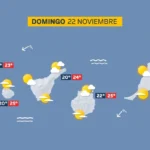
Sunday: sunshine, scattered cloud and a light calima

Tenerife weather: Stable skies and a slight lift in temperatures
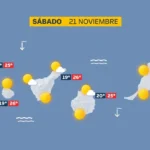
Saturday: sunshine and a calm Atlantic

DGT unveils new colour-coded winter road warnings
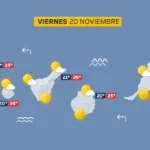
Friday: calm skies and a building Atlantic swell
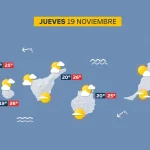
Thursday: scattered cloud and a building Atlantic swell

British man, 23, dies after being pulled from Tenerife sea

Tenerife weather: Sunshine and 27C forecast for Wednesday