
Teide National Park closed due to snow and ice
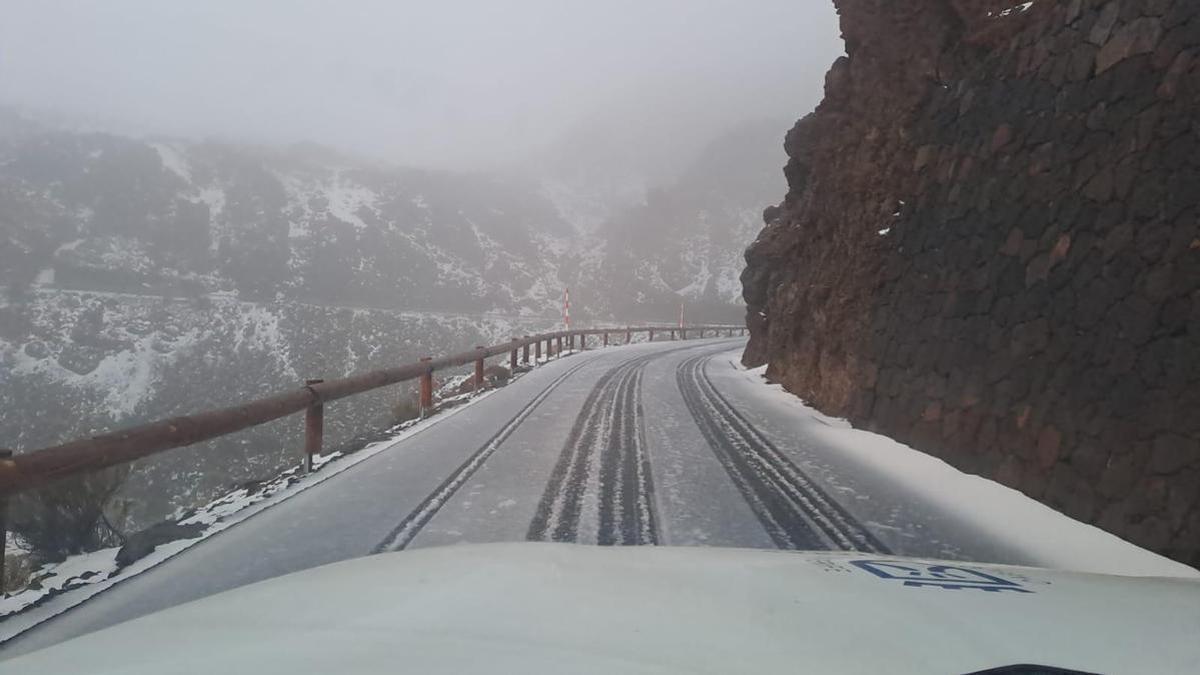
Access to Teide National Park on Tenerife is closed this Friday, 27 February 2026, due to snow settled on the summit following a cut-off low (DANA) affecting the entire archipelago. Vehicles cannot enter the protected area via the TF-24 (from La Esperanza) or the TF-21 (from La Orotava) because of ice and snow build-up overnight. The closure, confirmed by the Tenerife Island Council (Cabildo), aims to guarantee public and emergency team safety.
Island-wide alert for winds, storms, rain and calima
The island remains under a General Directorate of Emergencies alert for high winds, storms, rainfall, and calima (Saharan dust haze). In the northern zone of the national park, between Portillo Alto and Montaña Blanca, the night from Thursday to Friday saw intense hail and rain showers accompanied by powerful wind gusts. Several minor incidents, mainly related to wind and rain, required action from emergency and road maintenance services.
Reported incidents across the island
These incidents included a fallen lamppost on the TF-274 (at kilometre point 4), a tree blocking the road on the TF-143 at the entrance to Batán in the Anaga massif, a fallen palm tree on the road to Chejelipe in the San Antonio area, and a toppled traffic light on the intersection of Álvarez de Lugo and Ramón y Cajal streets in Santa Cruz de Tenerife. Branches and other urban debris were also displaced in various parts of the island.
Forest track restrictions and call for caution
As a further preventative measure, primarily due to the strong wind gusts, access and circulation on the island’s forest tracks have been restricted since 09:00 today. Access is only permitted to recreational areas and authorised zones that remain open. The island’s councillor for the Natural Environment, Sustainability, Security and Emergencies, Blanca Pérez, stated that “the absolute priority is people’s safety, which is why we are keeping access to Teide closed and restrictions in forest areas in place while adverse weather conditions persist.”
Pérez added that “teams worked in a coordinated manner overnight to deal with incidents caused by wind and rain, and we continue to constantly monitor the evolution of the weather phenomenon to adapt preventative measures according to risk.” She also appealed for public “prudence”, reminding everyone that “it is essential to avoid unnecessary travel to summit and forest areas, and to respect all closures and instructions from emergency services.”
Wind gusts exceed 100 km/h
The council reiterated the importance of taking extreme precautions, not driving on roads affected by ice, snow, or landslides, and always following the instructions of security services and the relevant authorities. Strong wind gusts again exceeded 100 kilometres per hour on Tenerife’s summit. The highest readings were recorded at Izaña on Teide, with 115 km/h in the early hours. At this same location on Thursday, gusts had reached 127 km/h. The second highest value was recorded in the highlands of Vallehermoso on the island of La Gomera, with 107 km/h.
No post found!