
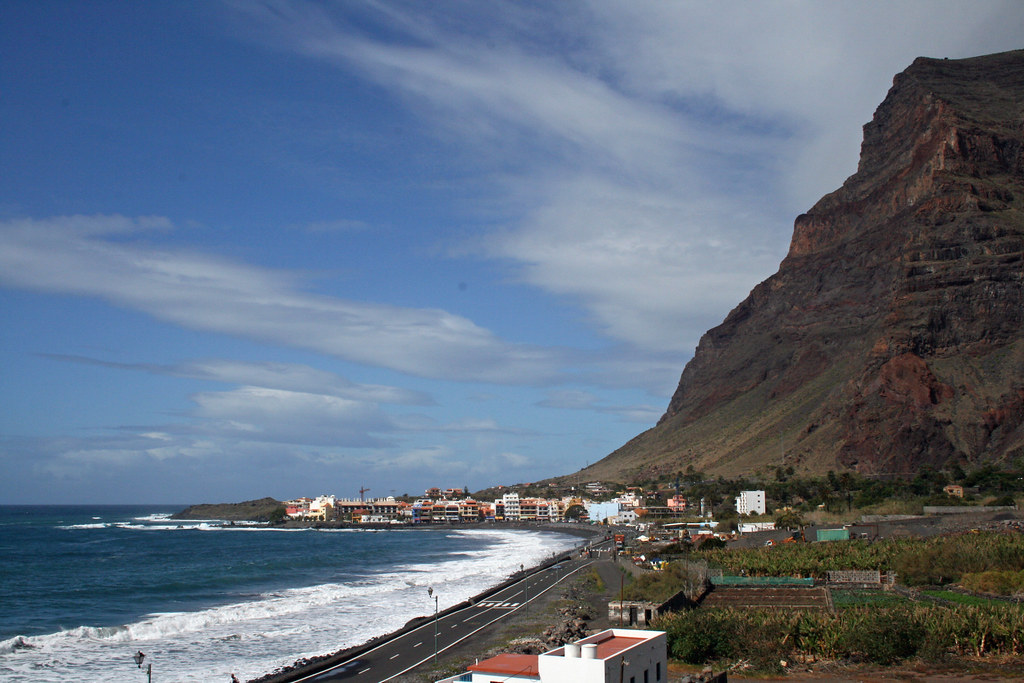
Valle Gran Rey is the most extraordinary place on La Gomera — and one of the most fascinating in the Canary Islands. This deep, dramatic valley on the island’s west coast tumbles towards the ocean in terraces of banana plantations and palm trees, ending in a string of black sandy beaches. Since the 1970s it has attracted an alternative crowd — hippies, artists, musicians and people seeking a simpler life. Today the atmosphere is gentler, but the bohemian spirit endures.
Three beaches, three characters
Playa del Inglés is the longest and wildest of the Valle Gran Rey beaches. Black sand stretches for several hundred metres at the foot of the cliffs, and at its northern end lies an unofficial nudist area. This is where the hippie tradition runs strongest — you can still find people living in caves above the beach (though the authorities regularly try to put a stop to it). Swimming is possible, but currents can be strong.
Playa de La Calera is the central beach — it sits directly below the village of La Calera, along the main promenade. Dark sand, calm water by the breakwater, restaurants and bars just steps away. This is the best option for families and anyone looking for comfort without sacrificing the Valle Gran Rey atmosphere.
Playa de Vueltas is a small beach beside the fishing port. Sheltered by a breakwater, it has the calmest water — ideal for swimming with children. Next to the quay, colourful boats and the ferry to Los Cristianos (Tenerife) bob on the swell. Seafood restaurants by the port serve the freshest catch of the day.
Bohemian atmosphere
Valle Gran Rey is not a tourist resort — it is a community. A German-speaking diaspora (mainly from Germany, Austria and Switzerland) settled here in the 1980s and 90s, creating a unique cultural blend. In the lanes of La Calera and the port bars of Vueltas, you will hear German as often as Spanish. Restaurant prices are among the lowest in the Canaries — a menú del día (set lunch) for 8-10 euros is standard.
In the evenings, street musicians play along the promenade, bars host jam sessions, and people sit in circles on the beach. Carnival in Valle Gran Rey — smaller but more authentic than in Santa Cruz de Tenerife — is one of the most colourful cultural events on the smaller islands.
Practical information
- Getting there: by car from San Sebastián de La Gomera (capital and ferry port) on the GM-1, about 50 minutes through the mountains. The road is winding but paved and well maintained.
- Ferry: from Los Cristianos (Tenerife) to San Sebastián (Fred Olsen, 50 min), then by car or bus to Valle Gran Rey. Or a direct ferry to Vueltas (limited services).
- Public transport: buses from San Sebastián to Valle Gran Rey (line 1, several services daily, about 1 hour).
- Facilities: showers and toilets at the main beaches, lifeguards in season at La Calera.
- Accommodation: apartments and small guesthouses — no large hotels. Best to book ahead in peak season (winter is the busiest time).
- Sunsets: west-facing coast — the sunsets are spectacular, especially from the La Calera promenade.
Nearby beaches
- Playa de Argaga — a small, wild cove south of Valle Gran Rey, accessible only on foot (about 30 min). Nudist.
- Playa de Santiago — 40 minutes east by car, a quiet fishing village with a beach.
- Playa de Alojera — on the island’s north-west coast, black sand beneath banana terraces, about 40 minutes by car.
Weather in Valle Gran Rey
Valle Gran Rey is the warmest and driest spot on La Gomera. The deep valley shelters its beaches from the trade winds, creating a microclimate ideal for swimming and sunbathing. Check the current weather in Valle Gran Rey.