
Playa de Puerto Naos is the largest and longest beach on La Palma — nearly 500 metres of black volcanic sand on the island’s west coast. For years, it was La Palma’s main tourist bathing spot, boasting a Blue Flag award, a seafront promenade and full facilities. The eruption of Tajogaite volcano in September 2021 changed everything — not by destroying the beach itself, but by forcing the evacuation of the entire town due to volcanic gas emissions.
After the eruption — current situation
Be sure to check the current status of Puerto Naos before planning your visit. Following the eruption of Tajogaite (Cumbre Vieja) in 2021, elevated levels of carbon dioxide (CO2) seeping from the ground were detected in the Puerto Naos area. This odourless gas, heavier than air, accumulated in basements, garages and lower sections of buildings, posing a serious threat to health and life.
The evacuated town remained sealed off for many months. Gradually, as gas emissions decreased, the authorities began allowing people to return — first the beach itself (reopened in 2023), then individual buildings. However, the recovery process has been slow and not all properties have been cleared for use. Always check the latest updates before travelling.
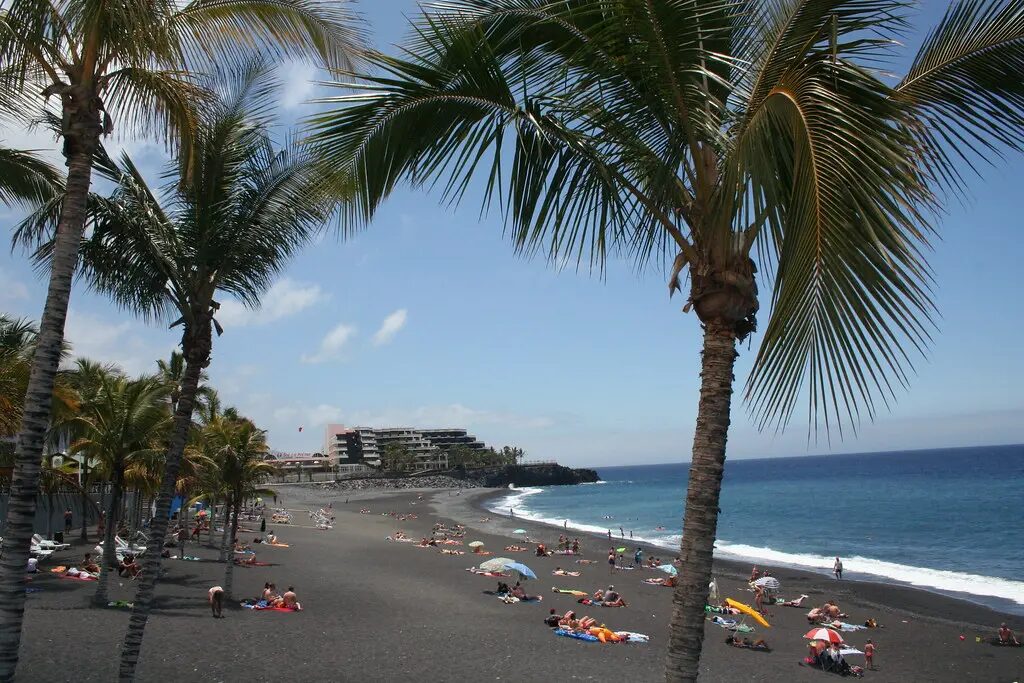
The beach — black sand and calm water
Playa de Puerto Naos is a wide stretch of dark grey, almost black volcanic sand. The beach faces west, which means spectacular sunsets over the open Atlantic. The water is generally calm thanks to a natural breakwater, though it can get rough in winter. In the years before the eruption, the beach regularly held a Blue Flag for water quality and facilities.
Behind the beach, banana plantations spread across the landscape — a hallmark of La Palma’s west coast. The local microclimate means sunshine is more abundant here than anywhere else on the island, as the Cumbre Vieja mountain ridge blocks clouds from the east.
Practical information
- Getting there: by car from Los Llanos de Aridane on the LP-1 heading west, about 15 minutes. From Santa Cruz de La Palma about 45 minutes via the tunnel.
- Post-eruption status: before visiting, check the official Cabildo de La Palma announcements regarding beach and town accessibility.
- Facilities: the beach is gradually recovering its infrastructure — showers, lifeguards in season. Dining and accommodation options may be limited.
- Alternative: if Puerto Naos is inaccessible, head to Tazacorte (10 minutes north) or Los Cancajos (east coast).
- Sunsets: among the finest in the Canary Islands — the beach faces due west.
Nearby beaches
- Playa de Tazacorte — 10 minutes north, black sand, a fishing port and legendary sunsets.
- Playa del Charco Verde — a small cove with dark sand between Puerto Naos and Tazacorte.
- Playa de los Guirres (Echentive) — a new beach formed by lava from the 1949/1971 eruptions, raw and wild.
Weather at Playa de Puerto Naos
Puerto Naos sits on La Palma’s western, drier coast. Climate conditions here are more favourable than on the east side – warmer and with less rain. Check the weather in Los Llanos de Aridane.