
International Experts Debate Ocean Protection in Tenerife
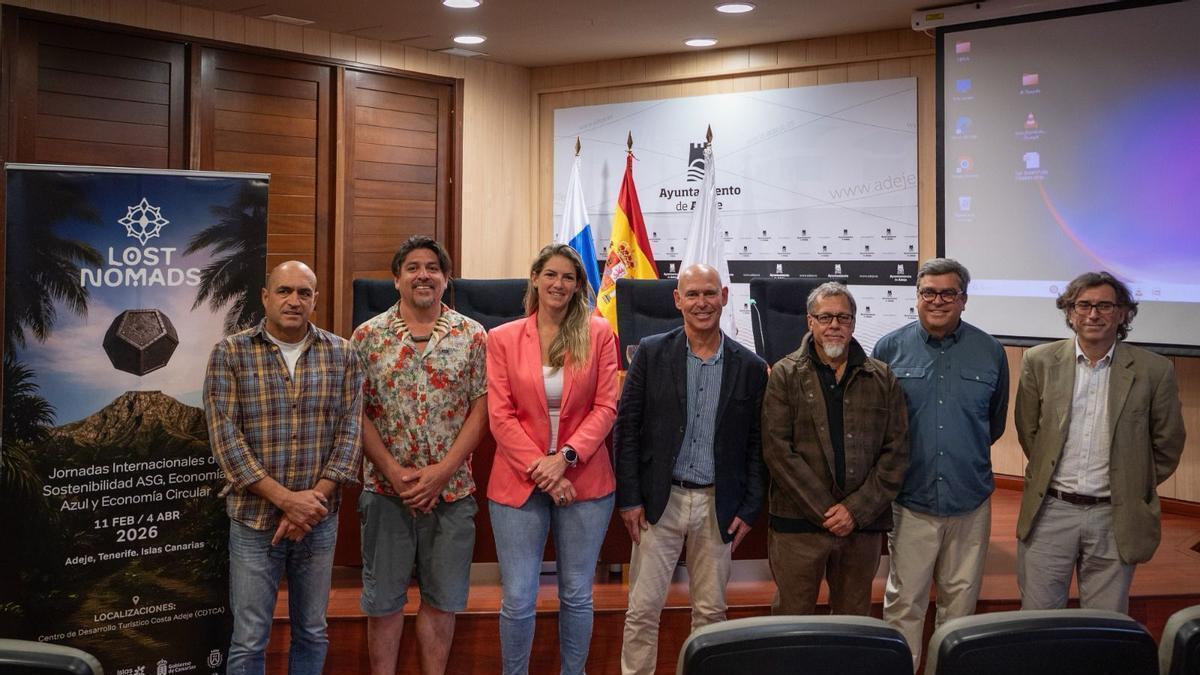
The Costa Adeje Tourism Development Centre hosted the second roundtable of the International ASG Sustainability, Blue Economy and Circular Economy conference series this Tuesday. The session focused on the role of ocean policies as a key tool for sustainable development, particularly in island territories. The meeting brought together international and national experts from the scientific, political, and environmental fields, creating a space to exchange experiences and knowledge on marine protection, ocean resource governance, and sea-related economic opportunities.
Chilean Experience in Large-Scale Marine Conservation
Among the participants was a notable delegation from Chile, who shared their experience in large-scale marine conservation. Julio Chamorro, President of the Sea Council of the Juan Fernández archipelago, explained the fundamental role of local communities in managing and protecting ecosystems, highlighting decades of work by artisanal fisheries in balance with the environment. Former Chilean senator Ricardo Lagos Weber addressed the role of public institutions in driving ocean protection policies, stressing the importance of collaboration between administrations and communities to consolidate conservation advances.
Quality Over Quantity in Marine Protection
International policy expert Max Bello detailed one of the most significant recent milestones in marine protection: the expansion of protected areas in the Juan Fernández archipelago to nearly one million square kilometres. This move positions Chile as a world leader, with over 50% of its waters under some form of protection, far exceeding international commitments set by the United Nations. The debate highlighted that not only the extent of protected areas is relevant, but also the quality of that protection. In this regard, warnings were issued about the situation in Europe and Spain, where, despite officially reaching targets close to 30% protection, less than 1% of waters have effective measures in place, limiting the real impact on marine ecosystem recovery.
Islands as Pioneers of Marine Governance
The roundtable also focused on the strategic role of island territories. It highlighted how islands, due to their ecological and cultural characteristics, are positioning themselves as key spaces for developing innovative models of marine governance, where ocean protection directly contributes to quality of life, local identity, and economic sustainability. In this context, similarities between the Juan Fernández archipelago and the Canary Islands were underlined, opening the door to potential future learning and collaboration.
Blue Economy and Future Challenges
Researcher César Bordehore provided a scientific perspective on current challenges, pointing to problems such as the overexploitation of marine resources, largely linked to economic and political dynamics that do not always prioritise long-term sustainability. The speakers agreed that strengthening marine protection could become a fundamental tool for consolidating the blue economy in the Canary Islands. The session, moderated by underwater photographer Francis Pérez, also addressed issues such as responsible tourism, marine-related employment, and the need to involve civil society in ocean conservation.
This meeting is part of a broader programme seeking to foster dialogue between sectors and promote sustainable solutions to current environmental challenges, with special attention to the island and coastal reality of the Canaries. The event is organised by Farra Events with sponsorship from the Canary Islands Government and Adeje Town Council, and collaboration from the Tenerife Island Council’s Department of the Environment.

Canaries Fight to Save €242m in EU Green Energy Funds

Loro Parque’s New Jaguar Cub Takes First Steps Outside

50 Earthquakes Detected West of Teide National Park

Canary Islands to Draft New Coastal Management Law

312,000-Year-Old Fossilised Cardón Found in Tenerife

How to Watch the August Solar Eclipse from Tenerife

Plan Your 2026 Solar Eclipse Viewing in the Canary Islands

Legal Loophole Lets Fuerteventura Quarry Operate in Protected Zone

La Palma’s New Volcanic Landscape to Become Protected Parkland
