
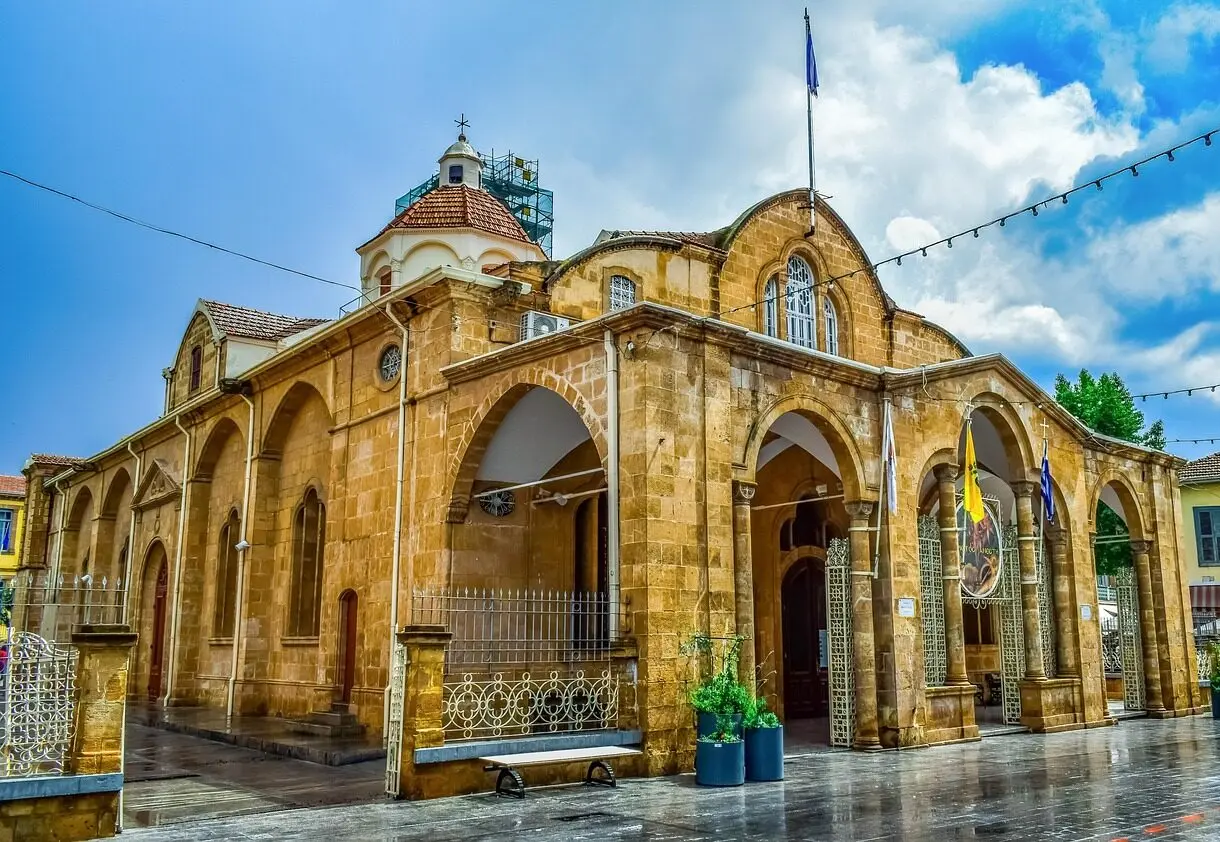
When planning a family holiday, capital cities often get pushed down the list in favour of coastal resorts. A trip to Nicosia with children, however, turns out to be a worthwhile change from beach life and a great live history lesson. Although your main base will probably be one of the coastal resorts, and our complete guide to the island covers this in the article Cyprus with children, a visit to the world’s only divided capital has huge educational value. This is an inland city that does not pretend to be a seaside resort, but it offers unique cultural and historical experiences.
Nicosia is not a typical holiday destination. The lack of sea breeze and sandy beaches means we do not recommend it as a base for your whole trip. It is worth setting aside one or two days, though, to show children how turbulent history shaped modern Europe. A trip to the capital lets you see with your own eyes the border dividing two different worlds, and the Renaissance defensive walls and interactive museums provide an interesting sightseeing programme.
- Nicosia as a day trip from a Cyprus holiday
- 1. Venetian walls and Ledra Street – historic Nicosia old town
- 2. The Green Line and the border crossing – a safe history lesson and the Nicosia green line
- 3. Cyprus Museum – Cyprus's archaeological capital for young explorers
- 4. Museum of Fairytales and Leventis Municipal Museum – interactive Nicosia with kids
- 5. St John's Cathedral and Omeriye Baths – historic Nicosia and places worth knowing
- What to eat in Nicosia with children
- How to get to Nicosia
- One-day plan for Nicosia with children
- A day trip out of the city – Lefkara village
- Frequently asked questions
- Is it worth going to Nicosia with children?
Nicosia as a day trip from a Cyprus holiday
Organising a day trip requires different planning from a stay by the sea. When Nicosia with children becomes the destination, the key is choosing the right sightseeing hours and the right season. The city lies inland on the Mesaoria plain, which means the climate is much more continental and dry than on the coast. In July and August temperatures in Nicosia regularly exceed 40 degrees Celsius. The lack of the sea’s cooling influence makes the heat oppressive, especially for the youngest.
For this reason, the best time to visit with a family is spring, autumn or winter. If your holiday falls in the height of summer, plan your sightseeing in the old town for the early morning, ideally starting your walk around 8:00, or for the late afternoon after 17:00. The hottest hours in the middle of the day are best spent in air-conditioned museum interiors or in restaurants serving local specialities.
When planning a summer trip, you must make absolutely sure the children have hats, high-factor sun cream and a supply of drinking water. Bear in mind that the narrow streets of the old town only offer limited shade from the sun, and the heated walls make the heat feel worse. Regular breaks for ice cream or cold drinks in the shade are the key to keeping the youngest in a good mood.

Getting to the capital from the popular tourist regions is easy thanks to the network of free motorways. If your base is Larnaca with children, the journey takes about 45 minutes and the distance is just 45-55 kilometres. Setting off from resorts in the east of the island, such as Ayia Napa with children, you should prepare for around 75-90 kilometres, which takes about an hour and 15 minutes. The longest route awaits families holidaying in the west. If your accommodation is in Paphos with children, the drive to Nicosia is around 145-158 kilometres and takes from an hour and 40 minutes to two hours each way.
Bear in mind that Cyprus drives on the left, which can be a challenge for drivers used to the right. The motorways are wide and well signposted, though, and driving on them is not difficult. For children in the back, watching the traffic from the left-hand side of the road can be an interesting experience. Hire cars usually have distinctive red number plates, which makes it easier for other drivers to identify tourists on the road.
A trip to the capital is most suitable for school-age children, from around 8-10 years old. Older children will be able to understand the specifics of the city’s division, the history of the Venetian fortifications and the cultural differences you encounter after crossing the Green Line. For babies and toddlers in pushchairs, a trip to the centre of the island, especially in the warmer months, may prove too tiring and not very appealing.
1. Venetian walls and Ledra Street – historic Nicosia old town
It is worth starting your tour of the historic centre by looking at the massive fortifications. The Renaissance defensive walls date from 1567 and were built by the Venetians, who were preparing the city to defend against the coming invasion by the Ottoman Empire. The designer Giulio Savorgnano gave the fortifications a unique geometric shape of an eleven-pointed star with 11 distinctive bastions and 3 city gates, the most famous of which is the Famagusta Gate. The Venetians demolished many medieval churches and palaces outside the walls to obtain building material and clear the field of fire. A walk along the old moats and walls can be presented to children as a game of finding the individual bastions, which will make it easier for them to cover the next metres on foot.
The historic heart of the city is cut by Ledra Street. This is a pedestrianised shopping street where tourist traffic and residents’ daily life are concentrated. Walking along this street, you will feel the rough limestone of the historic buildings, hear the hum of conversation in cafe gardens and see the colourful shop signs. A key point on the route is Shacolas Tower, a modern high-rise whose 11th floor houses an observation deck and the Observatory Museum. From here there is a full 360-degree panorama of the whole city. From above you can clearly see the buffer zone dividing the capital and the large Northern Cyprus flag painted on the slopes of the Pentadaktylos mountains.
For young visitors, a visit to the Shacolas Tower deck is a great experience. There are observation telescopes and touch screens with interactive maps and panels explaining the turbulent history of the city’s division. This helps children connect what they see through the glass with historical facts. During the walk along the old fortifications, our walk around the capital gains an extra educational dimension, showing the former military power of the Venetian republic.
Our visit to this part of the city did reveal some drawbacks, however. The narrow roads inside the defensive walls can be very uneven, with high kerbs, which makes it difficult for families pushing deep pushchairs. In addition, around the Ledra Street pedestrian area, at the Ledras Municipal Parking (Ariadnis) car park, work on modernising the smart parking system is being carried out in 2025 and 2026, which may periodically reduce the number of available spaces.
The Venetian moat is now partly laid out as city parks and playgrounds, which lets children run off energy in the shade of the old fortifications.
🕐 Opening hours: Shacolas Tower Observatory is open daily from 10:00 to 17:00 (winter) or until 18:00 (summer season). The Venetian walls and moats are accessible free of charge around the clock.
💰 Ticket prices: Entry to the Shacolas Tower observation deck costs €2.50 for adults, while children under 12 go free. The walk along the defensive walls is free.
⏱️ Suggested time: About 2-3 hours to walk Ledra Street, visit the tower and walk the moat along the bastions.
Tip for parents: When you go up to the Shacolas Tower deck, ask the children to try to locate the UN buffer zone on the interactive screens, then find it live through the telescopes. This will help them understand the city’s geometric layout.
2. The Green Line and the border crossing – a safe history lesson and the Nicosia green line
Crossing the Green Line is the most important point of a visit to the capital. This buffer zone, controlled by UN peacekeeping forces, divides the city into a Greek (southern) and a Turkish (northern) part. The history of this border goes back to 1964, when a British officer drew it with a green pencil on a map to separate the feuding communities. The division became permanent after the Turkish invasion in 1974. The pedestrian border crossing is at the end of the Ledra Street pedestrian area. It is fully safe, well lit and crossed every day by hundreds of families and tourists. Crossing through the buffer zone makes a big impression: you can see barbed wire fences, abandoned buildings in no man’s land and soldiers’ guard posts.
Original identity documents are required to cross the border. All family members, including babies and children, must have a valid passport. Photocopies or photos of documents on a phone are not accepted by the border authorities. Checks are efficient: officials scan documents digitally. No stamps are given in passports at this crossing, so there is no worry about later travel problems.
After crossing to the northern side, the character of the city changes immediately. You find yourself in a world reminiscent of a Middle Eastern bazaar. Instead of European boutiques there are stalls with spices, souvenirs and traditional crafts, and the air carries the smell of Turkish coffee and grilled kebabs. From the minaret loudspeakers you can hear the muezzin’s call to prayer.
The main things to see on the northern side are:
- Büyük Han: The largest surviving caravanserai in Cyprus, built by the Ottoman Turks in the 16th century. This former inn for caravans has a large open courtyard surrounded by two-storey arcades. In British colonial times it served as a prison, and today it houses small craft and souvenir shops. In the middle of the courtyard stands a small mosque supported on columns, with a water spring beneath it. Entry to the courtyard is free.

- Selimiye Mosque: An imposing church that was originally the Gothic Cathedral of St Sophia, built in the 13th century and modelled on French Gothic cathedrals. Kings of the Lusignan dynasty were crowned here. The church was converted into a mosque after the Ottoman conquest in 1570. After a thorough five-year restoration, it reopened to visitors in May 2025. Entry is free, but remember the rules: take off your shoes before entering, and clothing must cover shoulders and knees (women must also cover their hair).

Crossing the buffer zone is the most moving moment when exploring Nicosia with school-age children. It shows them, in a very tangible way, the religious, linguistic and cultural differences across just a few metres of the crossing zone.
Do watch out for payment issues, though. Although you can pay by card at Büyük Han and larger places, smaller traders and stallholders require cash in Turkish lira (TRY). They are happy to accept euros too, but the exchange rate offered by local traders is often very unfavourable for buyers.
At the Ledra Street pedestrian crossing you will not get any paper stamps in your passport, as the whole procedure is 100% digital and completely secure.
🕐 Opening hours: The Ledra Street pedestrian border crossing operates around the clock (24/7). Büyük Han is best visited during business hours, from 09:00 to 17:00. The Selimiye Mosque is open daily except during prayer times.
💰 Ticket prices: Crossing the border, entering the Büyük Han courtyard and visiting the Selimiye Mosque are all completely free.
⏱️ Suggested time: About 2-3 hours for the border procedures, a walk around Büyük Han, a visit to the mosque and a look at the traditional bazaar.
Tip for parents: Before you go, talk to your children about the fact that after crossing the border they will hear a different language and see a different currency. It is worth changing a small amount into Turkish lira at a currency exchange so that the children can buy a traditional Turkish treat (such as lokum) themselves on the other side.
3. Cyprus Museum – Cyprus’s archaeological capital for young explorers
For families interested in ancient history and mythology, a visit to the island’s most important archaeological museum will be an interesting part of the itinerary. The Cyprus Museum displays rich collections of artefacts from the Neolithic period through to the early Christian era. The exhibition lets you trace the development of civilisation on the island, showing how important a trading point in the Mediterranean the former capital of Cyprus was.
🌐 www.culture.gov.cy/dmculture/DA/DA.nsf/All/67084F17382CF201C2257199001FE4AD?OpenDocument
The room with the clay votive figurines from Ayia Irini makes the biggest impression on young visitors. More than two thousand terracotta figures of people, warriors and chariots are arranged in a semicircle around an ancient votive stone. They were discovered in 1929 by a Swedish archaeological expedition. Children also enjoy looking at the ancient gold jewellery, the Roman sculptures (including the statue of Aphrodite from Soli) and the old everyday vessels decorated with animal motifs and geometric patterns.
The museum is best suited to older children (from around 8-10 years old) who already have some basic knowledge of history and can focus their attention on traditional display cases. The current building, at 1 Mouseiou Street, lacks modern, interactive multimedia stations. The new museum building is under construction and its opening is planned for 2029. In the current premises younger children may get bored quickly, so it is worth focusing on the most visually interesting exhibits.
The lack of interactive screens and educational spaces in the historic rooms makes it difficult to keep children under 6 interested for longer than 40 minutes. It is also worth remembering that the museum is closed on Mondays.
Entry to the Cyprus Museum is completely free for all visitors as part of a state programme supporting culture.
🕐 Opening hours: Tuesday – Friday from 08:00 to 18:00, Saturday from 09:00 to 17:00, Sunday from 10:00 to 13:00. The museum is closed on Mondays. On the first Wednesday of each month, opening hours are extended to 20:00.
💰 Ticket prices: Entry is free for all visitors as part of a government programme to widen access to culture introduced in 2024.
⏱️ Suggested time: About 1 to 1.5 hours to comfortably walk through the main exhibition rooms.
Tip for parents: Before entering the room with the Ayia Irini figurines, set the children a challenge to find the figurine with the most unusual facial expression or headdress. This will engage their observation skills and turn traditional viewing into a treasure hunt.
4. Museum of Fairytales and Leventis Municipal Museum – interactive Nicosia with kids
In the historic part of the city there are two museums that are well suited to younger travellers. The first is the Museum of Fairytales, at 32 Granikou Street. This is a special place created with children aged 3 to 12 in mind. The exhibition is fully interactive and based on themes from well-known fairy tales, legends and myths, including Greek folklore and Aesop’s fables. Inside, children can explore hidden passages behind wardrobes, enter mysterious libraries, look through secret drawers, listen to recordings of fairy tales at special stations and take part in art workshops.
The second place worth visiting is the Leventis Municipal Museum, located in the 19th-century, revitalised Laiki Geitonia district. The museum presents the history of the city from ancient times to the present day in an interesting way. Unlike the Cyprus Museum, Leventis is very well adapted for family visits. There are special interactive zones for children, historical maps designed for younger visitors and mannequins showing traditional Cypriot costumes. It also runs workshops and summer museum adventure schools for children aged 6-12.
The play zones and art workshops make these places an excellent choice for the youngest travellers. They allow learning through play at a friendly pace, and the air conditioning inside offers a moment of relief.
Do bear the time restrictions in mind, though. The Museum of Fairytales is open to individual visitors almost exclusively on Saturdays from 10:00 to 14:00, and you must call ahead before visiting (+357 22 376 522). On weekdays it mainly serves organised school and nursery groups.
Both museums offer free or very cheap entry, and the Leventis Municipal Museum is fully air-conditioned, making it an excellent shelter from the midday heat.
🕐 Opening hours: Museum of Fairytales: for individual visitors on Saturdays 10:00 – 14:00 (phone booking recommended on +357 22 376 522). Leventis Municipal Museum: open Tuesday to Sunday from 10:00 to 16:30. Leventis is closed on Mondays.
💰 Ticket prices: Entry to the Museum of Fairytales costs around €5.00 per person. Entry to the Leventis Municipal Museum is free (voluntary donations to the museum are welcome).
⏱️ Suggested time: About 1.5 hours to comfortably visit each of these places.
Tip for parents: It is best to plan a visit to the Leventis Municipal Museum for the middle of the day (between 12:00 and 14:00). Thanks to the efficient air conditioning in the building, you will escape the worst heat on the streets of the old town.
5. St John’s Cathedral and Omeriye Baths – historic Nicosia and places worth knowing
In the old part of the city there are several other historic sites that often appear in guidebooks. It is worth knowing which of them are suitable for a family visit. St John’s Cathedral (Agios Ioannis) is a small 17th-century Orthodox church that looks modest from the outside, but its interior holds exceptional riches. The walls are covered with fine, colourful frescoes depicting biblical scenes and the history of the Cypriot church. A visit here is short, around 10-15 minutes, which means even older children will not have time to get impatient. Entry is free, but there is a strict dress code (knees and shoulders covered; wraps are available on site).
Right next to the cathedral is the Archbishop’s Palace – an imposing neo-Byzantine building that is the official residence of the head of the Cypriot Orthodox Church. Although the palace interiors are not open to visitors, the building itself makes a big impression from the outside with its architecture, colonnades and the statue of Archbishop Makarios III standing in front of it. It is worth pausing here for a moment during a walk to show children this landmark of the capital.
The historic 16th-century Hamam Omeriye Turkish bath, on the other hand, is a place we would definitely not recommend to families travelling with children. Although the building has great historical value, it now operates as a luxury spa and relaxation area. Treatment and massage packages start at around €69 per person. Inside, the atmosphere is one of silence, focus and calm, which rules out the presence of children.
When planning a walk around the old town, it is worth remembering these differences. St John’s Cathedral is a great stop for a quick look at sacred art, while trying to visit Hamam Omeriye with children will end in being turned away because of the leisure character of the place.
A visit to St John’s Cathedral requires appropriate clothing (shoulders and knees covered), and free wraps are available on site for those who forget.
🕐 Opening hours: St John’s Cathedral is open to visitors Tuesday to Friday from 09:00 to 15:00 and on Saturdays from 09:00 to 12:00. On Sundays and Mondays the church is closed to tourists. Hamam Omeriye operates during treatment booking hours (adults only).
💰 Ticket prices: Entry to St John’s Cathedral is completely free. Treatments at Hamam Omeriye start from €69.
⏱️ Suggested time: About 10-15 minutes to see the frescoes in the cathedral.
Tip for parents: Before entering the cathedral, explain to children the rule of keeping quiet in places of worship. Point out the golden iconostasis and the huge chandeliers hanging from the ceiling, which make a big visual impression.
What to eat in Nicosia with children
Cypriot cuisine combines Greek and Middle Eastern influences, offering dishes that children usually enjoy. In the Old Town you will easily find family-friendly restaurants and tavernas serving tasty meals at reasonable prices. For children, mild chicken or pork skewers (souvlaki), grilled halloumi cheese and chips are excellent choices.
Ordering a traditional Cypriot meze – a set of many small dishes brought to the table one after another – can also be an interesting experience for the whole family. It lets children try a variety of flavours in a fun way. For dessert, loukoumades work well – small doughnuts drizzled with honey and sprinkled with cinnamon or nuts. It is also worth trying tahinopita, sweet yeast buns with sesame paste, which you can buy in any local bakery.
We recommend a few tried-and-tested places to eat in the historic centre:
- Piatsa Gourounaki: A popular taverna near Faneromeni Square. It serves simple, tasty Greek grilled dishes and souvlaki. The atmosphere is loud, relaxed and typically southern, so nobody minds livelier children. A portion of souvlaki with chips and salad costs around €9-€12.
- To Anamma: A traditional restaurant right on Ledra Street. It has a pleasant, shaded garden at the back of the building, which gives relief on hot days. The food is tasty and traditional, and the waiting staff work efficiently and bring meals quickly.
- Serart Artisan Pasta: A small restaurant on Asmaaltı Street serving fresh, handmade pasta with various sauces. It is a great alternative if children miss classic Italian flavours. Pasta dishes cost around €8-€11.
- Avo Armenian Food: A legendary fast-food spot on Onasagorou Street. You can buy traditional lahmajoun flatbreads (thin dough with minced meat) and flatbreads with halloumi baked in the oven. It is an ideal option for a quick, tasty and cheap snack on the go – single flatbreads start from just €1.50 to €2.50.
How to get to Nicosia
Driving to the capital is the most convenient option for families. All the main coastal resorts are connected to Nicosia by well-signposted motorways (roads A1, A2, A6). Remember that Cyprus drives on the left, which requires extra concentration from the driver. Motorways are free, and the maximum speed limit is 100 km/h.
Parking within the narrow, historic streets of the old town is very difficult, and we advise against looking for spaces there. The best and cheapest solution is to use the large municipal car parks located right by the Venetian walls:
- Tripoli Park and D’Avila Moat: Spacious car parks located directly in the former Venetian moat, right next to the entrance to the Ledra Street pedestrian area. This is the best base for exploring the centre. Parking costs around €2-€3 for the whole day.
- Constanza Parking: Located by the Constanza bastion (near Bayraktar Mosque). An excellent starting point if you plan to explore the eastern part of the old town or St John’s Cathedral first.
- Ledras Municipal Parking (Ariadnis): A multi-storey car park located very close to Ledra Street. Bear in mind that in 2025 and 2026 a new smart parking system is being installed there, which may temporarily reduce the availability of spaces.
It is worth remembering the road marking rules. A single yellow line painted by the kerb means no parking (only a short stop to drop off passengers is allowed). A double yellow line means a strict no-stopping rule. The city authorities enforce these rules very strictly and issue high fines. Also avoid parking on rough, unpaved dirt lots, as you risk being blocked in by other vehicles or having your car towed away. Municipal car parks are often free on Saturdays after 14:00 and all day Sunday.
One-day plan for Nicosia with children
The best one-day plan is to start your walk early in the morning. Below is a realistic schedule for a day trip:
- 08:30: Arrive in the capital and park at Tripoli Park in the Venetian moat. A short walk along the defensive walls and into the old town.
- 09:15: Walk along the Ledra Street pedestrian area towards the border.
- 10:00: Visit the Shacolas Tower observation deck. Look at the panorama of the divided city through the telescopes and use the interactive maps.
- 10:45: Head to the border crossing at Ledra Street. Document check (passports) and cross the UN buffer zone to the northern side.
- 11:15: Visit the former Büyük Han caravanserai (time to rest in the courtyard) and the Selimiye Mosque (enter without shoes).
- 12:45: Return to the Greek side and have lunch at the Piatsa Gourounaki taverna or the To Anamma restaurant near Ledra Street.
- 14:00: Visit the air-conditioned Leventis Municipal Museum – learn about the city’s history through interactive zones for children.
- 15:30: Visit the Fairy Tale Museum (if the trip is on a Saturday) or visit the Cyprus Museum (see ancient figurines and jewellery).
- 17:00: Return to the car park, buy traditional sweets for the journey and drive back to the coastal resort.
A day trip out of the city – Lefkara village
If you still have energy after an intense day in the capital, or you are planning a longer, two-day trip, it is worth combining a visit to Nicosia with a trip to the traditional village of Pano Lefkara. It lies about 40 kilometres south of the capital, in the Troodos mountains area. The village is known for the traditional craft of lace-making (Lefkaritika), which is inscribed on the UNESCO list of intangible heritage, and for traditional silverwork.
A walk through the village’s narrow stone streets lets children see women embroidering intricate patterns right outside their homes and workshops. According to local legend, in 1481 Leonardo da Vinci visited the village and bought a lace tablecloth here for the main altar of the cathedral in Milan. Near Lefkara it is also worth visiting the Terra Oliva organic olive farm, where children can learn how olive oil is pressed, and see the Lefkara Dam surrounded by hills. At the Terra Oliva farm, short olive tastings and demonstrations of making organic olive cosmetics are organised, which makes an interesting, sensory break in the journey.
Frequently asked questions
Yes, the trip is worthwhile if you are travelling with older school-age children and looking for a lesson in history and cultural differences.
Yes, the pedestrian border crossing on Ledra Street is completely safe and is regularly used by families with children.
A valid passport for every person on the trip, including children and babies, is required at the border check.
Yes, since 2024 entry to this and other state museums in Cyprus has been free for all visitors.
One day is enough to see the main sights of the Old Town, cross to the northern side and visit a museum of your choice.
Nicosia is 45 kilometres from Larnaca, which by car works out at about 45 minutes of easy motorway driving.
No, the capital of Cyprus lies inland, so there are no beaches or sea access there.
Saturday is the only day when the Fairy Tale Museum is open to individual visitors, from 10:00 to 14:00.
Yes, this pedestrian border crossing operates 24 hours a day, seven days a week.
Tripoli Park and D’Avila Moat are cheap municipal car parks located in the Venetian moat, right next to Ledra Street.
Is it worth going to Nicosia with children?
Ultimately, Nicosia with children is a proposition worth carrying out as a one-day educational outing. The capital is not suitable as a base for your stay, but it is a fantastic complement to a holiday on the island. Seeing the divided city and the Venetian fortifications with your own eyes, walking along Ledra Street and visiting the interactive museums are valuable experiences.
Here are the main reasons to come here:
- A hands-on history lesson: Crossing the Green Line with UN peacekeepers is a lesson in tolerance and political geography that no school lesson can replace.
- Cultural contrast: Crossing from the Greek side to the Turkish side in moments shows children a huge contrast in culture, architecture and food.
- Interactive exhibitions: Both the Fairy Tale Museum and the areas for younger children at the Leventis Municipal Museum show that learning about the past can be fun.
If you are planning a holiday in the resort area of Larnaca with children or other coastal bases, put the capital on your list of day trips. Just remember identity documents for everyone on the trip and avoid the hottest summer weather. More practical advice on travelling around the island with a family is in our main guide Cyprus with children.