
Forest Agents Challenge Legality of Private Security in Teide Park
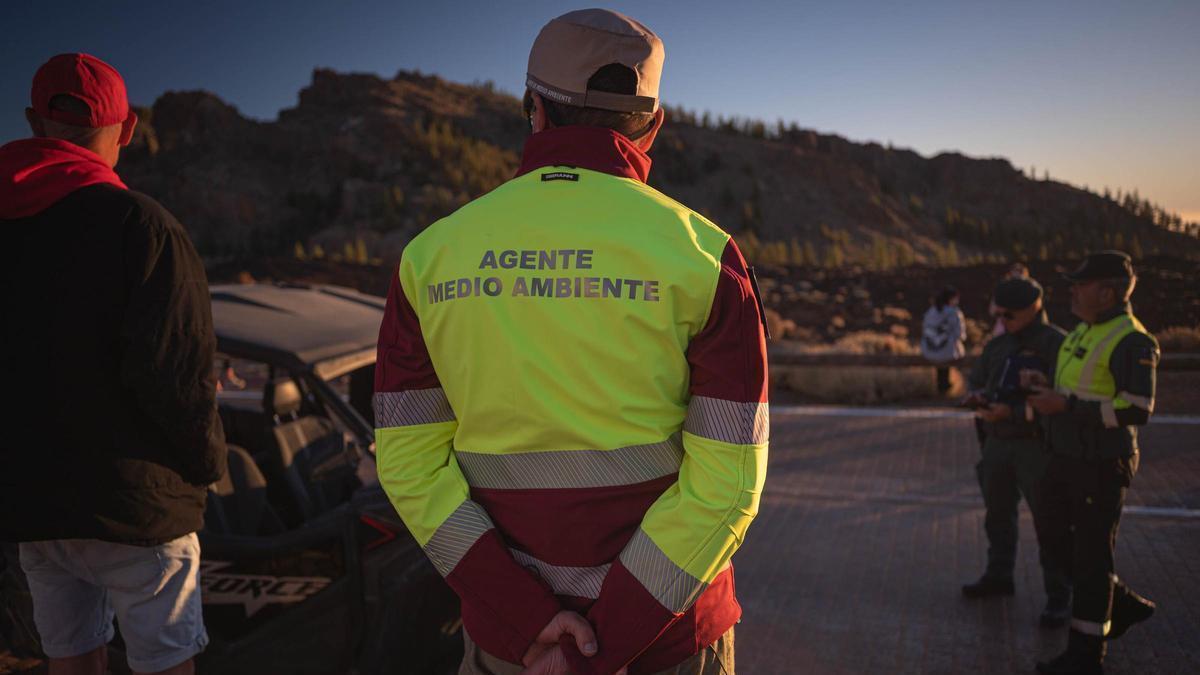
The Association of Forest and Environmental Agents of the Canary Islands (Afmacan) has labelled the use of private security in Teide National Park as “illegal”. The group views the announced deployment of 16 rural guards in this natural space as “a usurpation of public functions”. They formally communicated this position to the President of the Tenerife Council, Rosa Dávila, in a document filed last Thursday.
Broad Union Backing for the Challenge
The document was signed not only by Afmacan but, as “an example of unified action”, by all the trade unions with representation in the island corporation. This includes both the Staff Board (civil servants) and the Works Committee (contract staff), specifically CCOO, CGT, Sepca, and UGT. The CSIF, Intersindical Canarias, and UGT unions, which have delegates in the local police forces of the municipalities within the park’s area, also added their signatures. All these groups agree on the “illegality” and the “usurpation of public functions” represented by hiring a private company to carry out surveillance and control duties, in this case through rural guards.
Fundamental Legal Arguments Presented
For the forest agents, the presence of rural guards in the protected natural area is “an infringement of current regulations” and they insist it constitutes “a violation of the rights and competencies of public sector workers”. Spokespeople for the association explain they have held several meetings with representatives of the Tenerife Council where they have expressed their disagreement with the measure and informed them that an illegality is being committed. Furthermore, they point out that “we have submitted a technical and legal document to argue our position on the matter”.
Among the reasons put forward, two are considered fundamental. Firstly, that “Teide National Park does not fit the typology of a rural estate, agricultural holding, or hunting ground”, and therefore “the legal requirements for the presence of rural guards in said space are not met”. Secondly, “the Private Security Law does not grant legitimacy to rural guards to exercise surveillance and control functions in national parks”, meaning “their actions lack legal cover”.
Alleged Usurpation of Authority
Representatives of Afmacan have detected that “the rural guards are assuming competencies inherent to agents of the authority”, such as “managing and regulating traffic” and “initiating complaints also related to traffic”, all while “presenting the appearance of agents of the authority”. They state this constitutes “a usurpation of public functions” and “a violation of Article 87.2 of the Road Safety Law”.
Calls for Public Sector Control and Alternative Models
This collective believes that “the functions of environmental surveillance, custody, and control in Teide National Park must be performed exclusively by legally authorised public officials”, specifically by Forest and Environmental Agents. On another front, they propose “the implementation of alternative and known management models for access to hiking trails”. These would be limited to information, guidance, and capacity control functions, compatible with the current legal framework, and which do not constitute an invasion of the competencies attributed to Environmental Agents and local police.
Risk of Legal Uncertainty and Potential Court Action
In the association’s view, the current situation “could generate legal uncertainty for citizens and the Public Administration itself”. Indeed, some of the groups that signed the document addressed to Rosa Dávila are considering going to court to report the situation.
Afmacan is a non-profit entity that brings together forest and environmental agents from all public administrations in the Archipelago: the State, the Autonomous Community, island councils, and town councils. Its advertised objectives include safeguarding environmental conservation in the Islands, promoting the protection and professional development of agents, and informing society about the functions and work of these professionals. It seeks to advance sustainable development in the Canaries through training, information, and defence of its members’ interests.
No post found!