The Canary Islands face a looming supply crisis as a European Union ban on Brazilian meat imports takes effect from 3 September. More than half (55 per cent) of the islands’ beef imports arrive from Brazil, while poultry – almost exclusively chicken – sits at exactly 50 per cent. Brussels has determined that the South American market fails to meet the sanitary requirements included in the EU’s agreement with Mercosur (Argentina, Uruguay, Paraguay and Brazil), and has marked the date in red.
Industry scrambles for alternative suppliers
The food industry is working through August at full pelt to find new markets capable of filling, at least partially, the hole that will open up in the supply to the islands’ shops and supermarkets. Direct importers have also rolled up their sleeves. If the loss of this principal market cannot be resolved, price increases are inevitable.
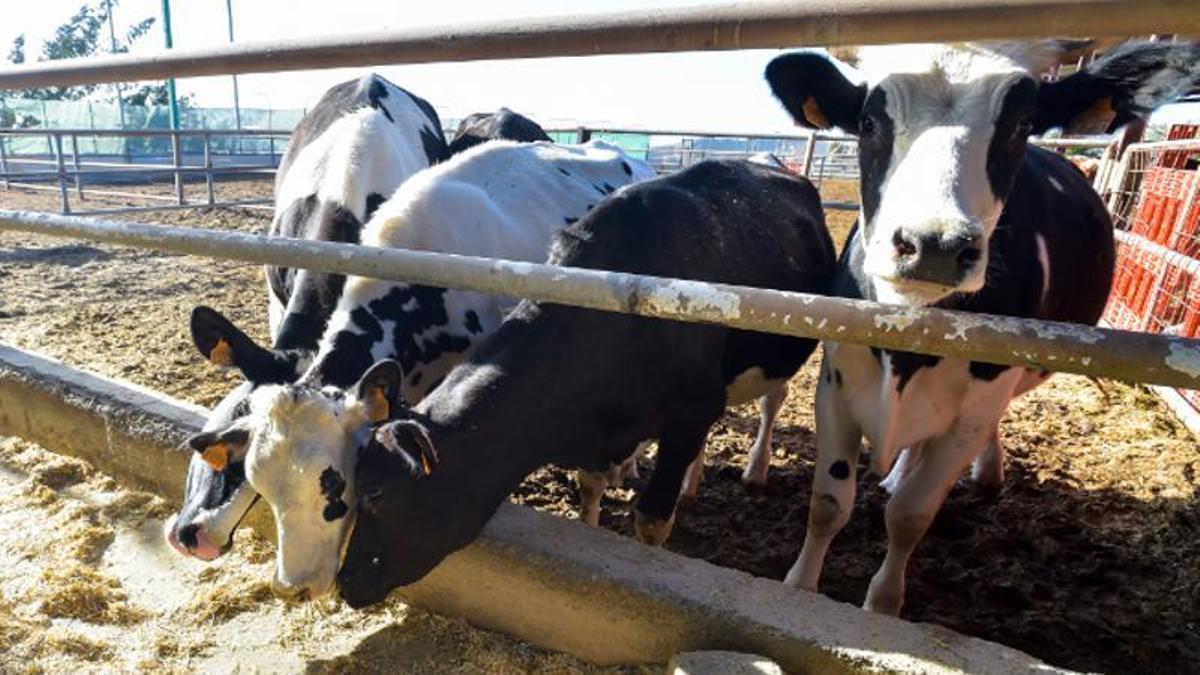
Such a blow would be keenly felt, particularly in the case of chicken, which has become the meat of choice for not a few Canary Islanders since inflation took hold in the summer of 2021. The blockade ordered by the EU also extends to dairy products, fish, honey and horsemeat, though none of these has a particular impact on the islands.
Antibiotic concerns behind the veto
The ban has its origins in what European regulations deem to be an excessive use of antibiotics during animal rearing. The problem for human health lies in the generation of resistant bacteria. The EU’s agreement with Mercosur was signed by European Commission president Ursula von der Leyen in Asunción, the capital of Paraguay, last January. Just a few months later, in spring, the Union’s health authorities urged Brazil to change its meat production strategies. The country’s farmers have failed to convince them since May.
Chicken supply most at risk
The islands are each year the destination for 28,000 tonnes of poultry and 15,000 tonnes of beef that set sail from the South American country. “In the case of chicken breast, almost 95 per cent of what we consume comes from there,” explains Jorge Escuder, president of Asinca (the Association of Industrialists of the Canary Islands). He also explains that the veto will be lifted when producers are able to demonstrate the traceability of the meat from their animals to the level of detail demanded by EU rules.
The business organisation stresses the importance of guaranteeing imports. The mere increase in demand that will be generated in the markets that could serve as alternatives already points to a rise in prices, which will in turn bring a loss of competitiveness. That alone would invite a segment of consumers to flee in search of other products. What happens in this case, however, is that chicken is a refuge. It is traditionally the faithful companion of those who cannot afford higher-quality meat products and, being a white meat, it does not carry the contraindications of other animal proteins.
Escuder concedes that finding other countries at this stage that could fill the gap left by Brazilian chicken on the shelves “is not something that can be achieved automatically”. As for beef, while the EU’s falling-out with Brazil is also a blow, it is easier to replace. Within Mercosur itself, both Argentina and Uruguay are producers with wide international recognition.
Echoes of avian flu disruption
Chicken and Brazil are back in the news a year after an outbreak of avian flu in Rio Grande do Sul prevented the normal flow of this product into the Canary Islands on EU orders. On that occasion, the crisis was averted because the outbreak was brought under control relatively quickly, before the Archipelago’s markets felt the impact. However, Asinca maintains that there were occasional shortages and price rises of up to 50 per cent.
Timeline for resolution
The timescales for resolving the circumstances behind Brussels’ decision vary widely. In the case of chicken, Escuder estimates that the matter could be sorted within three or four months. The outlook for beef is worse, with animals whose rearing and fattening period is longer, meaning resolution would not be possible for “two years”.
Increasing food sovereignty is one of the strategies on which the Canary Islands Government insists. Nevertheless, the size of the autonomous community is too small to guarantee cover for consumption through local production alone. The latest figures indicate that just 15 per cent of poultry and 6 per cent of beef consumed in the islands is covered by local farming.
In the summer of 2023, an outbreak of Colorado beetle detected in the United Kingdom forced the closure of potato imports from that country. The search for alternatives – from authorised countries – did not prevent sudden price increases. It lasted several months, during which families and restaurants reduced their consumption.
What’s happening in the Canaries – straight to your phone
News, weather alerts and practical updates – direct from the islands, in English. We live here and know what’s going on – before the international media catch up. Everything lands on our WhatsApp channel – no middlemen, no algorithm. Curated for families, expats and travelers.

Los Realejos residents fight on against propane gas plant
Canarias among Spain’s poorest regions as 36.2% live on low incomes
Canary Islands bananas lose ground to imported bananas

Canary Islands bottom of Spain’s social housing table

Three migrant boats reach Canary Islands in 24 hours

Canarias proposes 10-year residency rule to buy property

Gran Canaria hotel maid arrested over stolen gold necklace

Canary Islands plan 10-year residency rule to buy a home

Canary Islands launches empty homes rental scheme