
Deep-Sea Discovery Between Islands
A scientific team from the Spanish Institute of Oceanography (IEO) has obtained the first multidisciplinary evidence of hydrothermal activity at the Enmedio submarine volcano. Located at a depth of more than 1,600 metres between Tenerife and Gran Canaria, the findings are based on geological, geophysical, geochemical, and oceanographic data collected over nearly a decade. Published in the specialist journal Bulletin of Volcanology, the results do not refer to a volcanic eruption, but to the circulation of hydrothermal fluids. This helps scientists better understand the submarine volcanism of the Canary Islands and its impact on the functioning of the deep ocean.
The Volcano’s Structure and Features
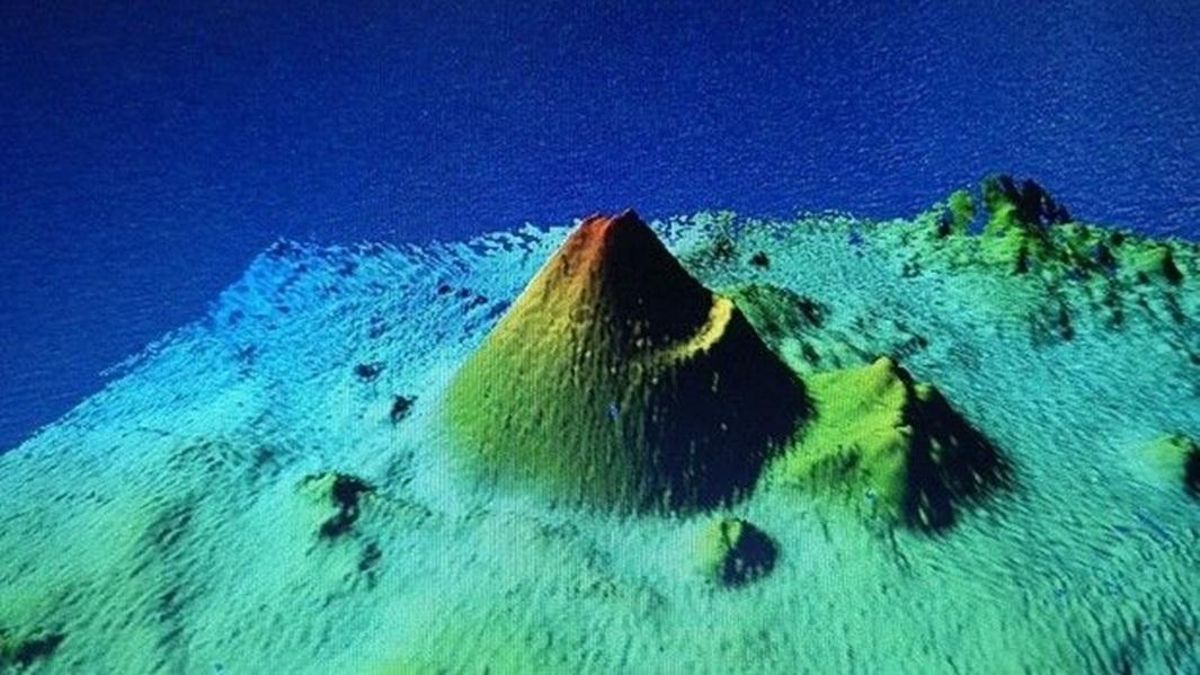
The Enmedio submarine volcano is named for its location between the islands of Tenerife and Gran Canaria, lying approximately 25 kilometres from the former and 36 from the latter. Its conical structure forms a kind of mountain, with a base diameter of 3.5 kilometres situated at a depth of between 2,140 and 2,350 metres. Its summit is found about 1,600 metres below the sea surface, as detailed by the Spanish National Research Council (CSIC). The IEO study also reveals a major fracture crossing the volcano from north to south and a large depression on one of its flanks. These features facilitate the release of hot fluids from the volcano’s interior into the marine environment.
Confirming Active Fluid Circulation
The results, obtained in collaboration with Geosciences Barcelona (GEO3BCN-CSIC), the Institute of Marine Sciences (ICM-CSIC), the University of Salamanca, and the University of La Laguna, confirm that this deep-sea volcano has active circulation of hydrothermal fluids. This is a process where water comes into contact with the Earth’s internal heat after seeping through fractures in the Earth’s crust, later emerging as an extremely hot, mineral-rich solution.
“Although this occurs regularly on the Earth’s ocean floors, in the case of the Enmedio volcano it had barely been studied,” notes Eugenio Fraile, a researcher at IEO-CSIC and author of the study. These emissions not only modify the volcanic substrate but also generate anomalies in the water column, affecting its chemistry and the microbial communities of the deep ocean. For example, researchers observed that the water column at the volcano’s summit was half a degree warmer than the surrounding ocean.
Geological and Biological Clues
Furthermore, rock samples collected during several oceanographic campaigns show alterations rich in iron oxides and filamentous microstructures associated with biological processes, typical of low-temperature hydrothermal environments. “These clues are reinforced by high-resolution seismic and bathymetric data, which point to intense alteration of the volcanic substrate in the fractured zones,” details Adelina Geyer, a researcher at GEO3BCN-CSIC.
Impact on Deep Ocean Chemistry
The oceanographic observations made over the Enmedio volcano revealed anomalies caused by the hydrothermal fluids. On one hand, anomalous temperature and turbidity were recorded in the water column between 1,600 and 2,200 metres depth. On the other hand, an increase in the abundance of microorganisms and an enrichment of dissolved inorganic nutrients in the water, especially ammonium—which quadrupled normal values—were observed.
“The results indicate that hydrothermal activity directly influences the biogeochemical processes of the deep ocean in this area of the archipelago,” states Rafael Bartolomé, a researcher at ICM-CSIC.
Not Related to Recent Seismic Activity
The authors emphasise that the recorded activity does not refer to a volcanic eruption and is not related to the recent seismic swarms registered in Las Cañadas del Teide on Tenerife. The study was developed within the framework of several scientific projects led by IEO-CSIC and relies on data obtained during oceanographic campaigns aboard the research vessels Ángeles Alvariño and Sarmiento de Gamboa.
No post found!