
Seismic Swarm Recorded South West of Las Cañadas
Tenerife registered more than 90 earthquakes between Monday and Tuesday of this week to the southwest of the Las Cañadas caldera. Despite the striking number, the Canary Islands Volcanology Institute (Involcan) explains on its social media channels that this seismic swarm does not herald an imminent volcanic eruption on Tenerife.
No Change to Low Eruption Probability
“This seismic episode does not imply changes in the probability of a volcanic eruption, either in the short or medium term, which remains low,” assure Involcan. The institute insists that the seismicity recorded in recent days is “slightly higher than the usual average,” but clarifies that it “cannot be considered unusual for the island of Tenerife.”
The scientists also note that the largest tremor recorded in this episode reached a magnitude of 1.8 mbLg. In this last year alone, the institute has located 2,320 earthquakes, equating to an average of approximately 6.35 seismic events daily. These figures indicate that the appearance of these small seismic movements is part of the island’s natural behaviour. For more details, see our new AI-powered seismic monitoring.
Origin Linked to Hydrothermal Fluids
Regarding the over 90 micro-earthquakes located in recent days, experts point out that their magnitudes have been “very low” and that their hypocentres were situated in an area where seismicity is common, reinforcing the idea that this is not an exceptional episode.
One of the most important details in Involcan’s analysis is the interpretation of the origin of these micro-earthquakes. According to the scientific body, the detected seismic events are very likely associated with the movement of hydrothermal fluids inside the island. Furthermore, this activity is part of the “pressurisation process of the magmatic-hydrothermal system, which has been observed in Tenerife since the end of 2016.”
Long-Term Increase in Deep Volcanic Activity
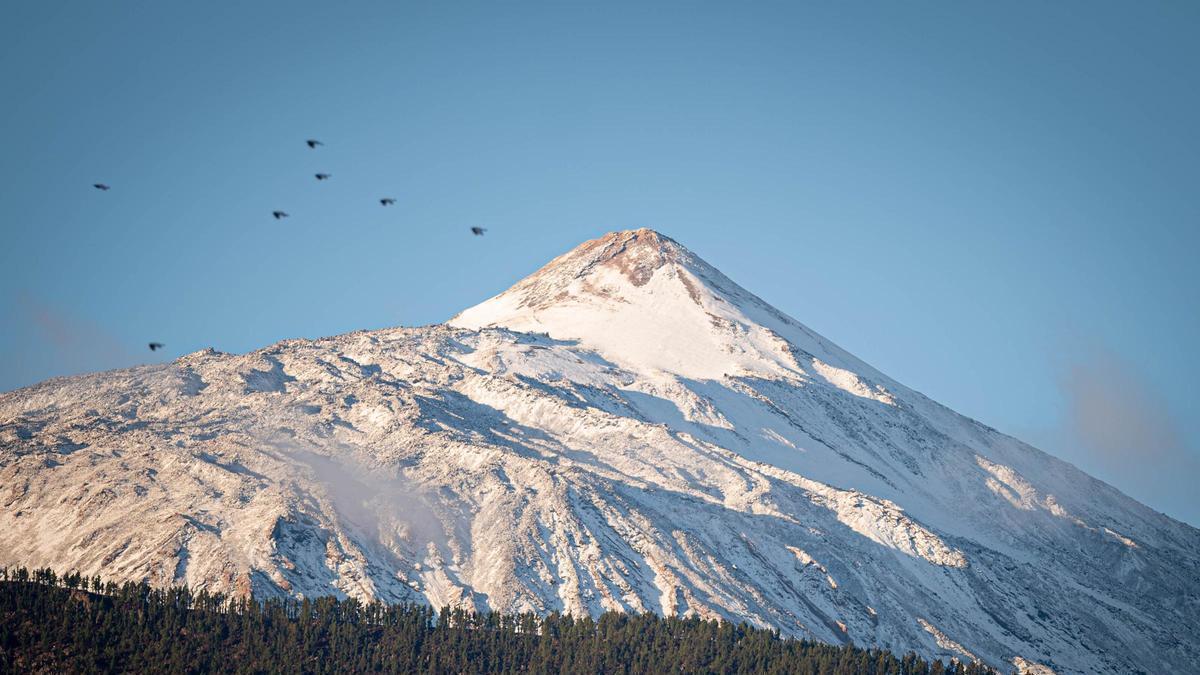
Additionally, since late 2016, around 130 seismic swarms have been recorded in Tenerife, as well as “significant increases” in the diffuse emission of carbon dioxide (CO2) from the crater of Mount Teide, where the island’s main visible manifestations of volcanic gases (fumaroles) are concentrated.
“These observations clearly indicate that Tenerife’s deep volcanic activity has undergone relevant changes over the last nine years,” states Involcan, which adds that the latest seismic swarm “reinforces the evidence that the increase in deep volcanic activity on the island shows no signs of abating.”
What’s happening in the Canaries – straight to your phone
News, weather alerts and practical updates – direct from the islands, in English. We live here and know what’s going on – before the international media catch up. Everything lands on our WhatsApp channel – no middlemen, no algorithm. Curated for families, expats and travelers.
No post found!