

Sicily with kids – why it’s worth a family trip
You’re probably wondering whether this Italian island is a good destination for your family. The answer is yes, but it takes a few sensible choices and good planning. As a mum, I look closely at every trip we take together. We live on Tenerife day to day, so flying with children and organising life on an island is second nature to us. I often get asked whether it’s better to pick classic destinations such as Spain with kids, or another part of Italy, such as Venice with kids. Each of these places has its advantages, but Sicily offers so much variety that it’s hard to ignore. You get everything in one place – high mountains for walks, warm sea that’s ideal for swimming, an active volcano and food that appeals even to fussy little eaters. Italians have a wonderful way with young children. Kids are welcomed here, and waiters in restaurants will often entertain a grumpy toddler, giving parents a moment’s peace.
When planning a family holiday in Sicily, it’s worth knowing exactly what you want to see so you don’t spend the whole trip in the car. This guide gives you specific information about what worked for us. We’ll focus on which beaches are safe for young children, how to organise a trip to the volcano so it’s safe and interesting, and where best to look for accommodation. I’ll give you our point of view, without glossing over things, and with plenty of practical knowledge. Holidays with children are always a compromise between what adults want and what little ones can handle. Children aged 6-10 usually look for different experiences than younger kids, who would happily play in the sand all day. So a trip has to combine a wish to explore historic cities with carefree time on the beach. Sicily fits that role perfectly, because the distances between interesting places and the coast let you plan each day flexibly. Also check: Italy with kids – a guide to the regions. Also check: Tuscany with kids. Also check: Naples, Amalfi and Capri with kids.
It’s also worth mentioning that family facilities here are specific. You won’t find big resorts with entertainment at every turn, which some will see as a downside and others as a big plus. We value the peace and the chance to show children the world at its natural, everyday pace. Sicily with kids suits families who like to be on the move, taste local life and aren’t afraid to stray from the main route now and then. See how to organise a trip like this so every member of the family comes home happy and rested.
- Sicily with kids – why it's worth a family trip
- Sicily at a glance – what to know before you go
- When to go to Sicily with kids – weather month by month
- Map of Sicily – 3 areas to choose from
- East Sicily: Catania, Etna, Taormina, Syracuse
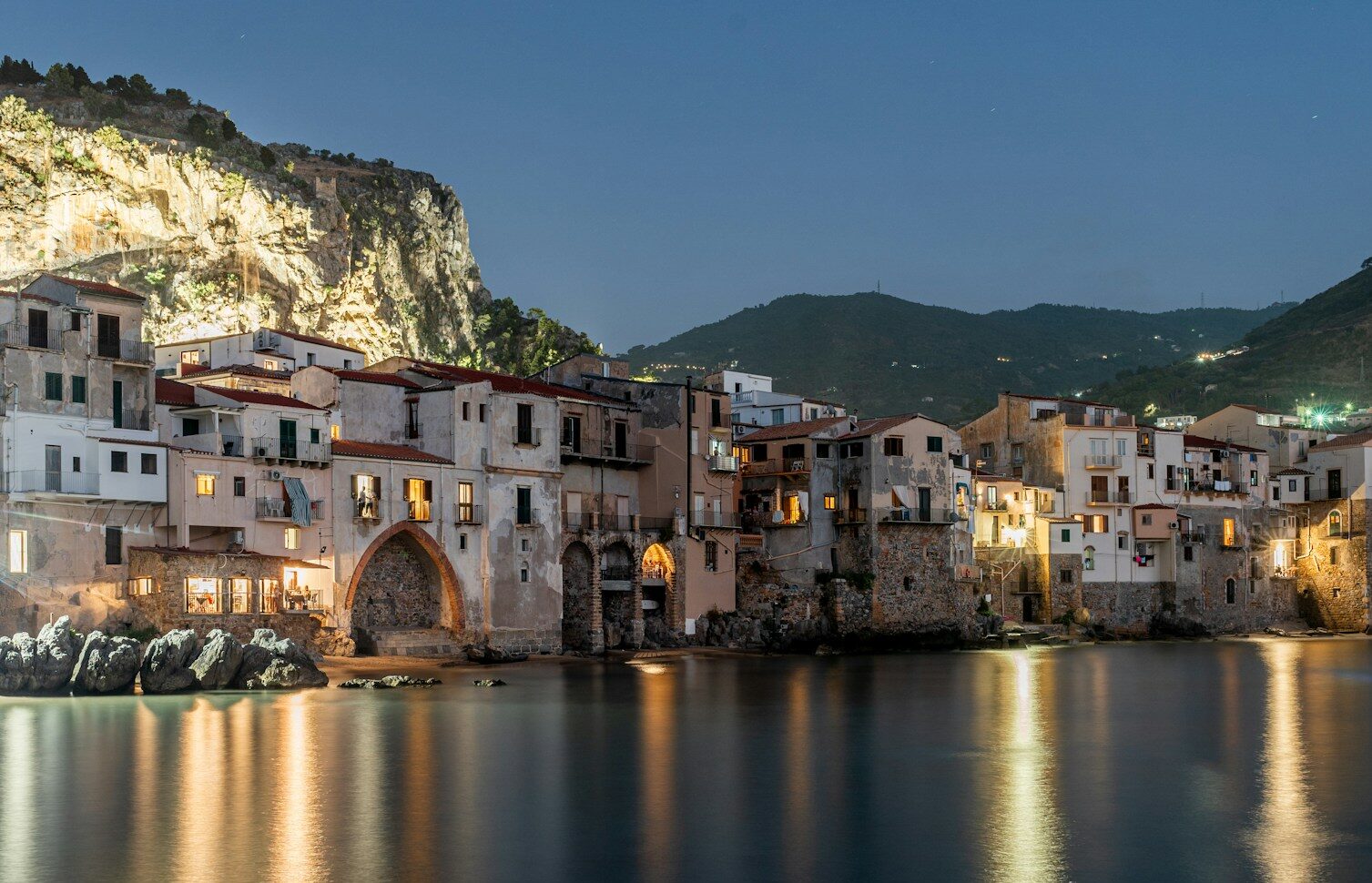
- West Sicily: Palermo, Trapani, San Vito Lo Capo, Cefalu
- South Sicily: Agrigento, Noto, Scala dei Turchi
- Etna with a child – a practical guide
- The most beautiful beaches in Sicily for families – 10 places we checked with children
- The Egadi and Aeolian islands – are they worth it with children?
- Where to stay in Sicily with children – comparing bases
- What to eat in Sicily with children
- How to get to Sicily with children
- Sicily with children – a 10-day plan
- FAQ – most common family questions
Sicily at a glance – what to know before you go
Before packing your bags and setting off, it’s good to know the basic facts about where you’re going. Sicily is the largest island in the Mediterranean and the largest Italian island, with an area of 25,711 square kilometres. Because of its size, it’s not somewhere you can tour thoroughly in a single week’s holiday. The island lies at the very south of Italy, right by the tip of the so-called Italian boot, and is separated from the mainland by the narrow Strait of Messina. Many people ask whether Sicily belongs to Italy. Yes, it’s an autonomous region of Italy with its own very rich history and culture. Geographically it’s the largest island in Italy, which means considerable distances between its east and west coasts. Also check: Lake Garda with kids.

The capital of Sicily is Palermo, a busy and fairly noisy city on the west of the island. The second largest centre is Catania, on the east coast. The official language is of course Italian, though locals often speak the Sicilian dialect. When dealing with tourists you’ll hear standard Italian, and in popular places you’ll get by in English without any trouble. About 5 million people live on the island, and the currency is the euro, which makes any payments very easy. Sicily is one hour ahead of the UK, so there’s a small time difference to keep in mind when travelling with children and keeping their daily routine and sleep undisturbed.
You can reach the island by plane, using three main airports. On the east side you land in Catania – airport code CTA. The west is served by Palermo airport – PMO – and the smaller Trapani airport – TPS. This matters when planning where to base yourselves, because travelling across the whole island with children straight after landing can be very tiring. Don’t forget the most important feature of the east coast landscape either. Mount Etna is the highest active volcano in Europe, towering over the whole area and visible from many kilometres away. It shapes the landscape of this part of the island and is one of the biggest attractions to keep in mind when planning trips with younger travellers.

When to go to Sicily with kids – weather month by month
Choosing the right time is a key decision when planning a trip with children. Sicily has a Mediterranean climate, which means long, very hot summers and mild but fairly rainy winters. From our experience, not every month is good for comfortable travel with young children. Below is a rundown to help you make a good decision based on the weather.
May is a very interesting time for a first visit. Air temperatures sit around 22 to 25 degrees Celsius. It’s an ideal moment for intensive sightseeing, walks around ancient ruins and nature trips, because the heat hasn’t arrived yet. Bear in mind, though, that the sea is still cool, around 18 to 19 degrees. May weather in Sicily suits active families who aren’t set on daily swimming and prefer to explore the island. June is the clear start of the beach season. The air warms to around 27 degrees and the sea reaches a pleasant 22 degrees. It’s a very good compromise between sightseeing and relaxing on the beach, and the days are long and mostly very sunny. Families often choose this month for the pleasant conditions before the biggest crowds.

July is the month when temperatures regularly exceed 32 degrees. For small children this can be far too hot for intensive sightseeing. The sea is around 25 to 26 degrees, which encourages long swims, but trips should be limited to early mornings or late afternoons. A trip to the volcano in July is perfectly possible, since it’s much cooler at altitude. You should expect high accommodation prices, though. August is the peak of the Italian season. Thermometers show 33 degrees and more. Italians take their holidays then, the so-called ferragosto. The island is at its busiest, roads can be jammed and prices reach their maximum. With children it can be hard to find a quiet spot on the beach, so if you can, it’s better to avoid this month for family trips.

September is, according to many of our friends and to us too, the best option for families. Air temperatures drop to a pleasant 28 degrees, but the sea is well warmed after the summer at around 25 degrees. The biggest tourist crowds are gone, which allows for peaceful beach time and comfortable sightseeing. October works too. Daytime thermometers show around 22 degrees and the water stays at around 22 degrees. It’s a time for slow, lazy sightseeing combined with quiet time on the beach. The period from November to March is the rainy season. Rain falls more often, though it’s rarely long downpours. Even so, most summer facilities are closed then and beach options are very limited.

Map of Sicily – 3 areas to choose from
A map of Sicily is something worth getting familiar with long before you go. The island is huge and you have to accept right away that you can’t see it all in one week’s holiday. Each part has its own character and works differently for a stay with young children. The best approach is to divide the island into three main areas and focus on one of them for your first trip, or possibly two if you have 12 to 14 days and plan to change accommodation during the trip. This division means your holiday won’t turn into one long stretch in the car.
The east is the area that includes places such as Catania, Taormina and Syracuse, and its main landmark is the huge volcanic massif. It’s by far the most common choice for a first visit with children. Landing at CTA airport, you’re very close to most of the interesting places, which cuts travel time a lot. Distances between attractions are relatively short, and the presence of an active volcano is a strong argument for choosing this region. Children are usually fascinated by the chance to see a smoking mountain, which they treat as a huge, almost film-like adventure.

The west of the island is the area around Palermo, Trapani, San Vito Lo Capo and Cefalu. You will find excellent coastline here, beautiful sandy beaches that are considered among the best for small children, and great local food. From our perspective it is an excellent choice for families who plan to spend a lot of time by the water, build sandcastles and take quiet walks around smaller seaside resorts. This is where San Vito Lo Capo is located, often described as the ideal beach for young children. If you are interested in Sicily attractions for children in the form of nature reserves and beaches, this part of the island has a great deal to offer.

The south, around Agrigento, Noto, Modica and Ragusa, is a slightly less touristy area. It is known for its beautiful baroque towns and impressive ruins of ancient temples. There is less infrastructure set up specifically for foreign tourists, which has its own great charm, but it requires hiring a car and planning your journeys well. In my opinion it is a very interesting option for a second or third trip, when the children are a bit older and can appreciate the distinctive architecture and a longer drive between towns. Our family insight is that the east works best for that first, trial trip. You will find a balance between views, history and the beach, while keeping things logistically convenient.

East Sicily: Catania, Etna, Taormina, Syracuse
Catania – a lively city at the foot of Etna

Catania is the most common starting point if your goal is the eastern part of the island. From a family perspective, two to three days are plenty to get a feel for the place without tiring the youngest too much. Our sightseeing always starts at Piazza Duomo, where you will find the famous elephant fountain, known by locals as Liotru.

Children love distinctive landmarks like this, and the elephant carved from black lava makes a big impression on six-year-olds. I strongly recommend going early in the morning to the La Pescheria fish market. It is a very authentic spectacle, full of loud calls from the sellers and all kinds of seafood, which is more interesting for children than many a museum.

When the children needed a break from the city noise, we headed to Bellini Park. It is a large green area in the centre, ideal for a picnic on the grass. With the older, eleven-year-old child we also visited Castello Ursino. The castle and its collections will interest children over the age of seven. In the evening it is best to plan a slow walk along Via Etnea, combined with the essential part of every Italian day, a portion of local gelato.

Etna with a child – how old do they need to be for the climb

Many parents ask me directly whether a trip to an active volcano with children is a safe idea. The answer is yes, but you need to match the plan to the age of your children. The simplest option is to drive up to Rifugio Sapienza at around 1,900 metres. A short walk around the old craters is suitable even for four-year-olds and does not require much effort. If you are thinking of taking the cable car up to 2,500 metres, the lower age limit in my view is six. The full guided route to the higher sections, reached by jeep, is an option only for older children over ten. This is down to the altitude, the smell of sulphur gases and simply the considerable physical effort. Whichever option you choose, the rule on clothing is the same. Always take a warm jacket, even in the middle of summer. The temperature at the top is around ten to fifteen degrees, and the wind is very piercing. Sturdy, closed shoes are just as important, because sharp pieces of lava quickly ruin flimsy trainers and can cut your feet.
Taormina – with children or not quite

Taormina provokes strong reactions. On one hand it is a very beautiful town, known for the ancient Teatro Greco with views of the smoking volcano in the background. On the other hand it is very touristy and quite expensive. Our plan assumed a maximum of one day in the town, and rather in the late afternoon and evening, when temperatures drop a little and the town seems calmer. The famous Isola Bella beach, reached by cable car or by tackling steep steps, is an interesting place, but I recommend it for children over six. Going down steep steps with a toddler in your arms is a big challenge. As for accommodation, Taormina is fairly heavy on the budget. A much more sensible choice for families is Giardini Naxos, just 5 kilometres away, which offers a very good beach and much more affordable hotels.


Syracuse and ancient Ortigia

If you are wondering what Sicily attractions has to offer, Syracuse must be on your list. The historic centre, known as Ortigia, sits on a small island connected to the mainland by bridges. It is a great place for a family walk at dinner time, with wide pedestrianised squares. During the day it is worth visiting the Archaeological Park, where you will find the cave known as the Ear of Dionysius. The acoustics of the place make a big impression on six and seven-year-olds. When planning a stay in this area, consider the nearby Calamosche beach. You should know, though, that this is one for more experienced travellers, because it requires a twenty-minute walk from the car park and is full of stones, which will not work with very small children. The whole area can easily be visited with accommodation in Catania, which is only an hour’s drive away.
West Sicily: Palermo, Trapani, San Vito Lo Capo, Cefalu
Palermo with children

The first impression on entering the island’s capital can be overwhelming. The city is chaotic, full of scooters, very loud and lively. For small children this overload of stimuli can be tiring, but for eight-year-olds and older it can be fascinating. From an architectural point of view, Cattedrale di Palermo makes a huge impression, with a form that combines different styles and is visually interesting even for a younger audience. It is worth taking a walk around the Vucciria or Ballaro markets. It is a strongly sensory experience, full of the smells of fresh fish and vegetables. The famous Teatro Massimo, meanwhile, is usually viewed with children only from the outside. For a rest, the Foro Italico park with its wide lawns is great for a picnic. An important lesson from our travels is to base yourselves not in the centre of Palermo itself, but in Mondello, fifteen minutes away, which gives a balance between beach time and sightseeing.


Trapani – harbour and salt

Heading west, you should not skip Trapani. The biggest attraction in this area for the youngest is the Saline Trapani-Paceco. The historic salt pans and the working windmills there, together with wild flamingos, are a real treat for children over four. The old town can easily be explored in one afternoon. Trapani is also a great base for the Egadi Islands, for example a ferry taking just thirty minutes to Favignana. A second trip we remember very well is the cable car up to the medieval town of Erice, at an altitude of 750 metres. The ride itself is a great experience for six-year-olds, and the views over the whole coast from the top reward the time spent getting there.
San Vito Lo Capo – top beach for families

This place is regarded as one of the best on the island for people travelling with very small children. The main reason is the sandy, very wide beach with fine, light sand and an extremely gentle entry into the water, which stays shallow for a long distance. The water near the shore is warm and clear, reminiscent of conditions on faraway islands. In September the Cous-cous fest is held here, which can be an interesting culinary variation for the older members of the family. The town has the atmosphere of a quiet resort with a good range of hotels and family apartments, without an overwhelming number of loud clubs.
Cefalu – on the north coast

Located on the north coast, roughly halfway between the capital and the east, the medieval town of Cefalu is a very good choice for a stop of a few days. Its main advantage is the beautiful town beach with fine sand, which is extremely convenient for families, because you can walk from your hotel room to the water in a few minutes. It is worth showing children the Norman cathedral with its impressive Byzantine mosaics. This architecture is fairly easy for seven-year-olds to take in, and visiting it does not take long. If you are doing a tour of the whole island, one full day and a night in Cefalu is very well spent time.
South Sicily: Agrigento, Noto, Scala dei Turchi
Valley of the Temples – close to antiquity

If you decide to explore the south, the main point on the map is Agrigento. The park here, known as the Valley of the Temples, is one of the best-preserved groups of Greek architecture outside Greece itself. With children from around six years old, visiting can feel like a treasure hunt, especially if you give them a map with the sites marked on it. Planning the time of day is very important. You should visit this area as early in the morning as possible, ideally before ten, or in the late afternoon. During the day it is simply terribly hot in the sun, and there is very little shade in the park.
Scala dei Turchi – the famous white cliffs

Just half an hour’s drive from Agrigento is the rock formation known as the Turkish Steps. The white chalk the cliffs are made of stands out against the blue of the sea in a striking way. On the subject of child safety, I have to add a very important note here. Since 2020 the authorities have tightly regulated access to the rocks themselves because of the fragility of the limestone and the damage done by visitors. So check the current restrictions before you come. Even if access is closed, the view of the formation from the nearby beach is worth stopping for. Little ones are often very impressed by the shape and colour of the coast alone, but I’d strongly advise against letting them wander unsupervised on the fragile cliffs.

Noto and Modica – baroque wonders and chocolate

Noto, a UNESCO World Heritage site, is a living museum of baroque architecture. It was almost entirely rebuilt in a single style after an earthquake, which makes it a great opportunity to explain to a seven-year-old what architectural consistency and an era in art actually mean. In May there’s a wonderful flower festival called Infiorata, when the main street turns into one huge carpet of flowers.
Further south lies Modica and, next to it, Ragusa. Modica is known for its chocolate, made the traditional way without heating. The local workshops offer tastings, which makes five and six-year-olds consider this the most interesting part of the trip. Ragusa, with its old town set on a steep slope, involves a fair bit of climbing, so it’s worth setting aside time to explore it in the afternoon.

A three-day tour of the south
How do you plan a trip like this to the south in practice? If your base is in the east, you can organise it as a small three-day trip. On day one, drive to Agrigento in the morning to see the Valley of the Temples, then stay overnight in a quieter resort. On day two, explore the baroque streets of Noto, try chocolate in Modica and watch the sunset in Ragusa. On day three, start early with a visit to Scala dei Turchi, then head back east at a relaxed pace in the afternoon. This layout minimises multi-hour drives back from day trips, which with younger travellers saves a lot of stress and tears.
Etna with a child – a practical guide

Etna – cable car, trekking and what’s really worth choosing
Etna is a subject where it’s hard to be objective. Some people panic at the very word “eruption”, others approach it as casually as if they were climbing a local hill. The truth, as usual, lies somewhere in the middle – and before you start planning a trip to Europe’s largest active volcano, it’s worth knowing a few things that will save you stress and maybe a bit of money.
Let’s start with scale. Etna isn’t a mountain you “tick off” on the way from Catania to the coast. Its area exceeds 1,200 square kilometres – standing in Catania, you’re already technically at the foot of the volcano. The summit currently measures 3,403 m above sea level and changes after every major eruption. The nature park was established here in 1987, and in 2013 Etna was added to the UNESCO list.
Is Etna dangerous? A few words about online panic
Every major eruption triggers a flood of questions along the lines of “should I cancel my trip to Sicily”. Short answer: no. Volcanoes work nothing like disaster films suggest. Etna is “working” almost constantly – several, sometimes a dozen or so times a year, there’s increased activity. For local residents it’s the backdrop to daily life, not a reason to evacuate. The real danger isn’t lava flows (they move slowly and can be calmly walked around), but rock fragments thrown out during more violent explosions. That’s why the zones around the central craters are simply closed – and that’s that.
Seismic tremors? Yes, they happen. But the seismic risk in Sicily isn’t statistically higher than in many other popular Mediterranean destinations – Croatia, Greece or Turkey.
Media panic follows its own rules: in summer more tourists visit Etna, so more photos and headlines appear. Hence the myth that the volcano “erupts more often in season”. It erupts more or less the same – there are just more witnesses.
How to visit Etna? Four options
The loop around – by car or on the narrow-gauge Ferrovia Circumetnea panoramic railway. It’s a good idea if you have a whole day and want to see Etna in context – the towns you pass, the vineyards, the stalls selling Bronte pistachios. The route itself takes a few hours, but with stops it will fill a whole day. The train doesn’t do a full loop – from the final station at Giarre you return to Catania on a regular Trenitalia train.
Cable car and 4×4 buses – by far the most popular option. You drive up to the Rifugio Sapienza at 1,900 m above sea level, then take the cable car, followed by four-wheel-drive buses. In March 2026 the prices were as follows:
- 🎟️ Cable car alone (up to about 2,500 m above sea level), return: 54 euro adults / 31 euro children up to 10
- 🎟️ Cable car + 4×4 buses (up to about 2,900 m above sea level): 82 euro adults / 51 euro children up to 10
- 🎟️ If there’s snow and snowcats run instead of jeeps: 100 euro adults / 56 euro children up to 10
At the top you can move around near the stop and walk up to the Barbagallo crater from 2002. Going further without a guide is forbidden. Beyond the health risk, there’s a purely practical issue: entering closed zones breaks the park regulations. If something goes wrong, your insurance most likely won’t pay out. That’s not scaremongering, it’s simply the policy terms.
Trekking around the side craters with a guide – an option we honestly recommend, even though it sounds less impressive than “going up to the summit”. Before the trip we were convinced that “the real Etna” was only the one seen from as high as possible. In fact it was the lower parts of the volcano – between 1,700 and 2,100 m above sea level – that stayed with us most. At that height the vegetation is still alive: bushes, trees, grasses in colours you don’t expect on a volcano. And all of it against black lava and the cut edges of craters. At the summit literally nothing grows – grey desert and wind. Similar views, a completely different impression.
After trekking you can add a tasting at a local winery – wine, olive oil, honey, various preserves. One producer had a clever idea: all liquids are bottled in containers under 100 ml, so they go through airport security without any trouble. For anyone flying with hand luggage only, that’s a real difference.
The Silvestri craters – Etna for 5 euro – right by the refuge, accessible without queuing or special preparation. Until the end of 2024 entry was free; now the landowner has introduced a charge of 5 euro per person. A good option when you’re short on time or travelling with small children who won’t manage a long trek. Walking up to the refuge and around the craters takes about 3-4 hours in total.
How to get there without a car
One bus a day runs from the bus station in Catania – it leaves at 8:15, the ticket costs 5 euro, and the journey takes about two hours. The return bus leaves from the refuge at 16:30. Buy tickets at the ticket office by the station – it’s worth doing this in advance, as the bus can fill up.
If you’re travelling without a car and want more than just a bus ride up – consider a guided tour. It picks clients up from central Catania and brings them back, so the logistics are simple.
When to go?
Etna is accessible all year round. In summer – good weather, good visibility, but crowds and high temperatures lower down (it’s always cooler at the top). Autumn, especially October and November, is a beautiful time in the lower parts – the colours of the vegetation contrasting with snow on the summit are striking. In winter the snow can be several metres deep, but the Piano Provenzana ski area operates on the northern slope. In spring the snow lasts until the end of April, sometimes longer.
Whatever the season: full shoes with good soles, long trousers and at least a thin long-sleeved top are the absolute minimum. The weather here changes from minute to minute.
The most beautiful beaches in Sicily for families – 10 places we checked with children
Sicily has almost 1,500 km of coastline. Some of these beaches are places where your jaw drops. Others – especially in August – are a fight with your elbows for a square metre of sand. We’ve put together 10 places we think are worth your attention: we visited several ourselves, and about a few we know enough to write honestly about what and how.
One general rule: if you can, go in June or September. July and August mean heat, crowded beaches and accommodation prices clearly higher than out of season.
EAST OF THE ISLAND
1. The beaches around Taormina

Taormina sits high on a hillside, and the beaches are much lower down – you walk down or take the cable car. The most famous is Isola Bella, named after the small islet just off the shore, which until 1990 was the private property of a British botanist and is now a nature reserve. The seabed is sandy and pebbly, and the entry into the water is gentle, which makes a big difference with children.
There is one problem, and it affects the whole of Taormina: since the second season of “The White Lotus” was filmed here, the town is packed all season. In summer it can be really tough. We were there out of season and it was lovely – in July we probably wouldn’t have coped.

If you’re planning Taormina with children, book your accommodation at least two months ahead and don’t expect peace and quiet in August.
Getting there: from Catania airport by bus, about 50 minutes.
2. Calamosche beach

In the south-east of Sicily, in the Vendicari nature reserve, there is a beach that the Italian guide “Guida Blu” named the most beautiful in Italy in 2005. Sand, rocky cliffs on both sides, water in a colour that’s hard to put into words.
We haven’t been here ourselves, but there are a few things worth knowing before you go: you walk to the beach from the car park, about 20 minutes. There is absolutely nothing there – no bar, no shade other than what you make yourself with an umbrella. Bring your own water and food. The place has become very popular in recent years, so arrive early in the morning – the later you go, the worse your chances of finding a spot.
SOUTH OF THE ISLAND
3. Scala dei Turchi

Near Agrigento stands a cliff that looks like something from another planet. Scala dei Turchi is a white marl rock that the sea and wind have carved over the centuries into something resembling giant steps – hence the name “Turkish Steps”. It has been on the UNESCO list since 2007.
The beaches on both sides of the cliff are sandy, free and have no facilities – no sun loungers, no bars. The boys first asked about ice cream, then a moment later were running around the white rocks and forgot all about it. We forgot about everything for a couple of hours too.
Before you go, search for the “Belvedere Scala dei Turchi” viewpoint on the SP68 road in your maps – the view from there makes for great photos.
4. Sampieri beach

Sampieri is a quiet little town in the far south of the island that most tourists know nothing about. The beach stretches for about two kilometres, is sandy and mostly free. Even in season it isn’t crowded – because most people head to Taormina or San Vito Lo Capo.
We haven’t been here, but the area has another advantage: the nearby UNESCO-listed baroque towns of Scicli, Ragusa and Noto – so you can combine the beach with sightseeing in one day.
5. Spiaggia dei Conigli on Lampedusa

Technically this is still Sicily administratively, though Lampedusa lies closer to Africa than to Palermo – about 200 km from the main island. Rabbit Beach regularly appears at the top of TripAdvisor rankings for all of Italy. White sand, turquoise and clear water, loggerhead sea turtles that still lay their eggs here – the beach is looked after by reserve volunteers.
We haven’t been here – Lampedusa is a trip in its own right, not something to do “on the way”. You can get there by ferry from Porto Empedocle or by plane. If you’re planning to go, check connections well in advance, as they sell out quickly in season.
WEST OF THE ISLAND
6. San Vito Lo Capo

This is the beach from the photos that makes you think “photoshop”. Fine, pale sand, turquoise sea, palm trees, cliffs in the background. The beach sits on a promontory reaching into the Tyrrhenian Sea – the view is enclosed on every side.
We were there in September. Warm, few people, the boys went into the sea without any persuading. In August it looks completely different – crowds of both tourists and Sicilians escaping here from all over the island. The first half of June or September – those are the only sensible times.
Along the SP16 road leading to San Vito Lo Capo there are also smaller coves – Baia Santa Margherita, Scaru Brucia – some require a walk, but you can have them practically to yourself.
7. Zingaro nature reserve

Just past San Vito Lo Capo the Zingaro reserve begins – a path along the coast leading through a series of coves with clear water. Entry costs 5 euros (children up to 14 and students 3 euros), and you get a map at the entrance.
We were here with the boys and it was one of those days that stay with you. The older one complained about his legs, the younger one didn’t want to come out of the water at Cala Capreria. We sat on a rock and for a while nobody wanted anything from us.
The shortest route is 7 km, the longest 14 km – but you don’t have to go all the way. Just walk to the first cove you like and stop there. Bring your own water and food – there are no supplies in the reserve.
8. Beaches and coves on Favignana
Favignana is a small island in the Egadi archipelago, a 15-minute ferry from Trapani. The coves here are genuinely lovely – especially Cala Azzurra and Cala Rossa. The latter is rocky, so water shoes are essential, but there are far fewer people than on the sandy stretches.
We haven’t been here with children – Favignana needs a day of its own and good weather at sea. A good idea as a day trip from Trapani.
9. The beach in Trapani

Trapani is a city most tourists treat as a stopover on the way to Favignana or Palermo. And the beaches here are quite decent and, importantly, not too crowded, because tourists rush on.
The beaches stretch for several kilometres – the further from the centre, the quieter. Our favourite stretch is around San Giuliano beach heading east. The city also has a direct bus connection to Palermo airport.
10. Cefalù

Cefalù can be visited as a day trip from Palermo – the train takes about 50 minutes and a one-way ticket costs 7.10 euros. The beach is in the centre of town, the sand is pale and the entry into the sea is gentle – safe even for small children.
Part of the beach is free, the rest is paid. After a swim it’s worth walking to Piazza del Duomo – the cathedral has stood here for over 800 years, and the square is surrounded by townhouses with bars and restaurants. The boys mainly appreciated the ice cream in the square, but at least they sat still for a while.
Trains from Palermo Centrale leave roughly every hour. You can buy a ticket at the ticket office or machine – remember to validate it before going onto the platform.
If we had to pick three places for families with school-age children, we’d go for San Vito Lo Capo (perfect beach), the Zingaro reserve (best walk) and Cefalù (easy to get to, calm sea, something to see after your swim). Scala dei Turchi is in a category of its own – not so much for a beach day as for seeing something you won’t find anywhere else.
The Egadi and Aeolian islands – are they worth it with children?
Sometimes it’s worth leaving the mainland for a while and sailing a bit further. The Egadi islands, west of the Trapani coast, are a great destination, reachable by ferry in about 30 to 60 minutes. The most family-friendly option is Favignana. With the youngest children it’s best to explore it on hired bikes with special child seats. The routes are fairly flat and the beaches are remarkably turquoise, which is a bit like the islands of Burano and Murano in terms of an easy island day trip. The other islets, like mountainous Marettimo, are more of a destination for hikers, with children aged ten and up.

The Aeolian archipelago, also known as the Lipari islands, is a completely different kind of trip, from the port of Milazzo. On Vulcano you’ll find hot mud springs. The strong smell of sulphur puts some tourists off, but older children often find bathing in warm mud good fun. I would strongly advise against a trip to Stromboli, though, where the active volcano requires a difficult night trek lasting several hours. If you’re looking for a good base in this area, it’s worth setting aside two days for Lipari.

Where to stay in Sicily with children – comparing bases
Your choice of accommodation determines what your trip will look like in terms of daily travelling. Starting with the east, which makes the most sense, it’s worth considering Catania city centre itself. That’s an option for very active families who like city bustle. Bear in mind that a large, crowded Italian city is a particular experience, like, for example, noisy Rome with children. If you prefer quiet, the nearby Aci Castello or Aci Trezza, fifteen minutes from Catania, are a better idea, offering a local feel and proximity to the sea. Giardini Naxos is an excellent answer to expensive accommodation in Taormina – there are plenty of typically family-friendly hotels right by the beach. If you’re looking for the most budget-friendly options on this coast, Letojanni also works very well.
Moving to the west, Mondello leads the way. It lets you spend days on the beach while giving you the option of popping into Palermo for a short sightseeing trip in the afternoon. If the goal is simply a holiday with sand and a bucket at the centre of it all, San Vito Lo Capo will be spot on. Cefalù, in turn, is the ideal compromise for those who want a characterful small town combined directly with a large town beach. If you venture down to the baroque south, the facilities for children are more limited, but it’s worth checking out apartments in the coastal towns of Marina di Ragusa or Sampieri.
On the type of accommodation, there is plenty of choice. Renting an apartment or a small villa works really well for families of five or for longer trips, when access to a kitchen helps ease the holiday budget. Hotels often offer breakfast and a pool that is very handy after a day of sightseeing, while all-inclusive options are not very common here and would rather miss the point, since the island has excellent food on the outside. A very good direction for those seeking peace is agriturismo. These are farms located further from town centres, offering home-produced food and contact with farm animals. Such a farm gives an authentic Italian experience of being close to nature away from the tourist trails.
What to eat in Sicily with children
Sicilian cuisine is extremely kind to families travelling with little ones. Even if your children belong to the group that only eats dishes they know from home, here they certainly will not go hungry. The absolute hit, which I recommend for every little hunger pang, is arancini. These are fried rice balls with all sorts of fillings. For younger eaters the classic al burro ones work best, that is with butter, cheese and ham, or al ragu with meat sauce. They are cheap, widely available as street food and work perfectly to take away.

Among main dishes, Pasta alla Norma is very popular. It is a classic from Catania with tomatoes, aubergine and grated salted ricotta. For children we often order a simplified version, just pasta al pomodoro, and no waiter has ever had a problem with that. It is worth letting older children try caponata. It is a Sicilian stew of braised vegetables, mainly aubergines, with a sweet and sour taste. Perhaps a ten-year-old will take to that flavour. We also must not forget the classic pizza, which although it differs from the Neapolitan one, is thicker, very fluffy and children eat it with gusto. Just remember one rule – avoid restaurants located right on the main squares. It is enough to go two streets deeper to eat cheaper, tastier and surrounded by locals.
Finally, I have left the dessert, which is really a full meal in its own right. Legitimate ice cream for breakfast? Only here. Morning granita, that is crushed ice with fruit, plus the brioche that the ice cream goes into, is the absolute fulfilment of children’s dreams. For older kids, crunchy cannoli will also be an interesting experience, that is a pastry tube filled with ricotta cream.
How to get to Sicily with children
Getting to the island is very easy these days. There are direct flights to Catania. Flights to Palermo are offered by rarer, mainly seasonal connections, as is the small airport in Trapani. The flight time is just three hours, which is acceptable even for the most impatient passengers. If you prefer another form of land transport, you can consider cheap trains in Italy and arriving by ferry, but with the youngest I definitely recommend the plane.
At the destination airport it is worth hiring a car straight away. It is the only sensible means of transport if you plan to see anything beyond one main city. A very important note about car seats. Instead of renting them on site, which can be expensive and the seats are often in poor condition, bring your own. Low-cost airlines allow you to carry two pieces of child equipment in the hold completely free of charge, which gives you certainty that the equipment is safe and clean.
Sicily with children – a 10-day plan
Putting all these places into a coherent plan may seem difficult. That is why I have prepared a sample schedule for a ten-day stay with accommodation based in Catania.
- Day 1: Arrival, check-in, first short walk, gelato and catching up on sleep after the journey.
- Day 2: Sightseeing in Catania. In the morning the La Pescheria market, Piazza Duomo, relaxation in Bellini Park.
- Day 3: Trip to the volcano. Drive up Etna, possibly a walk near the refuge, back for an afternoon rest.
- Day 4: Drive towards Taormina with obligatory beach time in Giardini Naxos in the first half of the day.
- Day 5: Syracuse. A whole day set aside for sightseeing in Ortigia and the Archaeological Park.
- Day 6: A day without the car. Total relaxation on a nearby beach, for example in Aci Castello.
- Day 7: Start of a mini trip to the south. Sightseeing in baroque Noto and chocolate tasting in Modica.
- Day 8: Morning visit to the Valley of the Temples in Agrigento. Overnight stay in the southern area.
- Day 9: A look at the remarkable Scala dei Turchi formation first thing in the morning, then a calm return to the eastern base.
- Day 10: Beach time, packing the suitcases and departure.

FAQ – most common family questions
Yes, it is a fantastic family destination, as long as you plan well and avoid the peak summer season. The island is very varied, offering both gentle sandy beaches that are ideal for the youngest children and large historic cities with interesting museums for older kids. Italians have a wonderful attitude towards young children, so in restaurants (where a child’s lunch costs around 8-10 euros) and public places you will always be met with a smile and kindness towards little ones. This makes the trip much less stressful.
4 to 5 years is the lower age limit for a safe and comfortable stay in the area of the Rifugio Sapienza shelter at 1,900 metres, where you can drive your own car for free. Going higher, to around 2,500 metres by cable car (a ticket costs around 50 euros for an adult), works for children from the age of six. Full guided trekking is an option only for teenagers over the age of ten, because of the irritating sulphur gases and the high altitude.
Sardinia is mainly about wonderful premium sandy beaches and somewhat higher prices (accommodation can be 20-30% more expensive), which makes it great for lovers of passive, luxurious holidays. Sicily, in turn, offers far greater variety in terms of budget and landscape – from the ancient monuments in Syracuse, through the cheap and delicious street food in Catania, to the huge volcano. The choice depends on the age of the children; for beaches alone Sardinia is better, for active explorers definitely Sicily. Also check: Sardinia with children.
Catania (or its quiet outskirts, such as Aci Trezza, 10 km away) is definitely the best first base for families because of its proximity to the airport and the active volcano. Renting an apartment here will cost around 80-100 euros per night. Palermo can be too noisy and chaotic, so in this part of the island I recommend the nearby coastal Mondello. Taormina, although very picturesque, is quite expensive (prices are 40% higher) and full of steep stairs, which makes it very difficult for pushchairs.
7 to 10 days is the absolute minimum to see one of the three main areas of the island without rushing. The distances between cities are considerable (for example, it takes about 3 hours by motorway from Catania to Palermo), so trying to drive around the whole island in one week will end with half the holiday spent in car seats. With children it is definitely better to choose one region, for example the east coast, and explore it slowly, taking day trips no more than an hour’s drive away.
Yes, you will find wonderful places for building sandcastles on the island. The best of them is San Vito Lo Capo in the west, with extremely fine white sand and a safe, long shallow stretch. The town beach in Cefalu also works well, as does the wide Mondello, located very close to the capital. On the east coast, with small children it is worth aiming for the beaches around Giardini Naxos, where renting a set of two sun loungers with a parasol usually costs from 15 to 25 euros for a full day in season.
3 hours – that is the average length of a direct flight from most large European airports. The most popular are cheap flights to Catania (CTA), where you can buy tickets well in advance for around 300 euros return. It is also worth checking seasonal charter flights to Palermo, which often include a large checked bag (20 kg) in the basic ticket price, which will come in handy for parents.
Yes, renting your own car is more or less essential if you want to get around the island freely and comfortably. Public transport outside the largest cities can be unreliable and runs quite rarely. Waiting with little ones for a delayed bus in full sun leads to enormous stress. The cost of renting a small city car in September is around 30-40 euros per day. Just remember to bring your own child seat, which will save you extra charges and give your child maximum safety on the road.
It depends largely on the season and the location you choose on the island. August is the price peak (apartment prices rise by as much as 50%) and the time of mass Italian holidays. However, if you go for example in September or May, choose accommodation away from the very centre of luxury resorts (like the expensive Taormina mentioned earlier), and limit restaurant meals to local pizzerias (pizza from 6 euros) and delicious street food, the whole family budget will be really very reasonable and affordable.
Yes, in July and August it can be downright dangerously hot for the youngest children. In these months temperatures regularly exceed 32 degrees in the shade, and in densely built-up cities the perceived heat is even higher. Intense tours of archaeological sites (such as the Valley of the Temples or ancient Syracuse), which are completely without shade, are a huge challenge for small children. For this reason, the summer months are best devoted basically just to passive beach time, making use of the cooler water, and sightseeing left for spring.