

Mallorca with kids is a smart choice on the logistics front, as long as you pick the right region and avoid the hottest part of August. Having lived on Tenerife with my family, I was curious how the Balearics would compare with our beloved Canaries. The boys are used to black sand, steep cliffs and strong ocean waves. We wanted to check whether a family holiday on Mallorca really is as easy, safe and convenient as thousands of tourists say. We packed our bags, got on a plane and set out to test that claim for ourselves. Also check: Ibiza with kids. Also check: Menorca with kids.
This article is the result of our own experience and hundreds of kilometres driven around the island. It contains all the knowledge we needed before we flew out. You won’t find sugar-coated descriptions here, just practical detail: costs, the best places to stay, a look at the weather and a rundown of the main sights. See whether this island is a good destination for your next family holiday.
- Why Mallorca for families? 6 solid reasons
- Mallorca's regions – which one to choose as a base?
- North (Alcudia, Playa de Muro, Pollenca) – Family kingdom
- East (Porto Cristo, Cala d'Or, Cala Millor) – Coves and caves
- South (Es Trenc, Colonia de Sant Jordi) – Wild nature
- West (Palma de Mallorca, Palmanova, Magaluf) – Entertainment and city
- Tramuntana mountains (Soller, Valldemossa, Deia) – For active families
- Top 10 things to do in Mallorca with kids – what to see?
- 1. Alcudia and Playa de Muro beach – the sandy giant
- 2. Palma de Mallorca – the busy streets of the capital
- 3. Drach Caves (Cuevas del Drach) – an underground world
- 4. Water parks in Majorca – water at full speed
- 5. Es Trenc beach – in search of Caribbean sand
- 6. Tren de Soller – a historic railway journey
- 7. Cap de Formentor – the power of the cliffs
- 8. Cuevas de Arta – an alternative in the east
- 9. Valldemossa – Chopin's mountain town
- 10. Palma Aquarium – a rainy-day backup plan
- When to go to Majorca with children? A season-by-season guide
- How much does Majorca cost with children? A 2+2 budget for a week
- Getting there and island logistics for families
- Where to stay – hotels vs apartments with children
- A week's plan in Majorca with children (own car version)
- Eating with children – the challenge of meal times
- Health and safety in the heat
- Frequently asked questions – FAQ
- Summary – is it worth going to Spain with children?
Why Mallorca for families? 6 solid reasons

Deciding where to spend a family holiday on Mallorca always involves compromises. But the Balearics have several big advantages over other destinations in Europe that any tired parent will appreciate. For us, used to volcanic and rather rugged Tenerife, the island seemed almost made for the needs of the youngest visitors.
- Short flight: A flight to Palma airport takes around 3 hours. That’s the ideal length of time for small children not to get bored and stroppy, and for older kids to watch one longer film on a tablet.
- Shallow water: Beaches in the north of the island are like paddling pools. Children can walk dozens of metres from the shore and the water still only comes up to their waist. No big ocean waves means a lot of peace of mind for parents.
- Infrastructure: The island is set up for pushchairs. Most promenades, hotels and tourist towns have even pavements and ramps, which is far from standard on many other islands.
- No exotic risks: You don’t have to worry about exotic diseases, dangerous insects or compulsory vaccinations before you travel.
- Mild climate in spring and autumn: Mallorca offers things to do with kids beyond summer. In spring and early autumn the temperatures are ideal for active days out without the risk of heatstroke.
- Desalinated water: Tap water is safe and free of bacteria, though the desalination process gives it a particular taste, so you’ll end up buying bottled water to drink anyway.
In short, from a logistics point of view, it’s one of the simplest destinations for a first family trip abroad.
Mallorca’s regions – which one to choose as a base?
Before you start looking for somewhere to stay, you need to know one thing: the island is very varied. The region you choose will shape the whole character of your trip. Mallorca with a child looks completely different in the mountainous west than in the flat, sandy north.
North (Alcudia, Playa de Muro, Pollenca) – Family kingdom
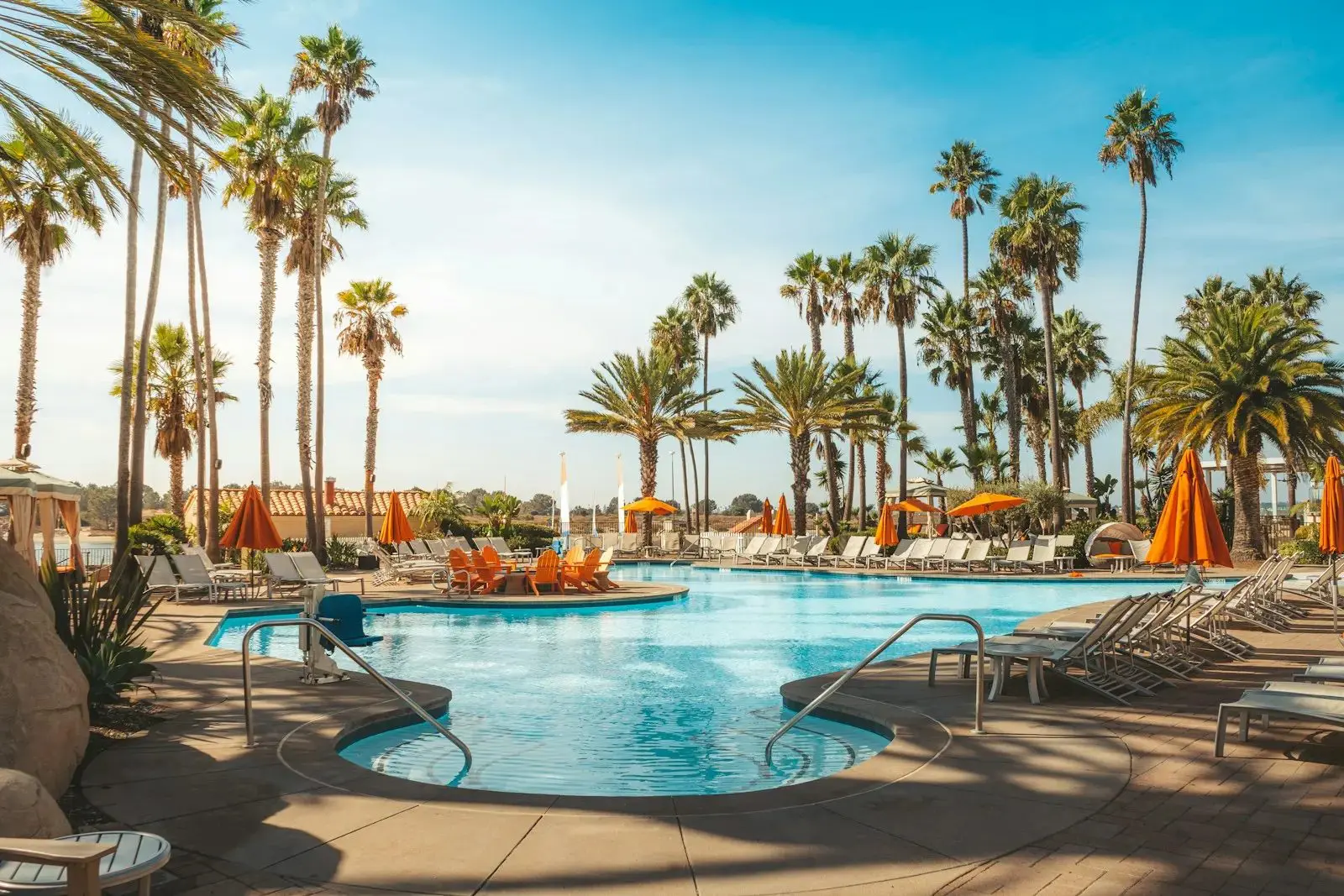
This is where most families with babies and pre-schoolers come. The Bay of Alcudia is over ten kilometres of wide beach with fine, pale sand and a seabed that slopes very gently. You’ll find large hotel complexes here with full all-inclusive packages. In the evenings you’ll mainly hear German and English, and you’ll pass dozens of pushchairs on the promenades. If you want maximum convenience and calm, this is the best choice. If you want to read more about this part of the island, be sure to check our separate article, because Alcudia has a lot to offer.
East (Porto Cristo, Cala d’Or, Cala Millor) – Coves and caves
The east coast is the land of the so-called “calas”, small coves cut into the land. The water here is a beautiful turquoise colour, but the beaches are often small, which means crowds in peak season. This area is excellent for older kids who are keen to try snorkelling. From this part of the island you’re also closest to the famous Dragon Caves. Bear in mind, though, that the drive from the airport takes a little longer. We’ve described the caves themselves in a separate post, which will help you plan the trip.
South (Es Trenc, Colonia de Sant Jordi) – Wild nature
The south appeals to families who value nature and a slower pace. Hotels here are smaller, often converted country estates (fincas) turned into farm stays. There are no big theme parks, but in return you get access to wild, undeveloped white-sand beaches where you can build sandcastles for hours. It’s an option for those who want to escape commercial bustle.
West (Palma de Mallorca, Palmanova, Magaluf) – Entertainment and city

The area around the capital is heavily built up. Magaluf and Palmanova are known for British tourists and nightlife, so it’s better to avoid them with small children. Palma de Mallorca itself is a great target for a one-day city break, but we wouldn’t really recommend it for a two-week stay with a bucket and spade. The pluses of this area are its closeness to the airport and a very dense network of water parks. You can learn more about sightseeing in the capital by checking what Palma de Mallorca is like on a family visit.
Tramuntana mountains (Soller, Valldemossa, Deia) – For active families
The north-west is a mountain range with winding, narrow roads. The stony and gravel beaches don’t encourage lounging with babies, but older children will enjoy hiking trips and rides on historic trains. Accommodation is mainly expensive boutique hotels for couples. Treat this area as a place for day trips rather than a base with children.
| Child’s age | Best region | Main reasons |
|---|---|---|
| Baby (0-2 years) | North (Alcudia, Playa de Muro) | Shallow water without waves, wide beaches for pushchairs, all-inclusive hotels right by the beach. |
| Pre-schooler (3-6 years) | North / East (Cala d’Or) | Lots of playgrounds, gentle entries into the water, sandy seabeds, easy access to toilets. |
| Older child (7-12 years) | Whole island (we recommend the East) | Chance to snorkel in the coves, closeness of the caves, mountain trips. |
Top 10 things to do in Mallorca with kids – what to see?
When planning things to do in Mallorca, remember one thing: the island is bigger than it looks. If you’re staying in the north, getting to the west will take you well over an hour. The list below is an overview of the main sights. We tested each of these trips with our sons.
1. Alcudia and Playa de Muro beach – the sandy giant

This is the most important point on the map of things to do with children on Mallorca. A strip of pale, soft sand stretches for kilometres. In summer the water is warm as soup and smells strongly of salt, mixing in your nostrils with the smell of SPF50 sun cream everywhere. Underfoot you’ll feel only smooth, hot sand with no sharp stones. Unfortunately, on the second day at the beach a favourite sand mould was lost, and the sun was burning necks so hard that half an hour was spent frantically digging through the sand before giving up and buying a new one at a local kiosk for double the price.
For children aged 8-10 this is the ideal place to build huge water forts, moats and dams. The shallow water lets them throw a ball without worrying about sudden waves. Remember to always come to this beach before 10:00 to get a spot near the waterline and avoid dragging your bags across the hot sand. If you’re looking for a wider round-up of seaside spots, be sure to read our beach ranking.
- 🕐 Opening hours: Around the clock
- 💰 Ticket prices: Free entry, sunbed with parasol around 15-20 EUR per day
- 🚇 Getting there: On foot directly from the town, or bus A32 from the airport
- ⏱️ How much time to allow: Half a day or a full day
Tip: Always keep a small dustpan and brush in your bag – it’s a brilliant trick for cleaning wet sand off feet before getting into the car.
2. Palma de Mallorca – the busy streets of the capital

A trip to the capital is a good break from lying by the water. The main sight is the huge La Seu Cathedral. In the streets you can taste sweet, deep-fried churros with thick chocolate. Your ears ring with car horns and the drone of hundreds of scooters squeezing between cars, and the air in the side streets can be really stuffy.
Children like running around the wide square in front of the cathedral and watching the big ships moored in the nearby port. The architecture alone won’t hold their interest for long, but the chance to walk on the defensive walls of Bellver Castle is an adventure worth telling friends about. It’s best to come to Palma early in the morning or on a cooler, cloudy day, before the crowds block the narrow streets of the historic centre. You’ll find more detail about the capital from a child’s perspective in a separate piece.
- 🕐 Opening hours: Cathedral 10:00-17:15 (depending on the season)
- 💰 Ticket prices: Cathedral from 9 EUR, children under 10 free
- 🚇 Getting there: EMT A1 bus from the airport, or by car (look for underground car parks)
- ⏱️ How much time to allow: 4-6 hours
Tip: Street parking in Palma is next to impossible. Put an underground car park straight into your sat nav, such as Parc de la Mar, right under the cathedral.
3. Drach Caves (Cuevas del Drach) – an underground world

The Dragon Caves are one of the essential stops on any sightseeing list. Inside, it is completely different from the surface – a cold, heavy damp settles on your skin, your ears pick up the steady echo of water drops hitting the rocks, and the sound of violins and cellos bouncing off the ceiling. During a tour, the underground damp can make younger children very cold after a few minutes and they may start complaining loudly that a favourite warm jumper was left at the hotel, which can really distract you.
The children’s imaginations were working at full speed. They looked for monster and dragon shapes in the rock formations. A big surprise was the boat trip across the underground Lake Martel at the very end of the route. Always book cave tickets online a few days in advance to avoid standing in very long queues at the ticket office in full sun. The other practical details about visiting and prices are gathered in our dedicated article about the caves.
- 🕐 Opening hours: Entry at set times (e.g. 10:00, 11:00, 12:00, 14:00, 15:00)
- 💰 Ticket prices: Around 17-20 EUR for adults, cheaper for children aged 3-12, free under 3
- 🚇 Getting there: By car towards Porto Cristo (east of the island)
- 🌐 Website: cuevasdeldrach.com
- ⏱️ How much time to allow: About 1.5 to 2 hours including entry
Tip: Flash photography is not allowed in the caves during the live classical music concert, so warn your children before you go in.
4. Water parks in Majorca – water at full speed

Fun at water parks is a must, especially for school-age boys. Depending on the region, you can choose from the huge Aqualand in the south, the cooler and smaller Hidropark in the north, and the Western Water Park with its extreme rides. We chose Hidropark. While we were queuing for the Kamikaze slide, water dripped onto our heads from the wet swimsuits of the people in front, it was stuffy and smelled strongly of chlorine. The huge queue for one of the tubes meant we stood for 40 minutes in full sun on the stairs, and both sons started arguing about who would go down first.
The slides are guaranteed to bring squeals of joy. The children tried all the available rubber rings and racing tracks. The biggest hit was the wave pool. Always buy water park tickets through the official website the day before, because prices at the ticket office are on average 10 per cent higher. If you are wondering which park to choose for your holiday in Majorca with children, be sure to see our guide describing each of the water parks.
- 🕐 Opening hours: Usually 10:00-17:00 (summer season only)
- 💰 Ticket prices: From 25 to 35 EUR per person (depending on the park and age)
- 🚇 Getting there: Directly by coach or car (paid car parks)
- ⏱️ How much time to allow: A full day from morning to afternoon
Tip: Take water shoes with rubber soles, because the concrete paths get so hot in the sun that you can burn your feet walking between the pools.
5. Es Trenc beach – in search of Caribbean sand

It is said to be the most recognisable natural beach on the island, surrounded by dunes and pine forest. The fine sand slips through your fingers like icing sugar, the sea murmurs steadily, and the temperature of the shallow, turquoise water invites long swims. Unfortunately, on the day of our visit a strong southerly wind blew sand straight into our eyes, and the lack of any natural shade got to us so much that we packed up our towels after just two hours.
The boys mainly focused on catching small fish in buckets and looking for shells washed up by the waves. Because there is no lifeguard cover, you had to keep an eye on them at all times. Be sure to take your own sun umbrella and a supply of drinking water to Es Trenc beach, because the facilities there are very limited and the prices at the only nearby bar can empty your wallet.
- 🕐 Opening hours: Open 24 hours
- 💰 Ticket prices: Free access (paid car park around 7-10 EUR per day)
- 🚇 Getting there: By private car only, along a gravel, bumpy road
- ⏱️ How much time to allow: 3-5 hours, depending on your tolerance for the sun
Tip: The road to the car park is full of potholes, so if you have hired a car without full tyre cover, drive very slowly and avoid the deep holes in the road surface.
6. Tren de Soller – a historic railway journey

The journey from Palma to the mountain town of Soller is a trip back in time on a wooden, hundred-year-old train. During the ride you hear the loud whistle of the locomotive before every tunnel, you can smell the mechanical grease, and cooler mountain air comes in through the open windows. Unfortunately, the wooden benches on the train are so hard, and the train shakes so much on the points, that it can end with mineral water spilled straight onto light-coloured trousers halfway through the route.
For the children, the biggest attraction was simply riding such an old train. They stuck their heads out of the windows and counted the hundreds of orange trees passing by, racing to see who could spot more. Buy combined tickets for the train from Palma and the historic tram down to the port in Soller, which saves a lot of hassle and makes the logistics in the mountains easier.
- 🕐 Opening hours: Departures several times a day from around 10:00 to 18:00
- 💰 Ticket prices: The full package (train + tram) is around 35 EUR per adult
- 🚇 Getting there: Starting station in Palma (Ferrocarril de Soller) near Plaza de Espana
- 🌐 Website: trendesoller.com
- ⏱️ How much time to allow: Half a day set aside
Tip: Seats in the carriages are not numbered. It is worth arriving at the station 20 minutes before departure so the whole family can sit together by one window.
7. Cap de Formentor – the power of the cliffs

The northernmost cape is a place of strong winds and huge open spaces. Standing by the railing at the Mirador Es Colomer viewpoint, the wind hits with great force, the sea crashing a hundred metres below against the rocks roars in your ears, and the air smells of pine forest. Unfortunately, the winding, very narrow road leading to the cape made me feel really sick, and we had to pull over onto a small verge and make an unexpected stop to catch our breath.
For a ten-year-old, the huge cliffs make a giant impression. Younger kids, on the other hand, may simply say it is blowing too hard to be comfortable. If you head to Formentor in summer (July-August), bear in mind that private cars are banned from the last stretch of road and you have to switch to a special bus to prevent traffic gridlock.
- 🕐 Opening hours: The viewpoint is accessible around the clock (watch out for summer traffic restrictions)
- 💰 Ticket prices: Free
- 🚇 Getting there: By car from Port de Pollenca (in summer, a shuttle bus to the top)
- ⏱️ How much time to allow: 2-3 hours of slow driving with photo stops
Tip: Always hold on tightly to hats and mobile phones, the wind can snatch things from your hands in a split second.
8. Cuevas de Arta – an alternative in the east
If you want to see caves but without the hundreds of tourists of the Drach caves, the eastern Cuevas de Arta are an excellent idea. Here the stalactites and stalagmites are taller and more majestic. You hear only the quiet dripping of water and the dull thud of your own footsteps on the concrete stairs. There is a pleasant, constant chill. The half-darkness at the start of the route and the dimmed lights frightened our younger son a little, and he had to walk the first hundred metres holding tightly to his father’s hand and did not want to go on his own.
After a moment of getting used to the gloom, both boys were impressed by the tallest stalagmite in Europe, called the “Queen of Columns”. The final cave lighting synchronised with classical music held their attention from start to finish. When visiting with small children, take a light jumper or cardigan, the underground temperature stays at 18 degrees all year round, which can give you the shivers after coming down from 30-degree heat.
- 🕐 Opening hours: From 10:00 to 17:00 or 18:00 (depending on the month)
- 💰 Ticket prices: Around 15 EUR per adult, children under 7 free
- 🚇 Getting there: By car towards the town of Arta, then Canyamel on the east coast
- ⏱️ How much time to allow: The visit takes about 40 minutes
Tip: If you leave the car in the free car park in front of the complex, do not leave any valuables on view in the cabin, the local staff themselves advised us of this.
9. Valldemossa – Chopin’s mountain town

The mountain village of Valldemossa is famous for the monastery where Frederic Chopin stayed. Much more important for visitors, however, are the stone streets themselves, full of flowers in pots. A sweet smell of traditional baked coca de patata drifts from every cafe, a sharp, cooler wind blows down from the mountains, and the stone walls of the houses feel rough and sun-warmed under your fingers. During our stay, the very steep, stony climbs turned out to be really tiring after a whole day of walking, so the boys protested and we had to take a long, forced break on a bench in the town centre, rescuing the situation with a quick purchase of a large portion of ice cream.
From an eight-year-old’s point of view, looking at old pianos in a museum was boring. Looking for cats lounging in the alleys saved the day, along with the sweet buns mentioned above, which turned out to be the hit of the day. If you’re planning a visit to the Tramuntana mountains with small children, bring a carrier instead of a pushchair, because the cobblestones and steep steps in Valldemossa turn a stroll with an umbrella into a proper obstacle course.
- 🕐 Opening hours: The town is open all the time, the Monastery usually until 16:30
- 💰 Ticket prices: Walking around is free, the Monastery with Chopin’s cell around 10 EUR
- 🚇 Getting there: 30 minutes by car from Palma along a winding mountain road
- ⏱️ How much time to allow: 2-3 hours of a relaxed walk
Tip: Don’t head back to the coast just before sunset, driving downhill into strong sun – the driver is often completely blinded on the bends.
10. Palma Aquarium – a rainy-day backup plan

The aquarium in the capital is a large, well-designed educational complex. The most impressive part is the “The Big Blue” tank with sharks. There’s quiet, dark background music, a huge pane of water visible through an enormous window, and the interior is cool and dimly lit. Despite the great facilities, we hit a bad moment – the shark zone was very loud with several Spanish school groups shouting over each other, so the noise bounced off the glass and we had to escape quickly to the tropical garden area outside.
Many children love sharks, so the sheer size of the aquarium makes a huge impression. Younger kids are often happiest with the big open pirate-ship playground in front of the exit, where another hour can disappear after finishing the visit. Use Palma Aquarium as a rescue stop on a day when the weather breaks during your holiday or when the rare Balearic rain pours down, booking tickets online on the morning of the same day.
- 🕐 Opening hours: Daily 09:30-18:00 (depending on the summer season)
- 💰 Ticket prices: Adults around 28 EUR, children 3-12 around 19 EUR
- 🚇 Getting there: Bus from central Palma or from the airport, close to the ring road
- 🌐 Website: palmaaquarium.com
- ⏱️ How much time to allow: 3 to 4 hours
Tip: Bring sandwiches. The food at the café by the aquarium entrance is expensive and worse quality than what you pack in your backpack.
When to go to Majorca with children? A season-by-season guide
Wondering when to go to Majorca with children? For families used to a UK summer, it might seem simple, but southern Spain plays by its own rules. In summer the heat can be relentless and can effectively rule out sightseeing with a preschooler. Below we’ve broken the year down, based on data from recent years and advice from friends who live there year-round.
| Month | Daytime temperature | Sea temperature | Our verdict for families |
|---|---|---|---|
| April / May | 18-23°C | Cool (16-18°C) | Good for cycling and sightseeing, poor for swimming. The water is bracing. |
| June | 25-28°C | Warming up (21-23°C) | The best time. Warm, reasonable prices, long beach days. |
| July / August | 30-35+°C | Like a bath (24-27°C) | Peak season. Crowds, high prices, risk of sunstroke for children. |
| September | 26-28°C | Very warm (25°C) | The sweet spot. Ideal sea, no wild crowds and bearable heat. |
| October | 22-24°C | Still warm (22°C) | A great budget pick, though there’s a risk of storms towards the end of the month. |
From a mother’s point of view, the safest months for a trip with the youngest children are June and September. In June the island wakes up, the days are the longest of the year, and the sand doesn’t burn your feet. September, meanwhile, means a sea warmed to bath temperature, which allows an hour of splashing in shallow water. I strongly advise against July and August for families with little ones – stepping out of the air conditioning then very often ends in sunburn or serious overheating.
How much does Majorca cost with children? A 2+2 budget for a week
How much does Majorca cost with children? The amounts vary dramatically depending on the month and the type of trip. The figures below are a realistic picture for a family with two school-age children in mid-season (June or September). Majorca prices its attractions firmly, and logistics cost money. Compared with our Tenerife, accommodation and food costs in the Balearics seem around 20 per cent higher on average, although flights alone can make up that difference.
- Flights: Budget airlines such as Ryanair or Wizz Air let you buy tickets for around EUR 70-120 return in mid-season. For four people (plus one large checked bag) expect a cost in the region of EUR 425-565.
- Accommodation: An apartment with a kitchenette and pool access costs on average from EUR 825 to 1175 per week in the eastern or northern region. A holiday in a 3* or 4* hotel with a full all-inclusive package will set you back from EUR 2350 to as much as EUR 3060.
- Car hire: Majorca with children and a hire car costs EUR 26-35 per day with full insurance. A week’s hire costs around EUR 210, plus petrol and parking.
- Ecotasa tourist tax: Compulsory, paid at every reception on arrival. It’s around 2.20 EUR per night for an adult in three-star hotels. Children under 16 stay free. Budget around 30-35 EUR in cash for your farewell to the receptionist.
To sum up the real cost of renting an apartment and cooking for yourselves, interspersed with cheap lunches in tavernas: it’s safe to assume a budget from about EUR 1,880 per week for a family of four, assuming you skip many paid attractions. A more comfortable all-inclusive starts at about EUR 2,590 and up.
Getting there and island logistics for families
The best places in Majorca for families are well connected to Palma de Mallorca airport (PMI). Three hours on a plane pass very quickly. The airport itself is huge but well signposted. You’ll find large play areas and dedicated, clean baby-changing rooms there.
If you choose public transport, Aerotib buses leave from the airport. The cost of getting directly to the north, for example the yellow A32 bus towards Alcudia, is around 8 EUR per ticket, which you pay cheapest by tapping a card at the entrance by the driver. The EMT A1 city line will take you to central Palma for just 5 EUR per person.
The most convenient option by far is hiring a car. It gives you the freedom to stop for spontaneous toilet breaks, or to avoid long, hot walks from the stop to the hotel. When hiring a car for the youngest passengers, use local, independent baby equipment rental companies on the island (such as RentalPanda), which saves a lot of money on expensive car seats and carriers hired at full price straight at the airport. Rental companies that deliver to your hotel offer car seats for as little as 2-3 EUR per day, while the well-known brands at the airport charge 10 to 15 EUR.

Where to stay – hotels vs apartments with children
The split in accommodation is very clear. If you want to see Majorca on optional excursions without tying yourself to cooking, all-inclusive hotels near Playa de Muro are hard to beat. Most of them have separate paddling pools shaded by sun sails, daily entertainers and meals flavoured for children from Western Europe (read: plenty of pasta and fish fingers).
An apartment (AirBnb, Booking) in the east, on the other hand, lets you taste freedom and is far more economical. It does mean constant shopping at Eroski or Mercadona supermarkets. We usually prefer independent flats with our sons, which lets us head to the beach early in the morning with our own sandwiches without keeping to the rigid breakfast times set by hotels. You also save on expensive drinks, because bottled water at the supermarket is three times cheaper.
A week’s plan in Majorca with children (own car version)
How do you combine lying flat on your back on a Majorca holiday with children with a desire to explore? Our tried-and-tested compromise with a ten-year-old is to weave small trips between full beach days. Here’s a realistic schedule for a base in the north or east.
- Day 1: Arrival, settling in, buying bottled water, a scouting walk around the immediate area. Building a sand base.
- Day 2: Total rest, easing into the mood. A few hours on the shallow beach before noon, lunch Spanish-style at 14:00, an evening stroll along the promenade.
- Day 3: Sightseeing in Palma. Leave very early (8:00), walk around the cathedral and Bellver Castle. Escape for ice cream, back near the hotel in the afternoon before the worst heat.
- Day 4: “Water madness” day. A full-day trip to a chosen aquapark, e.g. Hidropark in Alcudia. The children will crash from exhaustion very quickly in the evening.
- Day 5: Drach Caves. A short, cool morning in the dark underground, then in the afternoon exploring nearby calas (e.g. Cala Pi or Cala Mondrago) with snorkelling masks.
- Day 6: The “historic mountain trip” option. A train ride from near Palma to Soller, or a quick drive towards Valldemossa. Back to a safe sandy beach and packing.
- Day 7: Morning car drop-off, flight home with a backpack full of stones and shells.
Eating with children – the challenge of meal times
Spain’s eating rhythm can completely disrupt a hungry seven-year-old. Lunch is often served between 14:00 and 16:00. The real problems start in the evening, though. Most authentic restaurants don’t open their kitchens for dinner until 19:30, and sometimes not until after 20:00. For children who eat dinner at home around 18:00, that is far too late.
Remember that in Spain dinner is served late, so always keep filling snacks for the children to hand and plan your shopping well in advance to avoid tears on the way back from a walk.
What do you feed the youngest when they are fussy about the menu in a new place? A traditional, trouble-free favourite is the sweet, fluffy spiral-shaped pastry called ensaimada – ideal as a rescue breakfast. Among savoury dishes, country bread rubbed with tomatoes and drizzled with olive oil works well (often served with cheese). A breaded pork cutlet with chips is harder to find, so aim instead for simple roasted vegetables known locally as tumbet, or simply a big bowl of hearty paella with mild chicken.

Health and safety in the heat
A holiday in this climate places a few key organisational duties on parents. First, the EHIC (European Health Insurance Card) is absolutely essential before you fly. Just remember that it only works free of charge at public facilities marked Centro de Salud. Facilities at hotels, lured in by a red cross sign, are 90 per cent private clinics where you will pay several dozen Euros in cash for an ordinary paediatric visit on holiday. That is why we always advise buying cheap additional private health insurance with treatment costs.
Second, jellyfish. On the islands they appear in waves after windy days in spring or at the start of autumn. The famous pink jellyfish that glows at night (Pelagia noctiluca) is the quiet culprit behind many tears in shallow water. If you are stung, the key thing is to rinse the spot only with salt sea water, not fresh water from the tap. Lifeguards usually remove the remains of tentacles with the hard edge of an ordinary plastic payment card.

Frequently asked questions – FAQ
Yes. The island offers shallow, sandy beaches, a mild climate and extensive hotel infrastructure, which makes the logistics with little ones much easier. Choose hotels in the north of the island, where the beaches are safest.
September. Warm days at 28 degrees and water heated like soup make it an ideal time for building sandcastles after the big holiday crowds have gone. Avoid July and August, because the heat is too much for newborns then.
8000. For that amount you will spend 7 days renting a large apartment and cooking meals from cheaper local products from supermarkets (outside high season). You will save by buying tickets to the main attractions a day earlier on your own devices.
The north. The Bay of Alcudia and Playa de Muro offer a gently sloping seabed and ankle-deep water for dozens of metres out. All the promenades are laid with wide concrete paths that make it easy to push small pram wheels. You will find the most comfortable properties with wide lifts in Alcudia.
No. The main resorts are connected by convenient, cheap yellow buses directly from the airport, at reasonable rates for a single full journey with a ticket bought from the driver. A car is only useful if you plan to tour the remote, winding areas of the Tramuntana.
7. A full week off including flights is the minimum time investment that lets you see the differences between the mountainous, cooler range, the capital full of scooters and the hot sands of the shallow north. Families wanting a relaxed touring pace should consider extending their base booking to a full ten nights.
The beach. In first place is the shallow water at Alcudia, second the underground waters of the Drach Caves, and third the large educational complex of Palma Aquarium within the city, right by the motorway exit junction near arrivals. Choose at most one bigger viewpoint a day, so the kids don’t scream in an overheated car on the way from the hotel.
The Balearics. The shorter distance and the clearly sandy shoreline environment, gentler on the joints of younger beachgoers, are clear advantages. For a thorough, deep warm-up we recommend flying to the southern sandy area around Colònia de Sant Jordi.
Muro. This strip in the north combines a huge space for building sand walls with gentle, wave-free shallow water and no sudden drops in the seabed. Other favourites are the small coves on the eastern side, but those get busier in mid-summer after lunch. Lay your towels as close to the land’s edge as possible, before the sand starts scorching from the midday heat.
Yes. There are no tropical insects here, and the only sea-life hazard is the rare glowing purple jellyfish that approaches from the south at the start of the sea’s cooling in September after the rains. Always remember to use factor fifty sunscreen at any time of the bright day.
Ensaimada. The traditional pastry shaped like a rolled shell fits perfectly with milk on cooler mornings after waking. A simple, slow-cooked mix of mildly spiced baked vegetable and potato dishes, known to tourists as the local tumbet, works well in tavernas in the evening. Ask the waiters not to sprinkle the salty, thick seasoning on the plate before serving the potatoes, because of the stronger taste.
With limits. You can only use the document at public health centres with a sign at the gate identifying the facility as a public state medical care point. It will not work with a local doctor called out next to the beach from the hotel reception without the patient having a private insurance policy taken out before leaving home. For any sudden tooth problem or cut, ask your insurer before you go for the number of a free first-response point near the hotel.
Summary – is it worth going to Spain with children?
Majorca organises its children’s attractions in an extremely streamlined way for the European tourist, which saves you a lot of tiredness linked to navigating and worrying about hygiene in the resorts. It is an island made for a family holiday, building sandcastles on the beach and watching fish. Of the whole trip we most recommend visiting shallow, sandy Alcudia (you will recharge your nerves there after a whole year with a baby at home), spending a cloudy, cooler day in front of the big glass in the capital, and going into the heart of the dark caves.
For families wanting a comparison with the rest of the Iberian Peninsula, we wrote more about Spain for a family holiday in a separate general round-up on our homepage. Finally, it is also worth looking at a cooler calculation before you go and reading the pros and cons of travelling in that direction for older and younger children.