
Compiled with the help of artificial intelligence, based on Spanish-language information. Source below the article.
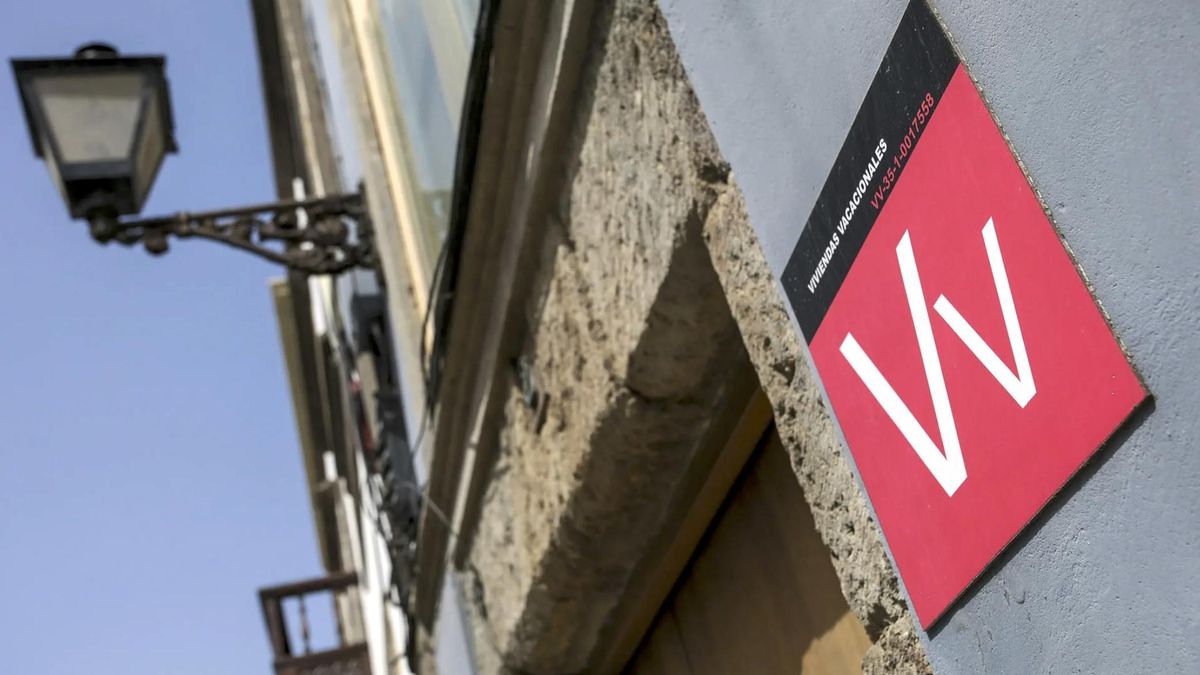
Tourism has already eaten into the space available for local residents. Since holiday rentals were legally regulated in May 2015, Canarians have been steadily losing opportunities — and the logic of “everything for the tourist” has ceased to be a perception and become a measurable reality.
Today, seven municipalities in the Canary Islands have more registered tourist beds than residents. In other words, in these areas, tourist accommodation capacity exceeds the number of people who actually live there.
A new map of tourist pressure
This is what Canarias Bajo Presión (Canary Islands Under Pressure) reveals — a new map that cross-references public information, much of it practically inaccessible, on tourism, housing, population and mobility to translate big figures into a more relatable scale.
Its creator, Canarian biologist and professor Román Herrera — also responsible for Vertidos Canarias — tells Canarias Ahora that the aim is “to take data out of official statistics and bring it to the street”, so that it can be understood in seconds and, at the same time, anyone can trace where each figure comes from and how it has been calculated.
The tool does not limit itself to counting holiday homes. Exploring it reveals at least three ways of looking at the same municipality: tourist pressure, difficulties in accessing housing, and the perception residents themselves have of that pressure, based on their participation.
Adeje: the most strained municipality in the archipelago
The case of Adeje — the most strained area in the archipelago — makes this clear. The municipality appears with more than 95% tourist pressure and up to 56.3% difficulty in accessing housing. According to the indicators, it is one of the most strained areas in the archipelago without having been officially declared as such.
In Las Palmas de Gran Canaria, the scenario is not very different. As this newspaper has already analysed, buying a home there is equivalent to 10.75 years’ salary. At the same time, there are 208 holiday homes per square kilometre — that is, within a 500-metre radius, approximately one in every 44 homes is registered as tourist accommodation.
The paradox is that the Gran Canarian capital has not been declared a strained area because, according to the College of Economists, it does not meet the requirements to be one.
“I think this figure helps a great deal in understanding why I wanted the website not to stop at simply counting holiday homes,” explains Herrera, who says the intention is to keep adding indicators and new layers of information.
99 million tourist nights
But the figures go even further. The Canary Islands recorded 99 million tourist nights during 2025, which, translated into a more intuitive measure, means there was the equivalent of around 275,000 tourists present on average every day in hotels and apartments across the archipelago — more people than the entire population of the municipality of Venice.
The analysis also highlights seven extreme cases: Pájara, with around 165 tourist places per 100 inhabitants; Yaiza, with 149 per 100; Mogán, with 132; Adeje, with 122; San Bartolomé de Tirajana, with 116 per 100; and Antigua, with 100.8 — evidence that the Canary Islands has become the fourth European region with the most overnight stays in tourist flats.
Housing demand continues to soar
The most direct contrast appears when these figures are set against residential demand. In 2026, 36,950 people were registered as applicants for protected housing in the Canary Islands. In less than eight years, the Public Register of Applicants for Protected Housing has added 17,922 more people — an increase of 94.2%.
The website adds another equally revealing detail. Municipality by municipality, it allows users to see what percentage of a household’s income goes towards rent and how much effort it takes for a family to cover that expense. It also measures the difficulty of accessing housing and the average monthly rental price.
In Santa Cruz de Tenerife, for example, accessing housing is considered “extremely difficult”, with a score of 83.8 out of 100. Translated into euros, tenants pay more than €590 a month for a home in the Tenerife capital — 30.2% more than in 2019.
The situation is no better in Arona. Although tourist pressure is lower — at 77% — the effort households must make to pay rent is relatively higher: 22.3% of family income goes towards rent, 3.9 percentage points more than in Santa Cruz de Tenerife.
Thousands waiting for public housing
In summary, the Canary Islands has an ever-growing number of places dedicated to tourism while tens of thousands of people wait to access protected housing. Residential demand continues to grow and the public response, for now, is advancing at a much slower pace.
The Canary Islands Housing Observatory’s own viewer makes clear that of the roughly 4,000 homes registered since the declaration of a housing emergency, only 248 appear as completed.
It is true, however, that the supply of holiday homes has begun to shrink. A study by Excelcan puts that fall at 19.6% during the second quarter of 2026 compared with the same period the previous year, following the entry into force of the new regulation.
But there are still 161,170 places available — a capacity considerably greater than the population of Salzburg and more than double the inhabitants of Santorini. In total, according to data from Canarias Bajo Presión, 72,363 homes are used for holiday purposes.
The overall picture makes it clear that the archipelago has an enormous capacity to accommodate visitors while thousands of people continue to wait for a home they can actually access.
What’s happening in the Canaries – straight to your phone
News, weather alerts and practical updates – direct from the islands, in English. We live here and know what’s going on – before the international media catch up. Everything lands on our WhatsApp channel – no middlemen, no algorithm. Curated for families, expats and travelers.

Tenerife eviction halted after mass protest in Santa Cruz

Canary Islands defy national slump as property sales rise 2.1%

Family demands probe into Fuerteventura demolition operation

NC-BC proposes seizing empty homes for affordable rent
El Médano residents revolt against council failures
Las Palmas tenders geotechnical study for 240 homes

Canary Islands land prices fourth highest in Spain

Canary Islands schools begin year with 29,254 teachers
The AI revolution: We are debating curtains while the building changes
