
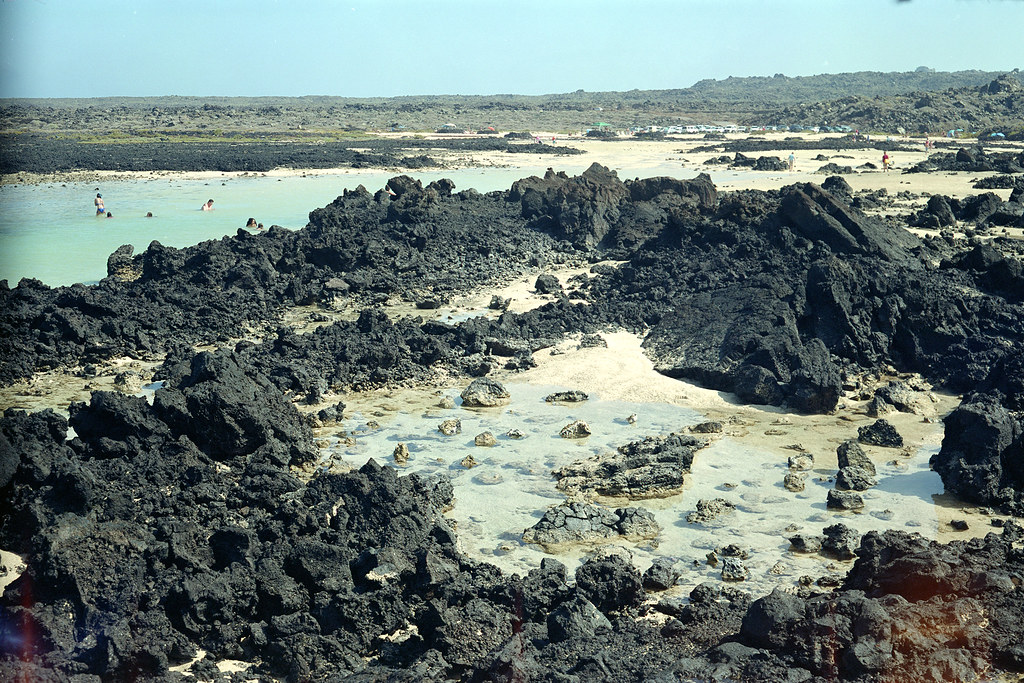
Caletón Blanco is one of the most photogenic spots on Lanzarote — and in all of the Canary Islands. Picture dazzling white, fine-grained sand scattered between black, porous lava rocks. Turquoise water fills natural pools among the rocks, while the rugged volcanic coastline of northern Lanzarote stretches into the distance. The contrast is so intense it seems unreal.
Natural Pools in the Lava
Caletón Blanco is not one big beach but a series of small sandy pockets wedged between lava formations. The water in these natural pools is shallow and warmed by the sun, creating something like a natural jacuzzi. Depth rarely exceeds a metre, making this a safe spot for children and anyone who isn’t confident in the open ocean.
The sand is exceptionally white — brighter than at most Canarian beaches. It comes from crushed shells and marine organisms. The contrasting black rocks are the result of volcanic eruptions that shaped Lanzarote’s northern coast. The visual effect is stunning and makes Caletón Blanco one of the most photographed places on the island.
Off the Tourist Trail
Caletón Blanco sits off the beaten track, a few kilometres south of Órzola — the last village in northern Lanzarote, from where ferries depart for La Graciosa. Most tourists drive straight through on their way to the port, never suspecting that just around the bend lies one of the island’s most beautiful beaches. The absence of hotels, bars and any tourist infrastructure means you’ll often have the place nearly to yourself — even in peak season.
It’s the perfect spot for a picnic. Bring your own water, food and towel, because there’s nothing to buy on site. The nearest shop and restaurant are in Órzola (5 minutes by car) or Haría (15 minutes).
Practical Information
- Getting there: by car via the LZ-1 towards Órzola. Turn off onto an unpaved road about 4 km before Órzola (signposted). Small car park by the beach.
- Public transport: line 9 from Arrecife to Órzola, but the bus stop is about 2 km from the beach on foot.
- Facilities: none — no toilets, showers or lifeguards. Bring everything you need and take your rubbish with you.
- Wind: the northern coast can be breezy, but the rock pools are partially sheltered.
- Best time to visit: May to October, when the wind is gentlest. At low tide the pools are shallowest and warmest.
Nearby Beaches
- La Graciosa beaches — ferry from Órzola (5 km), pristine shores of the eighth Canary Island.
- Playa de la Garita (Arrieta) — 15 minutes south, a calm beach with a natural pool, popular with local families.
- Charco del Palo — a naturist settlement with rock pools, about 20 minutes south along the coast.