
The Sound of the Sea Returns to Playa Jardín
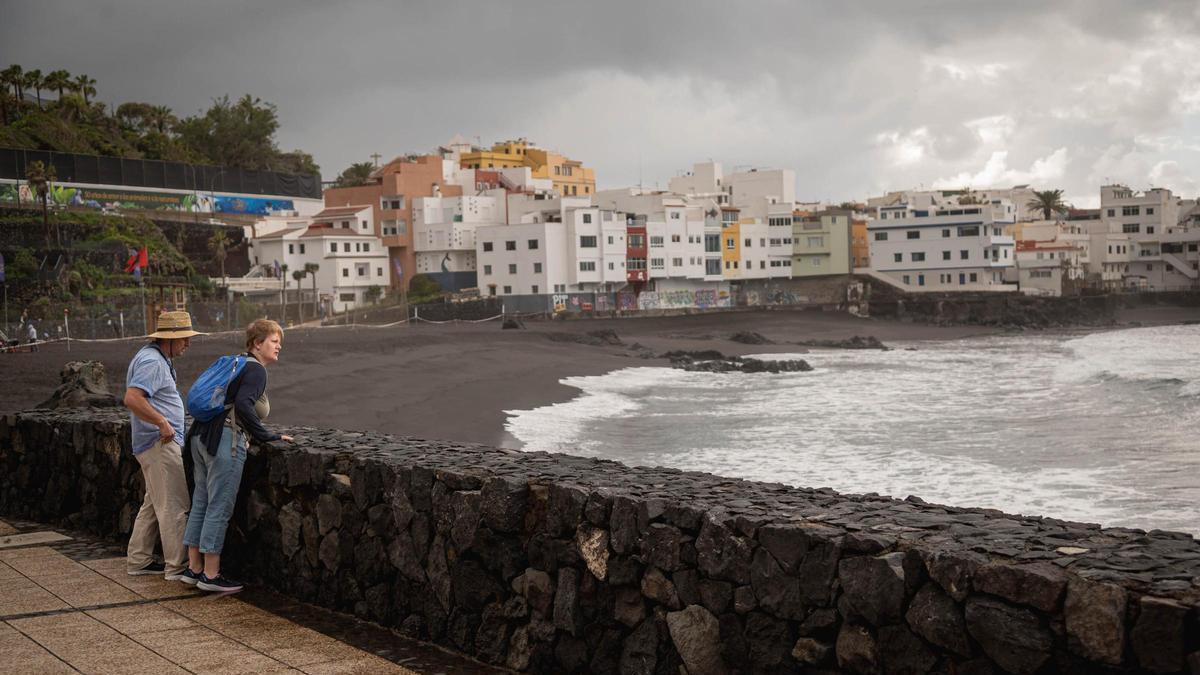
The sound of breaking waves and the bustle of tourists and residents has once again replaced the silence that reigned over Playa Jardín in Puerto de la Cruz for 349 days. On 17 June 2025, the three beaches – El Castillo, El Charcón and Punta Brava – were once again filled with bathers following their abrupt closure after faecal contamination was detected in the water. To this day, official analyses provided by the Canary Islands Government’s Public Health department reflect that the water quality is suitable for bathing. But the question hanging over the characteristic black sand of these Puerto de la Cruz beaches is whether the recovery is real, whether it is felt, and if it satisfies local businesses and swimmers.
A Costly Closure and a Multi-Million Euro Fix
The beach closed on 3 July 2024 due to the high level of contamination. A study commissioned by the regional government pointed to four main factors: the malfunction of the Punta Brava wastewater treatment plant, the rupture of a sewage outfall pipe, serious deficiencies in the sanitation network, and problems with three storm overflows (El Caletón, Playa Chica and Playa Jardín). After an investment of more than two million euros in the La Orotava treatment plant and over 20 favourable water quality tests since December 2024, the reopening was authorised on 10 June 2025.
Businesses Report a Sunny Resurgence
José Santiago Sanchi, a worker at the Playa Jardín beach bar terrace located on El Castillo beach, says that recent rainfall has slowed the influx of customers. However, at the start of the week, with days marked by sun and calima, “all three beaches were packed.” He believes the closure of Playa Jardín for over a year has not critically harmed the hotel sector, as bathers have continued to visit. He even recalls that the problem of faecal waste “is not new,” but has been around “forever, although now it has become more harmful to health.”
Commercial activity is beginning to accompany the resurgence of the tourist enclave. The Playa Jardín Burger restaurant reopened in July 2025 after being closed for four years and, to this day, continues to operate. Its workers confirm that customers have kept coming and they perceive that “this resurgence is real.” And like Sanchi, they say that on sunny days “there isn’t room for a soul on the sand, whether in summer or winter.” The premises at El Charcón, recently leased for 20 years, is undergoing renovation. Terraces are being set up again facing the sea. The environment, at least visually, has regained its dynamism.
Local Distrust Runs Deep
However, although the recovery of the bars is full steam ahead, many locals do not dare to set foot in the water of Playa Jardín. Carmen García lives near the coast. From her balcony, she sees the three beaches daily. “When the sea is calm the water looks beautiful and you feel like swimming, but as soon as it gets a bit choppy you see what is supposed to be sea foam and you don’t feel like it,” she explains. She does not feel safe. For her, the damage from this closure goes beyond its total inactivity for the past year and a half because she believes it has also been reputational. “The closure has given the municipality a very bad name. It’s not as if this doesn’t happen in other towns on the island, but because in Puerto de la Cruz it was on a large scale, we are singled out more.” Even so, she celebrates the reopening and the return of economic activity, though she insists that “the solution is not for today or tomorrow; the problem must be solved at the root.”
Paula González, another resident of Puerto de la Cruz, shares that distrust. “I am terrified of swimming after everything that has happened,” she confesses. She remembers swimming there without worry as a child, but now she is aware of the existence of outfall pipes like the one at Punta Brava. “Especially in the corner near Playa Chica, it really disgusts me.” Beyond the health of the beach water, she calls for structural improvements: deep cleaning after rains that wash debris down the San Felipe ravine, maintenance of the children’s playground, and more surveillance. In her university circles, she says the image of the municipality has changed: “Many only know Puerto de la Cruz from the news about the closure.” Although she notes that mass tourism kept coming even when the beach was closed, jumping over tapes and flags.
A Lasting Stain on a Tourist Image
Alicia Domínguez lives in Toscal Longuera but is from Puerto de la Cruz, and like others, she has not regained her sense of safety. She often walks along Playa Jardín during the week. “I look out to sea and I still see it as dirty,” she states. She believes the closure fully affected the tourist image: “You come to a tourist area and you can’t swim; in the end, that has an impact.” She calls for general improvements to facilities, toilets, promenades and more surveillance.
Lucía Palmero, who lives five minutes from Playa Jardín, admits she has not set foot on its sand since it closed. “It doesn’t inspire confidence in me because of all the information that has come out.” It angers her that she has to travel to other areas out of fear. “I’ve heard people say it’s better not to swim because you might get a rash,” she adds.
Despite the distrust of the locals, Playa Jardín now has the opportunity to prove that it is once again the idyllic, paradise-like spot that faecal waters stole from it.
What’s happening in the Canaries – straight to your phone
News, weather alerts and practical updates – direct from the islands, in English. We live here and know what’s going on – before the international media catch up. Everything lands on our WhatsApp channel – no middlemen, no algorithm. Curated for families, expats and travelers.
No post found!