
The Adventurer Who Changed Gran Canaria
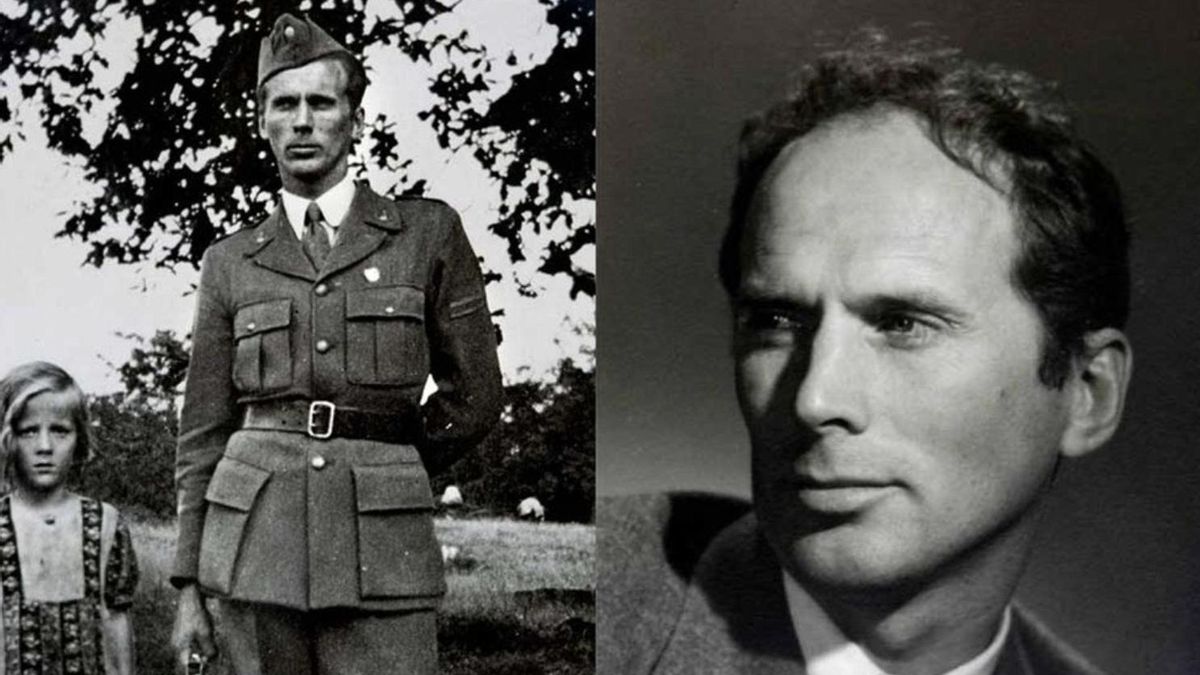
To ignore the history of tourism in Gran Canaria is to overlook extraordinary adventures that could have been lifted from novels, where remarkable characters transformed our island. This is no fiction. It is the case of the Swede Bertil Harding, one of those adventurers who in his youth distinguished himself in his village of Liserud by becoming the leader of a clandestine resistance movement fighting for Norway against the Nazis during the Second World War.
From War to a Dream of Paradise
Many of those young Europeans who survived the conflict changed their life priorities. In Bertil’s case, he and a group of friends set sail in a small, ageing yacht intending to head down to the Canary Islands and then set course for the Caribbean paradise. Their aim was to forget the horror and suffering of the war on idyllic islands where the only concern would be living in the shade of palm trees. That old tub couldn’t withstand the force of the currents in the English Channel and they had to repair the vessel in a French dock. Bertil went ahead and travelled to Gran Canaria to wait for his companions once the boat was fixed.
Waiting in a Virgin Maspalomas
He camped in Maspalomas, enjoying the peace and beauty of that idyllic spot in the south of Europe, where a few camels and goats belonging to the sharecroppers wandered. These farmers worked the furrows and stony ground during the harvest to produce the tomatoes that supplied British markets from the warehouses of Canary Wharf. Every Saturday he would travel along a dirt track by bicycle from the Maspalomas lighthouse to Telde, and from there on tarmac to the port of La Luz to get news of his sailing companions. On one of these trips, he was informed that the yacht had crossed the Atlantic without stopping in Gran Canaria.
He had to wait until he could sign onto a ship bound for the Caribbean. In the meantime, down in the south, on a rainy day which he sheltered from under a boat, he and a group of friends brainstormed how a charter business for Nordic tourists to Gran Canaria might work.
The Birth of the Charter Revolution
He first went to the Caribbean, where he learned his yacht could take no more and had sunk. His dreams of living sailing between islands and cays were shipwrecked. Now his dream was to share his Maspalomas experience with Swedes who, in a few hours of flight, could change their lives—something that had taken him weeks. He returned to Gran Canaria, where the Nordic presence was growing in the capital. He became convinced the island was the place Nordics dreamed of during winter.
In 1957, the first non-scheduled flight of the Swedish airline Transair AB took off, landing at Gando Airport from Stockholm with 54 passengers. It was a four-engine DC-4, as described by Birgitta Frejhagen in her book The Pioneers: “In those early years, it was the Nordics, thanks to the initiative of Harding and other pioneers who, with ageing DC-4 and DC-6 aircraft, conducted a kind of gathering of tourists in different Scandinavian countries (Sweden, Denmark, etc.) with a stop in Orly, then passing through Lisbon or another airport in southern Portugal and, finally, arriving in Gran Canaria after many, many hours of flight, who opened the new era.”
“The impact that Gran Canaria’s climate and people had on those who visited using these rudimentary charter flights was extraordinary and the capital became the most important tourist centre in the province of Las Palmas.” It was the beginning of the golden age of Gran Canaria’s capital and the construction boom of hotels and apartments between Guanarteme and La Puntilla. The birth of popularised mass tourism as a phenomenon is placed in the mid-1950s, thanks to Bertil Harding’s initiative.
Remembering a Pioneer’s Legacy
Bertil had known an almost virgin Maspalomas. There was nothing but a few huts and the sound of a paradise of birds in the oasis, the camels, the southernmost sunset of the islands. The light of the lighthouse twinned with Orchilla. In that scene, his wait and the time Bertil spent until he could sign onto a ship passed. Antonio Santana, a Canarian businessman and pioneer with Nordic tourism who knew the Scandinavians perfectly, remembered him fondly, “naked and happy”. He had become the most famous Spaniard in Sweden (after Franco, of course), for his parties pairing roast suckling pig with Swedish folk songs, and even the filming of Swedish films.
Another supporter of the charter precursor was Ingemar Pallin, the Nordic voice on Spanish airwaves. A friend of Harding, Pallin began in September 1963 on Radio Atlántico, a state station, with a pioneering multilingual programme aimed at the foreign population on holiday or resident on the island. Pallin adopted the radio pseudonym Xavier Palén, was so successful that he came to broadcast three times a day in different time slots. His voice was present on island radio for almost 40 years. Ingemar Pallin is the Swede who has received the greatest recognition in the form of honours from the Spanish and Canarian tourism authorities.
A Strategic Hub From the Start
Gran Canaria’s connectivity was the basis of its success, leveraging its strategic position to attract shipping lines and, from its origins, air navigation. This was evidenced by the presence on the island of several pioneering aviation expeditions: Leoncio Garnier (1913); the airship Graf Zeppelin (LZ-127) between 1920 and 1930; Gago Coutinho and Sacadura Cabral, aboard the hydroplane Lusitânia, with which they crossed the South Atlantic in 1922; in 1926 the hydroplane Plus Ultra stopped over on the flight between Spain and Argentina operated by Ramón Franco, Ruiz de Alda, Juan Manuel Durán and Pablo Rada. The four-engine DC4s with which Harding started the charters with a maximum capacity of 86 passengers were surpassed by the Boeing 747 jets transporting 467 passengers in the 1970s.
Gran Canaria was not Harding’s final destination. In 1965, he travelled to The Gambia in Africa and became a pioneer of the tourism industry there. His contribution to the African country is considered so significant that a main street in the capital, Banjul, bears his name: Bertil Harding Highway.
*This report was originally published on the blog of Michel Jorge Millares.
No post found!