
Fifth Seismic Swarm Recorded Near Teide
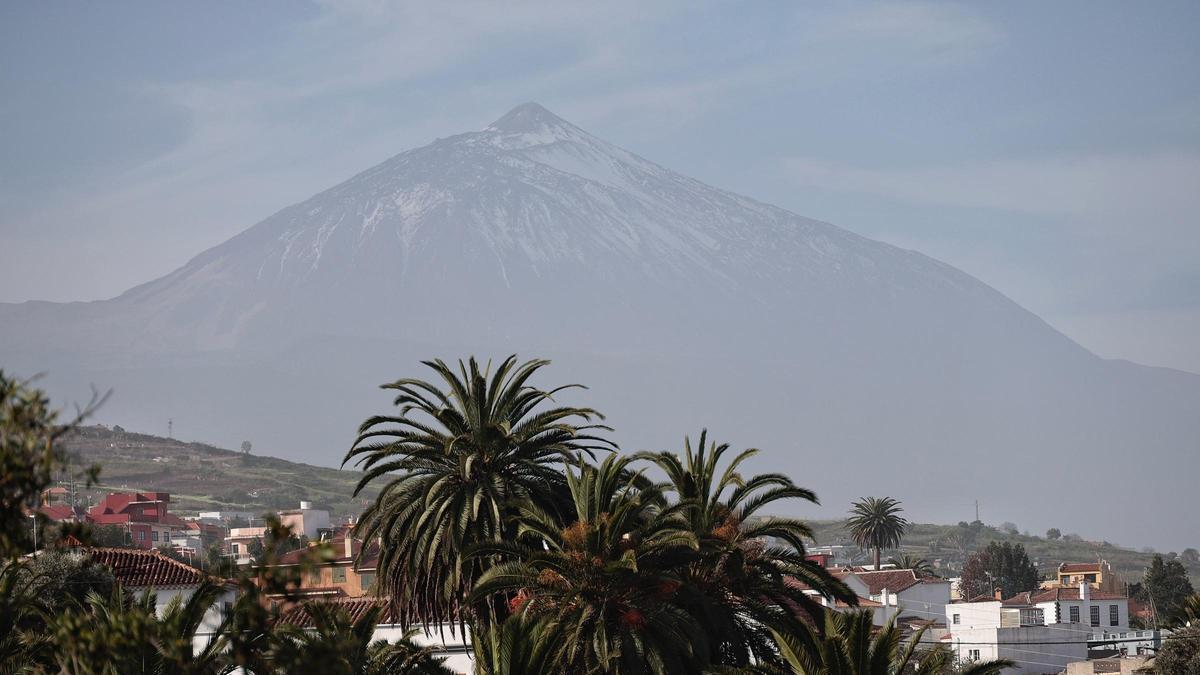
In the early hours of Monday morning, the fifth consecutive seismic swarm was recorded in the area surrounding Teide, the volcanic heart of Tenerife. The episode began around midnight and continued for at least eight hours straight. This latest event was more intense, with around 1,000 small earthquakes and repetitive seismic pulses detected. For more details, see our AI technology monitoring Teide’s earthquakes.
Location and Geological Context
The fifth and most recent swarm was located in the same area as the previous ones, to the west of Las Cañadas caldera, at a depth of between eight and ten kilometres. This is roughly where the base of the island is situated. As explained by Itahiza Domínguez, director of the National Geographic Institute (IGN) in the Canary Islands, the mantle lies beneath this zone. This is the layer where magma typically accumulates for decades before an eruption. “This is normal, what we have seen in past episodes in Tenerife, El Hierro, and La Palma,” he stated in an interview with Televisión Canaria on Monday morning.
Comparing the Recent Activity
The fourth swarm occurred over the weekend, featuring fairly weak events that lasted for more than 40 hours. In contrast, the intensity of Monday’s early morning episode was somewhat higher. Nevertheless, within the series recorded in recent days, some stronger tremors have been detected.
Scientific Reassurance and Monitoring
For now, the scientific community is offering a reassuring message. Experts have reiterated in recent days that there is no evidence of an imminent eruption in the short term. They caution, however, that they must remain vigilant for any changes. Following a meeting on Monday with the Island Council (Cabildo) and local town halls, the IGN director for the archipelago stated that the activity recorded in recent weeks does not increase the chances of an eruption in the short or medium term—that is, within weeks or months.
In fact, to speak of a higher probability, scientists would expect to see other signals, such as strongly felt earthquakes, much more rapid ground deformation, and an increase in gas emissions. Although, he added, all of this could happen “in a very short space of time.”
Scale of the Activity and Future Scenarios
Despite five swarms being detected in Tenerife, which together total between 6,000 and 7,000 tremors, they are “not relevant” because they are so small. In total, Domínguez highlighted, the energy released by all these hybrid events combined would not even be equivalent to a single earthquake of magnitude 2 or 3 mbLg.
Furthermore, the expert underlined that two paths are possible: the activity could continue at this level for a long time, or it could subside in the coming days. “We don’t know; we could return to calm in a few weeks, or there could be periods of increased activity, like at Campi Flegrei in Italy, which has had volcanic activity above the baseline level for 60-70 years. I’m not saying that in Tenerife it will be 70 years,” he argued.
Unanimous Consensus from Authorities
Domínguez assured that there is unanimity among the eight institutions that make up the Canary Islands Volcanic Emergency Plan (PEVOLCA)—including Involcan, IGN, and the public universities—on the conclusion that there is no possibility of an eruption in the short to medium term. “Although it is also true that a zero probability does not exist,” he acknowledged.
What’s happening in the Canaries – straight to your phone
News, weather alerts and practical updates – direct from the islands, in English. We live here and know what’s going on – before the international media catch up. Everything lands on our WhatsApp channel – no middlemen, no algorithm. Curated for families, expats and travelers.
No post found!